
Via Crucis is Latin for “Way of the Cross.” It is the name Catholics give to the devotional path that follows Jesus from his condemnation to his burial, usually in 14 stations. The same devotion is also called the Stations of the Cross, the Way of the Cross, or the Via Dolorosa.
The name matters because it tells you what the devotion is: not a static set of pictures, but a journey. The faithful walk with Christ, station by station, and contemplate the cost of the cross. This guide explains the meaning of the term, its history, and how the Via Crucis is prayed.
What Does Via Crucis Mean?
“Via” means way or road; “crucis” is the genitive of “crux,” meaning cross. Together, Via Crucis means “Way of the Cross.” The English title “Stations of the Cross” comes from the practice of stopping at fixed places, or stations, along the route.
The term Via Dolorosa (“Sorrowful Way”) is also used, especially for the traditional route in Jerusalem. In parish usage, “Via Crucis” and “Stations of the Cross” refer to the same devotion.
Where the Name Comes From
The devotion grew from the desire of pilgrims to follow the last journey of Jesus in Jerusalem. Early pilgrims venerated the places associated with the Passion; later, the Franciscans promoted a structured path through the city. When travel to Jerusalem became difficult, the devotion was reproduced in churches and chapels with images or crosses marking the stations.
The number 14 became standard in the Western Church, though the exact process took centuries. The Stations are therefore a devotional synthesis: they combine Gospel scenes, traditional memories, and the pastoral desire to let every parish share in the pilgrimage to Calvary.
Via Crucis and the Stations of the Cross
The two names are interchangeable in ordinary Catholic usage. “Via Crucis” is the Latin title; “Stations of the Cross” is the English title. A parish might announce a “Via Crucis” on Good Friday and a “Stations of the Cross” service during Lent, but the structure is the same.
The devotion is not the same as the Rosary. The Rosary meditates on the mysteries of Christ’s life, death, and resurrection through repeated prayers. The Via Crucis moves through a fixed sequence of scenes and usually includes a reflection, silence, and a response at each station.
The 14 Stations
The traditional list is:
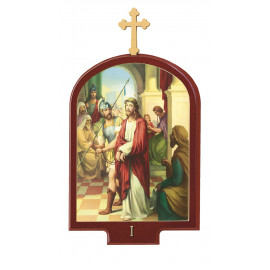
- Jesus is condemned to death.
- Jesus takes up his cross.
- Jesus falls the first time.
- Jesus meets his Mother.
- Simon of Cyrene helps Jesus carry the cross.
- Veronica wipes the face of Jesus.
- Jesus falls the second time.
- Jesus meets the women of Jerusalem.
- Jesus falls the third time.
- Jesus is stripped of his garments.
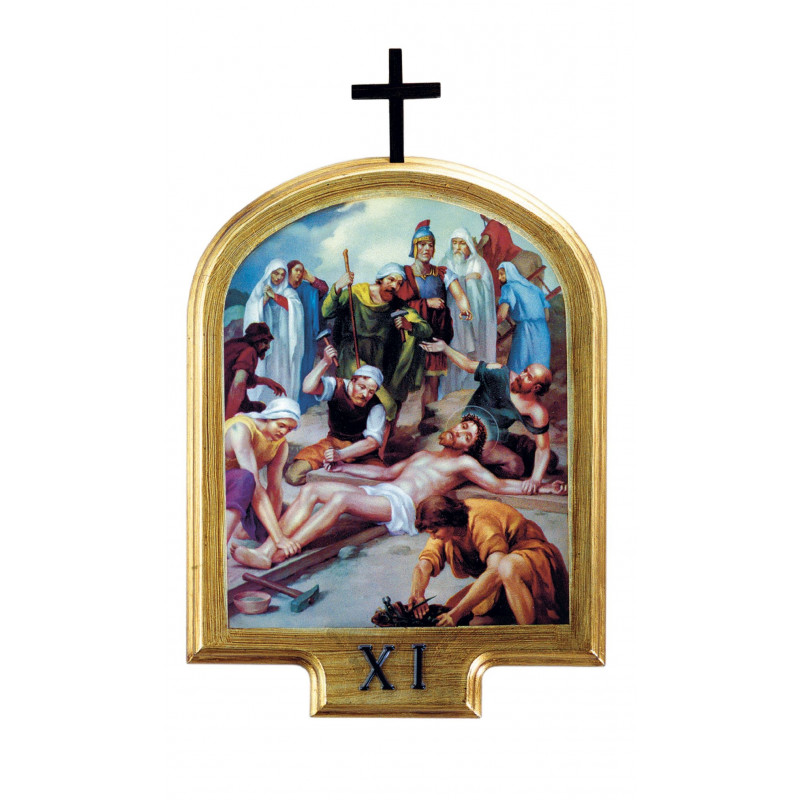
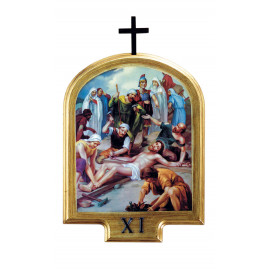
- Jesus is nailed to the cross.
- Jesus dies on the cross.
- Jesus is taken down from the cross.
- Jesus is laid in the tomb.
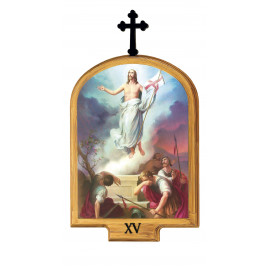
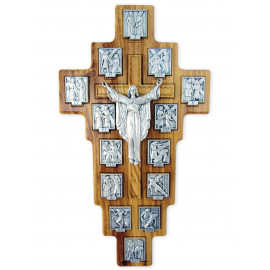
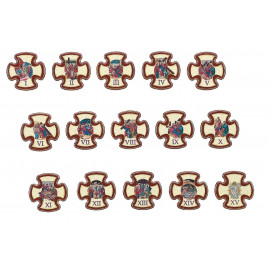
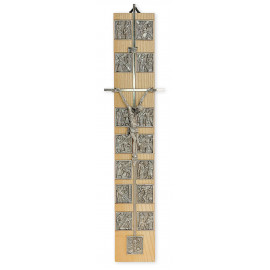
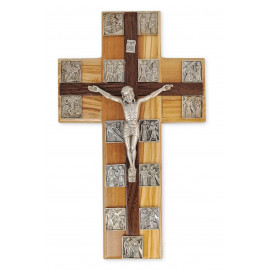
Some sets add a 15th panel with the Resurrection. It is not one of the traditional 14 stations, but it completes the meditation. Our Stations of the Cross collection includes 15-piece MDF sets and single wooden wall crosses. For a detailed explanation of each station, see our 14 Stations in order.
When Is Via Crucis Prayed?
The Via Crucis is most closely associated with Lent and especially with Good Friday. Many parishes celebrate it on the Fridays of Lent, often in the afternoon or evening. It can also be prayed on other days, especially Fridays, and in private devotion at any time.
In some places the Via Crucis is prayed outdoors, moving between crosses or images on the church grounds. In others it is prayed entirely inside the church. The essential element is the sequence of stations, not the location.
What Happens During the Devotion?
A typical celebration begins with an opening prayer and a reading or reflection. At each station, the leader announces the station, the people respond, and a short meditation follows. There may be music, silence, or a hymn. The devotion ends with a closing prayer and, in a liturgical setting, a blessing.
The traditional response is: “We adore you, O Christ, and we bless you, because by your holy cross you have redeemed the world.” The words summarize the faith of the devotion: the cross is not an accident but the means of redemption.
Is Via Crucis the Same as the Rosary?
No. The Rosary is a meditative prayer built on repeated Our Fathers and Hail Marys, with mysteries from the life of Christ and the Church. The Via Crucis is a processional devotion through 14 fixed stations. They can be prayed on the same day, but they are distinct practices.
The Via Crucis is also different from the Good Friday liturgy. The Liturgy of the Lord’s Passion is a liturgical celebration with readings, the Passion according to John, the solemn intercessions, the veneration of the cross, and Communion. The Stations may be prayed before or after it, but they are not the same service.
Frequently Asked Questions
Q: What does Via Crucis mean in English?
A: “Way of the Cross.” It refers to the devotional path through the 14 stations, from Jesus’ condemnation to his burial.
Q: Is Via Crucis the same as Stations of the Cross?
A: Yes. “Via Crucis” is the Latin name; “Stations of the Cross” is the English name. Both refer to the same devotion.
Q: Is Via Dolorosa the same thing?
A: “Via Dolorosa” means “Sorrowful Way” and usually refers to the traditional route in Jerusalem. It can also be used as a devotional title, but it is not a separate devotion.
Q: When is the Via Crucis prayed?
A: Most commonly during Lent, especially on the Fridays of Lent and on Good Friday. It can be prayed at other times as a private or communal devotion.
Q: Who can lead the Via Crucis?
A: A priest, deacon, or lay person appointed for the devotion may lead it. At home, a family member can lead.
Q: How long does the Via Crucis take?
A: A full parish celebration usually takes 20–30 minutes. A shorter family version can take 10–15 minutes.
Q: Is the Via Crucis biblical?
A: It is based on the Gospel Passion narratives, but some stations (Veronica, the three falls) come from devotional tradition rather than a direct Gospel text.
Q: Why are there 14 stations?
A: The number 14 became the standard in the Western Church. It is a traditional structure, not a number fixed by the Gospels.
Q: What is the 15th station?
A: The 15th panel usually shows the Resurrection. It is an additional meditation, not one of the traditional 14 stations.
Conclusion
Via Crucis is the Way of the Cross: a journey through the Passion that ends at the tomb and, in many sets, at the Resurrection. Whether you pray it in a church, outdoors, or at home, the devotion invites you to walk with Christ rather than merely read about him. For a complete prayer structure, see our Stations prayers; for the full background, see the complete guide.