

Two Traditions, Two Names
Catholics and Orthodox Christians both veil the vessels used in the Eucharist, but they use different names and different shapes. The Latin tradition speaks of the chalice veil; the Byzantine tradition speaks of the aer and the diskos veil. The differences are not cosmetic. They reflect different liturgical arrangements and different ways of covering the gifts.
The Catholic Chalice Veil
In the Roman rite the chalice veil is a square cloth that covers the chalice and paten before the Eucharistic liturgy. It is removed at the Offertory and may be replaced after Communion. GIRM 118 calls the veiling a praiseworthy practice and allows the veil to be the color of the day or white.
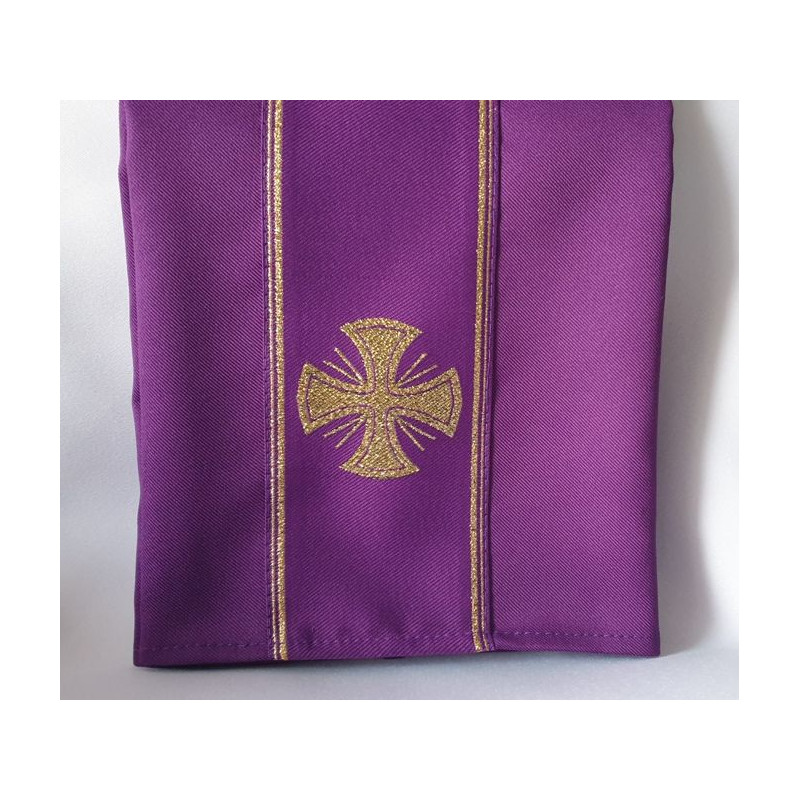
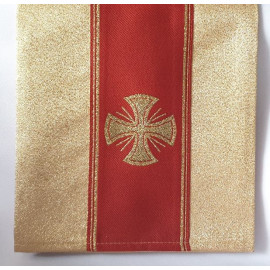
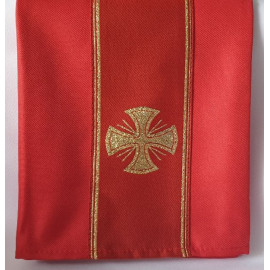
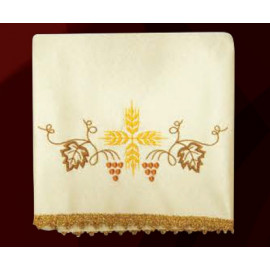
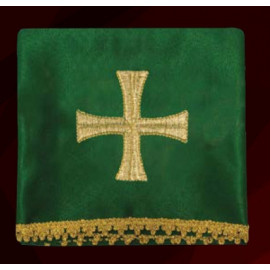
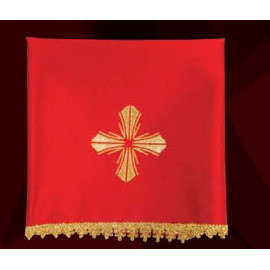
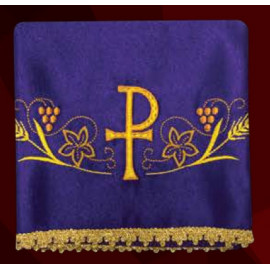
The Latin veil is usually 50–60 cm square. It is often made of the same fabric as the vestments and may be embroidered with a cross, IHS, or a liturgical symbol. Our Catholic chalice veils follow this pattern.
The Orthodox Aer and Diskos Veil
In the Byzantine liturgy the aer is the large cloth that covers both the diskos (the plate for the bread) and the chalice. The diskos veil is a smaller cloth that covers the diskos alone. The aer is often embroidered with the burial of Christ or other liturgical scenes, and it is used during the preparation and the Liturgy of the Faithful.
The aer is not simply a larger chalice veil. It covers two vessels at once, and its symbolism is tied to the shroud and to the covering of the gifts. The diskos veil has its own role in the proskomedia, the preparation of the bread and wine before the liturgy.
Shape and Size
The Catholic chalice veil is a square sized to the chalice and paten. The Orthodox aer is larger and rectangular or square, wide enough to cover both the diskos and the chalice. The diskos veil is smaller and covers only the plate.
This is why a Catholic veil cannot simply be swapped for an Orthodox aer. The shapes are different because the vessels are arranged differently on the altar.
When They Are Used
In the Roman rite the veil covers the chalice before Mass and is removed at the Offertory. In the Byzantine rite the aer is used during the preparation and the anaphora, and it is removed at specific points of the liturgy. The exact timing differs between the two traditions, so sacristy instructions should follow the local rite.
Symbolism
Both traditions treat the covering as a sign of reverence. The veil hides the sacred vessels from casual view and marks them as set apart for the Eucharist. The Latin veil also carries the liturgical color of the day; the Orthodox aer often carries embroidered scenes of Christ's burial and resurrection.
The differences are real, but the underlying instinct is shared: the vessels of the Eucharist are covered because they are holy.
A Note on Terminology
The words matter because they describe different objects. A Catholic sacristan who asks for "the veil" means the square cover for the chalice and paten. An Orthodox sacristan who asks for "the aer" means the large cloth that covers both the diskos and the chalice. The diskos veil is a third item, smaller than the aer and made for the plate alone.
In English-language catalogues the terms are sometimes mixed. If you are buying for a Byzantine parish, check the dimensions and the number of vessels the cloth is meant to cover. A product called a "chalice veil" may be too small for an aer, and an "aer" may be too large for a Latin chalice.
What This Means for Buyers
Buy for the rite you serve. A Latin parish should choose a square veil sized to its chalice and paten. A Byzantine parish should choose an aer and diskos veil that fit its diskos and chalice together. The fabric, embroidery, and color should follow the local liturgical usage, not a generic product photo.
If you are responsible for a shared sacristy, label the pieces by rite and size. A Catholic chalice veil and an Orthodox diskos veil can look similar in a drawer, but they are not interchangeable. Clear labeling prevents a last-minute substitution that does not fit the vessels.
Frequently Asked Questions
Q: Is the Orthodox aer the same as a chalice veil?
A: No. The aer covers both the diskos and the chalice; the Catholic chalice veil covers the chalice and paten. They serve different rites and have different shapes.
Q: What is a diskos veil?
A: A diskos veil is the smaller cloth that covers the diskos, the plate used for the bread in the Byzantine liturgy.
Q: Can a Catholic use an Orthodox aer?
A: The aer is made for the Byzantine arrangement of the vessels. A Catholic parish should use a chalice veil sized to its own chalice and paten.
Q: Why is the chalice veiled?
A: The veil is a sign of reverence and keeps the vessels clean before the Eucharistic liturgy. GIRM 118 calls the practice praiseworthy.
Q: Does the Orthodox Church use liturgical colors for the aer?
A: Yes, the aer and other vestments follow the liturgical color of the feast or season, though local usage varies.
