
The chasuble is the most recognizable vestment in the Catholic Church. But it didn't start out as a liturgical garment. Its origins are surprisingly practical — and its evolution tells the story of the Church itself.
Roman Origins
The chasuble began as the casula — a simple, cone-shaped outer garment worn by Roman peasants and travelers to protect against rain and cold. The word "casula" means "little house," because the garment essentially housed the wearer's entire body. It was made of wool or heavy fabric, with a hole in the center for the head.
Nothing about the casula suggested it would one day become the primary Eucharistic vestment. It was work clothing — practical, unadorned, and common.
Adoption by the Church
By the 4th century, as the Roman Empire Christianized, the casula began to appear in church. Clergy wore it as their everyday garment — not because it was sacred, but because it was what everyone wore. As fashion changed and the casula fell out of civilian use, the Church kept it.
By the 9th century, the chasuble had become exclusively a liturgical vestment. It was still the full, cone-shaped garment of its Roman origins — heavy, cumbersome, and covering the arms almost entirely.
The Medieval Transformation
During the Middle Ages, the chasuble began to change. To make it easier to raise the hands during the Mass, the sides were gradually cut away. What was once a full cone became a truncated cone — still heavy, but more manageable.
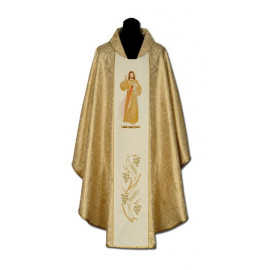
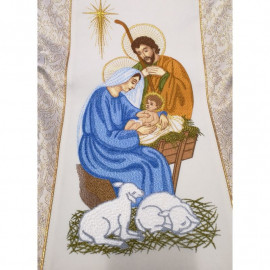
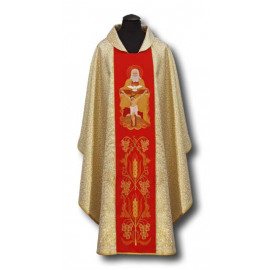
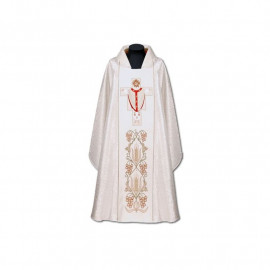
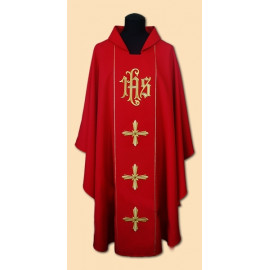
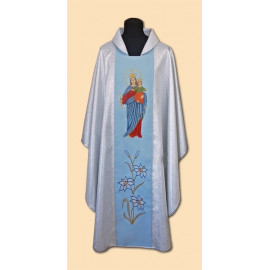
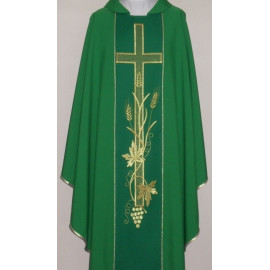
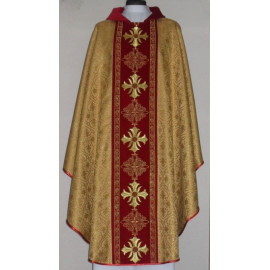
Embroidery also became more elaborate. Gold thread, silk, and precious stones adorned the chasubles of cathedrals and wealthy parishes. The orphrey (decorative band) became a canvas for theological art — crosses, saints, and biblical scenes. Today, you can find beautifully embroidered liturgical chasubles that carry on this tradition of sacred art.
The Roman Style
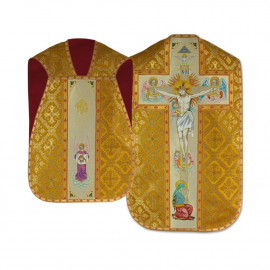
By the 16th century, the chasuble had evolved into what we now call the Roman style — a stiff, shield-shaped garment that barely draped over the shoulders. This was the result of heavy interfacing and elaborate embroidery that made the fabric rigid.
The Roman style dominated the Church for centuries. It was the standard vestment at the time of Vatican II and remains popular in many parishes today. Browse our collection of embroidered Roman chasubles crafted in this traditional style.
The Gothic Revival
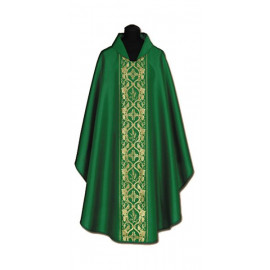
In the 19th century, there was a movement to return to the fuller, more flowing chasuble of the medieval period. The Gothic chasuble — with its elegant draping and softer fabric — was revived, particularly in monasteries and cathedrals.
Today, both styles coexist. The Roman style is formal and structured. The Gothic style is flowing and comfortable. The semi-Gothic style offers a middle ground.
What I Recommend
Understanding the history of the chasuble deepens your appreciation for it. Whether you prefer the Roman, Gothic, or semi-Gothic style, you're wearing a garment that connects you to 2,000 years of worship.
Frequently Asked Questions
Q: Which style of chasuble is "correct"?
A: All styles are permitted. The Church doesn't mandate a particular cut. Choose the one that serves your liturgical needs and aesthetic preferences.
Q: How long should a chasuble last?
A: With proper care and storage using vestment hangers, a quality chasuble can last 15-20 years or more.
Conclusion
The evolution of the chasuble is the story of the Church itself — adapting, preserving, and sanctifying the culture of each age. Every time you vest for Mass, you're wearing history.
Shop Related Products
- Embroidered Liturgical Chasubles — classic Roman and modern styles
- Embroidered Roman Chasubles — traditional shield-shaped design
- Semi-Gothic Chasubles — flowing, comfortable middle ground
- Embroidered Christmas Chasubles — for the Christmas season
- Embroidered Easter Chasubles — for the Easter season
- Embroidered Marian Chasubles — honoring the Blessed Virgin
- Hangers for Vestments — proper storage for your chasubles
See our linen chasubles collection.