
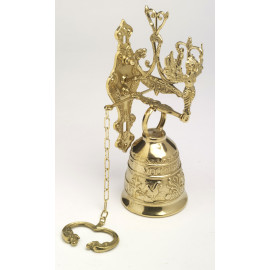






Three rings. That's all it takes. The altar bells sound at the consecration, and every head in the church bows. It's one of the most recognizable moments in the Catholic Mass. But why do we ring bells, and where did this tradition come from?
Medieval Origins
The ringing of bells at the consecration began in the 13th century. At the time, most of the Mass was said quietly in Latin, and the congregation couldn't always see or hear what was happening at the altar. The bells served as an audible signal that the most sacred moment of the Mass had arrived.
Even though the Mass is now celebrated in the vernacular and the congregation can see and hear everything, the bells remain — a beautiful link to centuries of Catholic worship.
When Are the Bells Rung?
Traditionally, the bells are rung three times at each of two moments:
- After the consecration of the host: The priest elevates the host, and the server rings the bells three times.
- After the consecration of the chalice: The priest elevates the chalice, and the bells are rung three times again.
Some parishes also ring a single bell at the epiclesis (when the priest extends his hands over the gifts) and at the final doxology ("Through Him, and with Him, and in Him...").
Types of Altar Bells
| Type | Description | Price |
|---|---|---|
| Single bell | One bell on a handle | $15-$30 |
| Triple bell | Three bells on a single handle | $25-$50 |
| Sanctuary bell (fixed) | Mounted bell, rung by rope | $50-$150 |
| Bell and gong set | Traditional Eastern-style set | $80-$200 |
What I Recommend
For most parishes, a triple bell on a handle is the most practical option. It's easy to use, produces a clear sound, and is affordable. Make sure the server practices the ringing motion before using it at Mass — a smooth, controlled ring is more reverent than a frantic jangle.
Frequently Asked Questions
Q: Are altar bells required?
A: The GIRM (150) says that "a little before the consecration, when appropriate, a server rings a bell as a signal to the faithful." It's recommended but not strictly required.
Q: Can the bells be too loud?
A: Yes. The bells should be audible but not jarring. In a small chapel, a single bell is sufficient. In a large church, a triple bell or a fixed sanctuary bell may be needed.
Conclusion
The altar bells are a small but powerful part of the liturgy. They draw our attention to the most sacred moment of the Mass and connect us to centuries of Catholic tradition. Ring them with reverence, and they'll serve your parish well.
Shop Related Products
- Liturgical Sanctuary Bells — single and triple bells
- Liturgical Altar Bell and Gong — traditional Eastern-style sets
- Liturgical Chalices — the vessel the bells announce
- Embroidered Chalice Linen Sets — complete altar linen set