


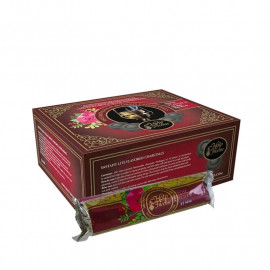


The Catholic Church most commonly uses frankincense (olibanum) and myrrh, often blended with other tree resins such as copal, benzoin or sandarac. The resin is spooned onto a self-lighting charcoal disc inside a thurible and burned during Mass, Benediction, processions and blessings. Greek-style blends — Jerusalem, Bethlehem, Pontificate and Angelus — are also widely used, especially in Eastern Catholic and Orthodox churches.
What Incense Does the Catholic Church Use?
The short answer is frankincense, the resin of Boswellia trees, usually called olibanum in liturgical texts. It is the incense named in the Gospel of Matthew among the gifts of the Magi, and it remains the benchmark scent of Catholic worship: dry, citrus-resinous, and clean-burning. In practice, most parishes burn a blend rather than a single resin. Myrrh, the resin of Commiphora trees, adds a deeper, slightly bitter note and is traditional during Lent and on Good Friday. Many commercial church blends combine frankincense with myrrh, benzoin, copal or sandarac to make the smoke last longer and smell fuller.
The Church does not prescribe a single recipe. The General Instruction of the Roman Missal (GIRM 276–277) allows incense at any Mass and describes the thurifer's role; it does not name a resin. That is why the choice of incense is usually a local one, made by the sacristan or the pastor.
Frankincense (Olibanum): The Standard
Frankincense comes from the dried sap of Boswellia trees, harvested in Somalia, Oman, Yemen and parts of India. The tears range from pale yellow to amber and burn best on a glowing charcoal disc. In our liturgical incense and charcoal range, natural olibanum is sold in 20 g, 70 g and 100 g packs, including a pea-size grade that lights quickly and a larger tear grade that burns more slowly. For a parish thurible, the pea-size grade is usually the most practical: it spreads evenly on the disc and releases smoke within seconds.
Myrrh and Other Resins
Myrrh is darker, stickier and slower to release its fragrance than frankincense. It is burned on its own, especially during Holy Week, or blended with frankincense for a heavier, more penitential smoke. Other resins appear in church blends: copal (a hard resin from Central America and Africa), benzoin (a balsamic resin from Styrax trees), sandarac (from the sandarac tree of North Africa) and amber. Each changes the balance of the blend — copal for brightness, benzoin for sweetness, sandarac for a dry finish.
Greek Incense vs Roman-Style Blends
Greek incense is a monastery-style blend, usually sold under names such as Jerusalem, Bethlehem, Pontificate, Angelus or Basilica. It is finer and often more heavily perfumed than a plain Roman-style resin, and it is burned in the same way — on charcoal, in a thurible or censer. The difference is cultural and aromatic rather than doctrinal: Greek blends often carry floral or sweet notes, while Roman-style blends tend to stay closer to frankincense and myrrh. Neither is more “correct”; both are lawful in the Latin Church.
Resin, Powder, Cones and Sticks
- Resin — the classic liturgical form. It must be placed on charcoal and does not burn on its own.
- Powder — fine incense that releases smoke almost immediately on the disc; common in Greek-style blends.
- Cones — pressed and self-lighting, convenient for home prayer and small chapels, but not the traditional thurible form.
- Sticks — common in personal devotion, but the liturgical books presume loose incense burned on charcoal, not a stick with a wooden core.
For parish use, resin or powder is the safe choice. For a home altar, cones avoid the need for charcoal altogether.
How Church Incense Is Burned
The thurifer places a self-lighting charcoal disc in the thurible, lights the edge and waits until the disc is covered with grey ash. The priest or deacon then spoons incense onto the coals, and the thurible is swung toward the altar, the Gospel book, the gifts or the people. A single disc burns for roughly 20–30 minutes, which is enough for one thurible fill at Mass or Benediction. The incense boat holds the loose resin, and the spoon transfers it to the coals — see our thurible, boat and spoon sets.
What the Smoke Means
Incense is a sacramental, not a decoration. Psalm 141:2 prays, “Let my prayer be set forth in thy sight as the incense,” and the Book of Revelation describes the smoke of incense rising with the prayers of the saints (Revelation 8:3–4). The smoke veils what is holy, marks the solemnity of the moment and carries the prayer of the Church upward. That is why incense is used at the consecration, at Benediction, at funerals and at the dedication of a church.
Using Church Incense at Home
Home use is lawful and increasingly common. A small censer or heat-proof bowl, one charcoal disc and a pinch of resin are enough. Keep the room ventilated, never leave a lit censer unattended, and use pliers to handle the disc. If smoke is a problem, choose pressed cones instead of resin. Our guide to using incense at home walks through the routine, and the censer vs thurible comparison explains which vessel to choose.
Frequently Asked Questions
Q: What incense does the Catholic Church use?
A: Frankincense (olibanum) and myrrh, often blended with copal, benzoin or sandarac, burned on a self-lighting charcoal disc. Greek-style monastery blends are also widely used.
Q: Is Catholic church incense the same as frankincense?
A: Not always. Frankincense is the most common single resin, but many church blends combine it with myrrh and other resins. “Church incense” describes the use, not one fixed recipe.
Q: Do Catholics use incense sticks?
A: Incense sticks are common in personal devotion, but the liturgical books presume loose incense burned on charcoal. For Mass, resin or powder on a disc is the traditional form.
Q: What kind of charcoal is used for church incense?
A: Self-lighting charcoal discs, about 33 mm across, made from charcoal powder pressed with a small amount of saltpeter. They light from one match and burn for 20–30 minutes.
Q: Where can I buy Catholic church incense?
A: Our liturgical incense and charcoal category carries 90 products — frankincense, myrrh, Greek blends, resins, cones and charcoal — from $4, with thuribles and boats and home censers in the adjacent categories.
