The question comes up in every sacristy and every altar-server class: what is the difference between a purificator, a corporal, a pall, and a finger towel? They are all white, all linen (or cotton), and all handled with care — but each does one job at Mass, and swapping them is a mistake. Here is the short answer, the long answer, and the famous "five sacred linens" list.
The Differences at a Glance
| Linen | Shape | Job at Mass | Where it goes |
|---|---|---|---|
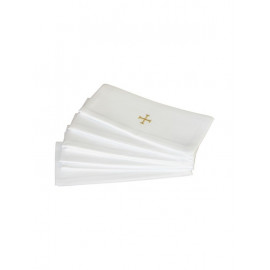
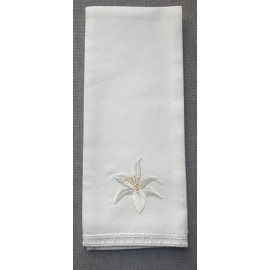
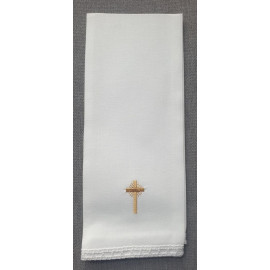
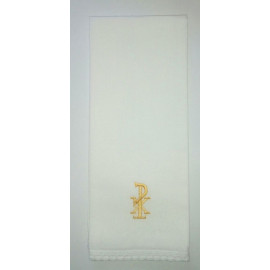
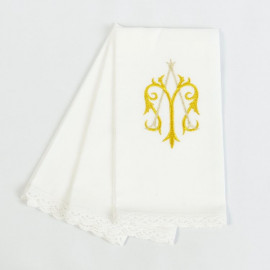
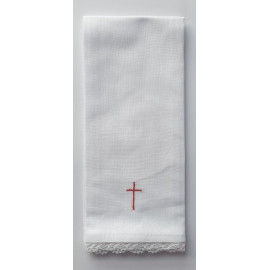
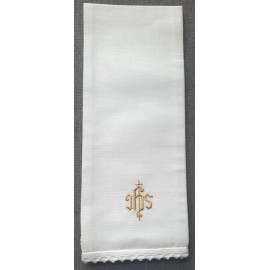
| Purificator | Rectangle, folded in three | Wipes the chalice rim; dries the chalice after the purification | Over the chalice, under the pall |
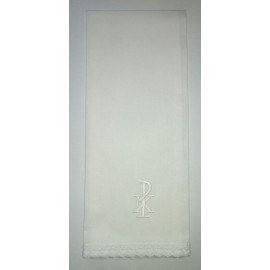
| Corporal | Large square | The cloth the vessels rest on; catches any particle | Spread flat on the altar |
| Pall | Small stiffened square | Covers the chalice during the Canon | On top of the purificator, over the cup |
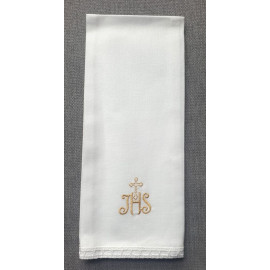
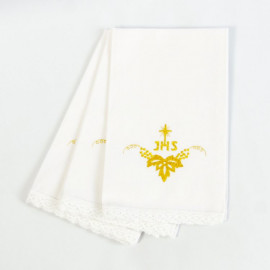
| Finger towel (lavabo towel, manuterge) | Small towel | Dries the priest's hands at the washing of hands | With the lavabo set at the credence table |
Purificator vs Corporal
This is the pair people confuse most. The corporal is the large square spread on the altar; the chalice and paten stand on it, and its whole purpose is to catch anything that falls — which is why it is folded with the cross inside when Mass ends. The purificator is the small cloth that does the wiping: it touches the rim of the chalice during Communion and dries the chalice at the purification. One lies flat and holds; the other is folded and wipes. You can read more about the corporal in our guide to what a corporal is, and see the cloths themselves in our purificator and corporal collections.
Purificator vs Pall
The pall is the stiffened square — linen over a rigid insert — that covers the chalice from the preparation of the gifts until the end of the Canon. It protects the Precious Blood from dust and insects. The purificator lies under it, over the cup: the pall covers, the purificator wipes. Our chalice palls come in every liturgical colour, with matching purificators.
Purificator vs Finger Towel
The finger towel — called the lavabo towel, or the manuterge in older books — dries the priest's hands at the washing of hands after the offertory. It never touches the chalice, and the purificator never touches the hands. The finger towel belongs with the lavabo set; our lavabo towels match the rest of the altar linens.
The "Five Sacred Linens"
Sacristy guides often speak of the five sacred linens of the altar. The list varies slightly by parish, but the common core is: the fair linen (the long white cloth covering the altar), the corporal, the purificator, the pall, and the lavabo towel. The Catholic Encyclopedia groups them as "the corporal, pall, purificator, and finger-towels", treating the altar cloths as their own family. The altar cloths, chalice linen sets and individual linens in our shop cover the whole list.
How the Four Linens Work Together at Mass
The sequence is worth knowing, because it explains every difference above:
- Preparation. The corporal is spread on the altar; the purificator lies folded over the chalice, the pall on top, all under the chalice veil.
- Canon. The pall covers the cup; the corporal holds the vessels.
- Communion. The purificator wipes the rim of the chalice after each communicant.
- Purification. The priest rinses the chalice, pours the water into the sacrarium, and dries the cup with the purificator; the corporal is folded with the cross inside.
- Lavabo. At the washing of hands, the finger towel dries the priest's hands.
Which Linens Does a Parish Need First?
If a sacristy is being built from nothing, the practical order is: corporals first (one per altar, plus spares), then purificators (one per chalice prepared, so four to six), then palls in the liturgical colours, then lavabo towels and burses. Matching sets make the sacristy easier to manage — our chalice linen sets combine the pieces in coordinated designs, and our purificators start at $7.
Frequently Asked Questions
Q: What is the difference between a purificator and a corporal?
A: The corporal is the large square spread flat on the altar, under the chalice and paten, to catch any particle of the host. The purificator is the smaller folded cloth that wipes the rim of the chalice and dries it after the purification. One holds, the other wipes.
Q: What is the difference between a purificator and a finger towel?
A: The finger towel (lavabo towel) dries the priest's hands at the washing of hands; the purificator serves the chalice. They are different cloths with different jobs and are stored in different places in the sacristy.
Q: What are the five sacred linens?
A: The common list: the fair linen of the altar, the corporal, the purificator, the pall, and the lavabo (finger) towel. The Catholic Encyclopedia describes the altar linens as the corporal, pall, purificator, and finger-towels, with the altar cloths as their own group.
Q: Can a purificator be used as a corporal (or the other way around)?
A: No — the shapes and folds differ, and each is made for its job. A purificator is too small to hold the vessels; a corporal is not made to be folded and handled wet. Keep the two distinct in the sacristy.
Q: Which linen should a parish buy first?
A: Corporals and purificators — they are needed at every Mass. Palls in the liturgical colours, lavabo towels and burses follow. Our purificators start at $7 each, and the matching corporals are made in the same workshop in Poland.
Shop the full altar-linen range: embroidered purificators · corporals · chalice palls · lavabo towels · chalice linen sets.