
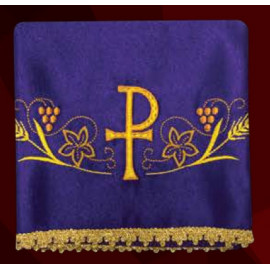
What Is a Chalice Veil?
A chalice veil is a square cloth used in the Catholic liturgy to cover the chalice and paten before the Eucharistic liturgy begins. It is also called a chalice cover. The veil is part of the set of linens and vessels prepared for Mass, together with the chalice pall, the burse, the corporal, and the purificator.
The veil is not a decorative extra. It marks the chalice as a sacred vessel and keeps dust and insects away before the chalice is prepared. In the sacristy the veiled chalice is often carried to the altar with the burse resting on top; the veil is then removed at the Offertory.
What Is the Chalice Veil Used For?
The veil covers the chalice and paten before the Eucharistic liturgy. It is a sign of reverence for the vessels that will hold the Body and Blood of Christ, and it keeps the chalice clean while it waits on the credence table or altar.
The veil also helps the liturgical color speak before Mass begins. When the veil matches the vestments, the chalice is visually joined to the color of the day even before the priest approaches the altar.
What Does GIRM 118 Say?
The General Instruction of the Roman Missal treats the veiling of the chalice as a praiseworthy practice. It notes that the veil may be either the color of the day or white (GIRM, no. 118). The instruction does not make the veil a strict requirement in the Ordinary Form, but it recommends it as a fitting sign of reverence.
In the Extraordinary Form the veiled chalice is customary. The chalice is carried to the altar covered, and the veil is removed at the Offertory. In both forms the veil is a liturgical textile, not a generic table cloth: it should be clean, dignified, and made for the altar.
When Is the Chalice Veil Removed?
The veil is typically removed at the Offertory, when the priest prepares the chalice. After Communion the chalice may be covered again, especially when the vessels remain on the altar or are carried back to the credence table. Local custom and the arrangement of the sanctuary determine whether the veil is replaced immediately after Communion or after the ablutions.
If you serve in a sacristy, establish one routine and keep it. The veil should be removed and folded or laid aside without touching the floor, and it should not be used to wipe the chalice. The burse and the pall have their own functions and should not substitute for the veil.
What Color Should a Chalice Veil Be?
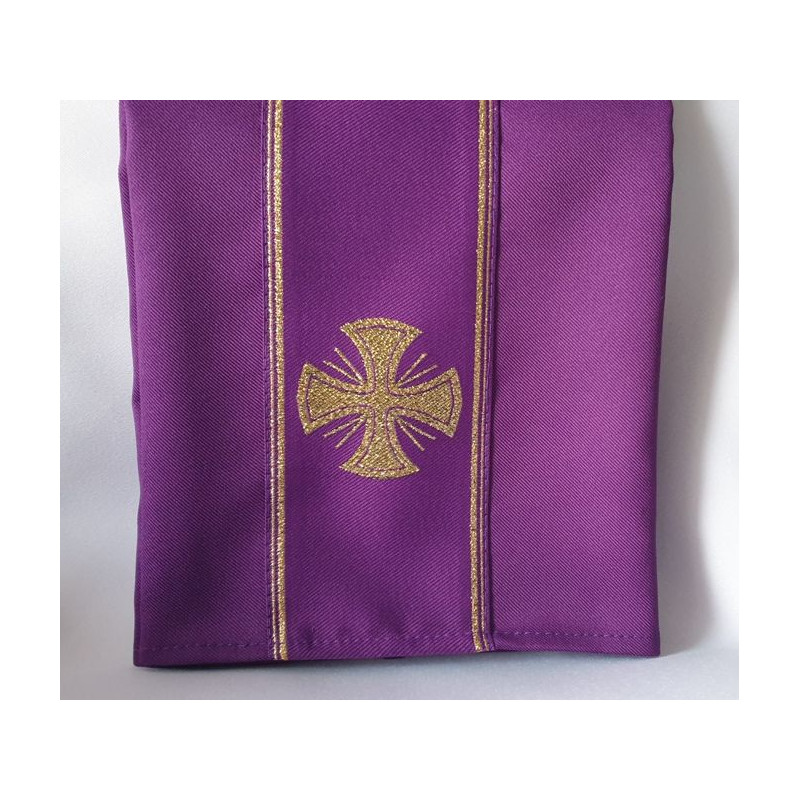
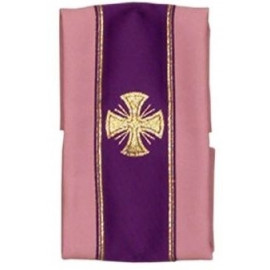
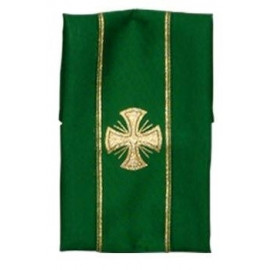
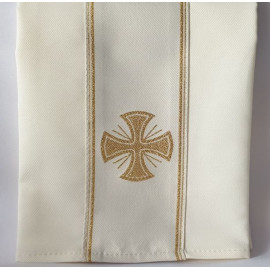
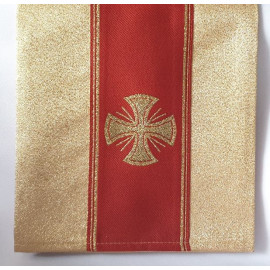
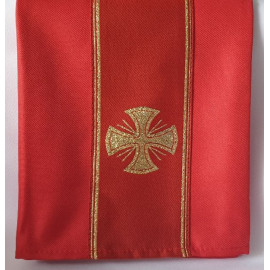
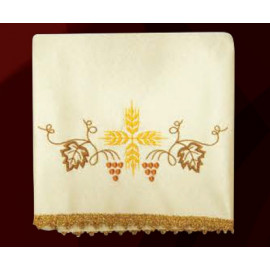
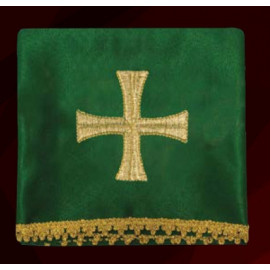
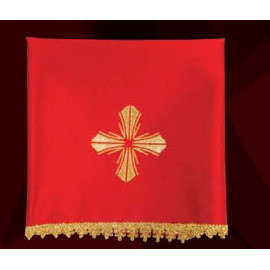
The veil should match the liturgical color of the day or be white. Green, red, purple, and ecru are the colors most often kept in a parish sacristy; white and gold serve solemnities, and black is used for Requiem Masses. A set of veils in the main colors is more practical than a single white veil.
Color is not decoration for its own sake. It ties the chalice to the vestments, the altar cloth, and the season. Our guide to chalice veil colors and the liturgical year explains the main options.
What Size Is a Chalice Veil?
In our collection, chalice veils measure 50 × 50 cm, 51 × 51 cm, or 60 × 60 cm. A 50 cm veil suits many parish chalices; a 60 cm veil gives more coverage for a taller chalice or a wider paten. The veil should cover the chalice and paten without dragging on the altar or catching under the burse.
Measure the chalice before you buy. The chalice veil size guide explains how to compare the three sizes.
Chalice Veil vs. Chalice Pall vs. Burse
The veil, the pall, and the burse are three different pieces. The veil is the large square cover for the chalice and paten. The pall is a small stiffened square placed over the chalice during Mass. The burse is a case for the folded corporal.
| Item | Purpose | Typical size | When used |
|---|---|---|---|
| Chalice veil | Covers the chalice and paten before the Eucharistic liturgy | 50–60 cm square | Before Mass and, if desired, after Communion |
| Chalice pall | Protects the Precious Blood during Mass | About 15–18 cm square | During the Canon and Communion |
| Burse | Holds the folded corporal | About 18 × 18 cm | Carried to and from the altar |
For a fuller comparison, see ciborium veil vs. chalice veil vs. monstrance veil and our guide to the chalice pall.
How to Choose a Chalice Veil
Start with the chalice, not the fabric. Measure the height and the width of the bowl, then choose a veil that covers the chalice and paten with a little margin. A veil that is too small looks strained; one that is too large drags on the altar and collects dust.
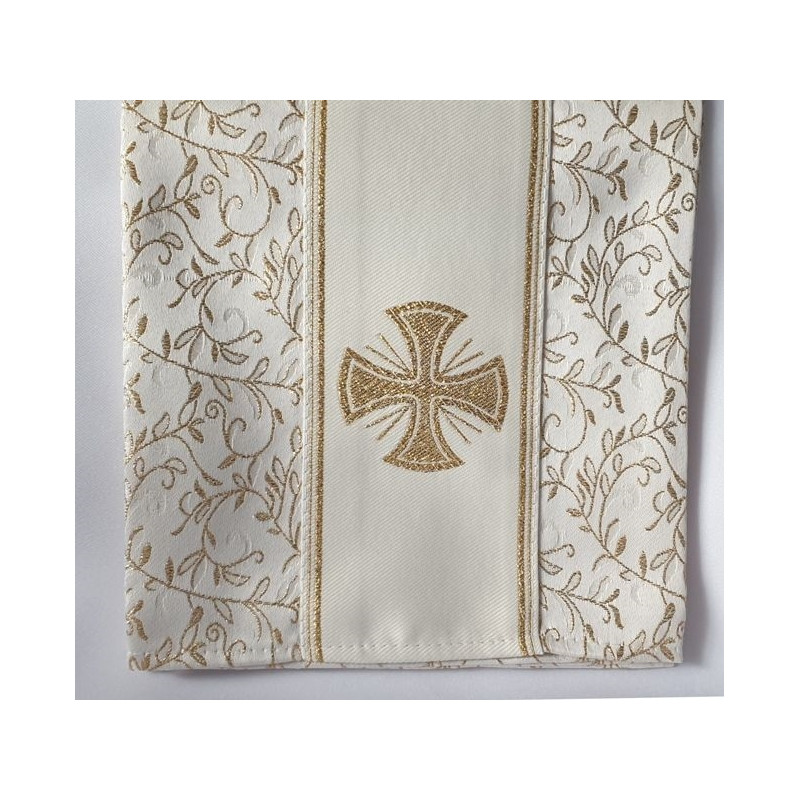
For ordinary use, choose a durable synthetic fabric. For solemnities, choose satin with gold embroidery and lace. If you buy for a parish, choose a set in green, red, purple, and ecru, and add a matching burse and pall so the chalice is dressed in one color.
Care and Storage
Store the veil flat or rolled around a padded tube. Avoid hanging it on a sharp hook that can pull the embroidery or leave a crease in the satin. Keep it away from damp sacristy walls and from direct contact with incense residue.
Press the veil on the reverse with a cool iron, using a pressing cloth over embroidery and lace. For washing and stain removal, follow the care guide for the fabric and the general liturgical linen washing guide.
Frequently Asked Questions
Q: What is a chalice veil called?
A: It is usually called a chalice veil or a chalice cover. In the Catholic and Orthodox liturgy it is the square cloth laid over the chalice before the Eucharistic liturgy begins.
Q: Is a chalice veil required at Mass?
A: In the Ordinary Form it is a praiseworthy practice rather than a strict requirement. GIRM 118 recommends it and allows the color of the day or white. In the Extraordinary Form it is customary.
Q: What is the cloth that covers the chalice?
A: The cloth that covers the whole chalice before Mass is the chalice veil. The small stiffened square placed on top during Mass is the chalice pall.
Q: What color should a chalice veil be?
A: It should match the liturgical color of the day or be white. Green, red, purple, and ecru are the most common parish colors; black is used for Requiem Masses.
Q: What size chalice veil do I need?
A: Measure the chalice and paten first. A 50 × 50 cm veil suits many chalices; a 60 × 60 cm veil gives more coverage for a taller chalice or a wider paten.
Q: Can a chalice veil be washed?
A: Yes. Wash it gently by hand in lukewarm water with a mild detergent, rinse thoroughly, air dry, and press on the reverse. Use a pressing cloth over embroidery and lace.