
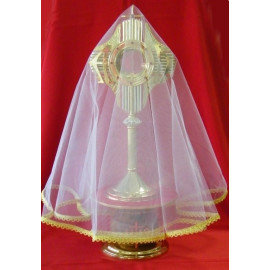
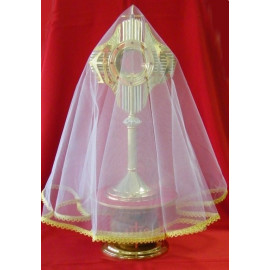
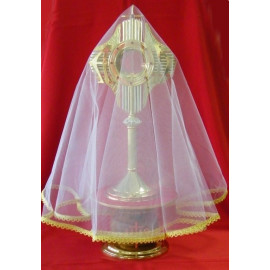


Benediction of the Blessed Sacrament is the Church's solemn blessing given with the Blessed Sacrament itself, exposed in a monstrance. It closes a period of Eucharistic adoration and is one of the most moving rites in Catholic devotion. Here is how it unfolds, step by step.
What Is Benediction?
Benediction (from the Latin benedicere, "to bless") is a liturgical service in which the consecrated host is exposed in a monstrance, adored by the congregation with hymns and prayers, and finally used by a priest or deacon to bless the people. It is not a Mass — no sacrifice is offered — but an extension of Eucharistic adoration.
Step by Step: How Benediction Is Celebrated
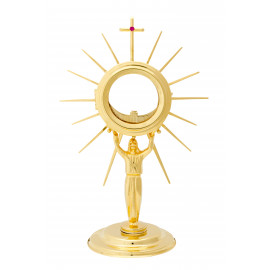
- Exposition. The priest or deacon opens the tabernacle, places the host in the luna of the monstrance, and sets it on the altar or throne. The congregation kneels.
- O Salutaris Hostia. The exposition hymn is sung while incense may be used.
- Adoration and prayers. A period of silent prayer follows, often with readings, litanies or the rosary.
- Tantum Ergo. The last two verses of St. Thomas Aquinas's hymn Pange Lingua are sung; incense is offered again.
- The Divine Praises. The congregation recites: "Blessed be God. Blessed be His Holy Name…"
- The blessing. Wearing the humeral veil, the priest or deacon takes the monstrance, traces the Sign of the Cross over the people with the Blessed Sacrament, and all respond "Amen."
- Reposition. The Blessed Sacrament is returned to the tabernacle, and the final acclamation ("Adoremus in aeternum Sanctissimum Sacramentum") concludes the rite.
The Hymns: O Salutaris Hostia and Tantum Ergo
Both hymns were written by St. Thomas Aquinas in 1264 for the feast of Corpus Christi. O Salutaris Hostia opens adoration ("O saving Victim, opening wide the gate of heaven…"); Tantum Ergo closes it and leads directly into the blessing. Their presence is so constant that "singing Tantum Ergo" and "Benediction" are nearly synonymous in parish life.
What You Need for Benediction
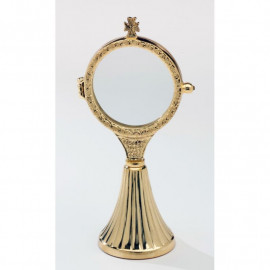
- Monstrance with a luna sized to the host — chapel or church size, depending on the space
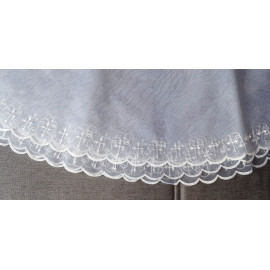
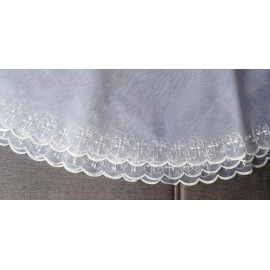
- Humeral veil — the wide shoulder veil with hand pockets, in the liturgical color; see our embroidered monstrance veils
- Altar candles and, where customary, incense and a thurible
- Cope for the celebrant, and surplices for servers
- Tabor or throne if the monstrance will remain exposed for longer adoration
When Is Benediction Held?
Benediction traditionally concludes a Holy Hour, the Forty Hours devotion, and Sunday evening devotions; it is also celebrated on the feast of Corpus Christi and at parish missions and retreats. Many parishes hold it weekly or monthly — often on a Sunday afternoon or evening.
How to Participate Reverently
Kneel when the Blessed Sacrament is exposed and during the blessing; join the hymns and the Divine Praises; keep silence before and after. During the blessing itself, bow your head and make the Sign of the Cross as the priest blesses with the monstrance — the blessing is given with the Blessed Sacrament, not with the vessel.
Frequently Asked Questions
Q: What is the difference between adoration and Benediction?
Adoration is time spent in prayer before the exposed Blessed Sacrament; Benediction is the short liturgical rite — hymns, prayers and the blessing with the monstrance — that normally concludes adoration.
Q: Who can give Benediction?
A priest or deacon gives Benediction. The blessing is given with the Blessed Sacrament exposed in the monstrance while the celebrant wears the humeral veil.
Q: Is Benediction a Mass?
No. No Mass is celebrated during Benediction; the rite takes place outside Mass, typically after a period of adoration, and the Blessed Sacrament is reposed in the tabernacle at the end.
Q: Do I need a humeral veil for Benediction?
Yes — the celebrant uses the humeral veil to hold the monstrance during the blessing, a sign that the blessing comes from Christ himself and not from the minister. A plain or embroidered veil in the day's liturgical color is used.
Conclusion
Exposition, hymn, silence, Tantum Ergo, the Divine Praises, the blessing under the humeral veil, reposition — seven steps that make Benediction the heart of parish Eucharistic devotion. If you are preparing a chapel for it, our monstrances and humeral veils cover the essentials.
