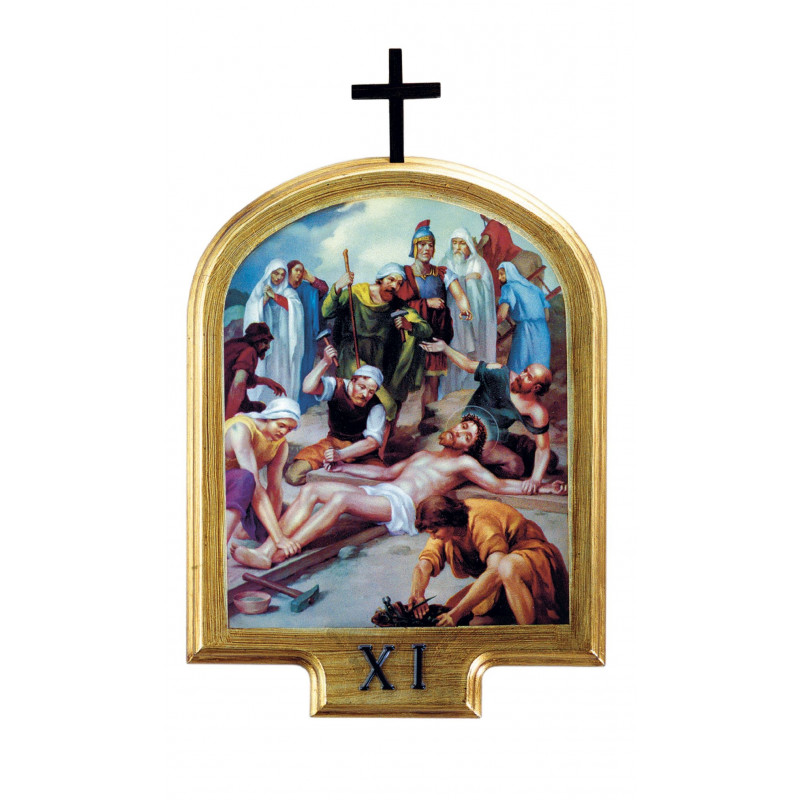
Most Catholics are familiar with the number 14: the traditional Stations of the Cross. Yet many sets sold today contain 15 pieces. The extra panel is almost always the Resurrection. It is not a mistake, and it is not a replacement for the traditional 14; it is a devotional addition that completes the story.
This guide explains the difference between a 14-piece and a 15-piece set, why the Resurrection panel became common, whether the 15th station is “official,” and how to choose the right set for a church, chapel, or home.
The Short Answer
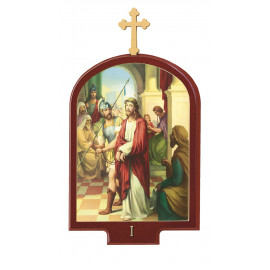
A traditional set has 14 stations, beginning with the condemnation of Jesus and ending with his burial. A 15-piece set has the same 14 stations plus a 15th panel showing the Resurrection. The 15th panel is not one of the traditional stations; it is a closing meditation.
If you want the strict traditional form, choose a 14-piece set. If you want the story to end with the Resurrection, choose a 15-piece set. Both are valid for private devotion and for parish use, provided the traditional 14 are clearly numbered.
Why Some Sets Have 15 Pieces
The 15th panel became popular because the Stations can feel unfinished if they end at the tomb. The Resurrection is the answer to the cross; without it, the devotion stops at grief. Many manufacturers add a Resurrection panel so that the set can be used as a complete paschal meditation.
The extra panel also has a pastoral value. In a parish, the Resurrection gives the celebration a clear ending and a note of hope. At home, it helps children understand that the story does not end with death. The panel is usually placed after the 14th station or displayed separately.
Is the 15th Station Official?
The traditional Stations of the Cross are 14. The 15th panel is not an official station of the Via Crucis in the same sense as the first 14. It is a devotional addition, not a requirement. A parish that uses a 15-piece set can still pray the traditional 14 stations and use the Resurrection as a concluding meditation.
Some communities prefer to keep the traditional number 14 and place the Resurrection image elsewhere in the church. Others include it as a 15th station in a private or family devotion. The key is clarity: the traditional stations should remain numbered 1–14.
What the 15th Panel Shows
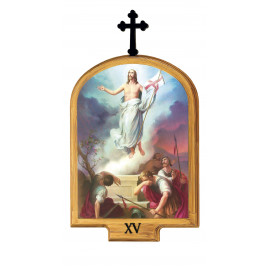
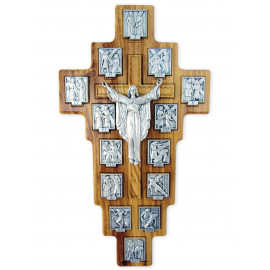
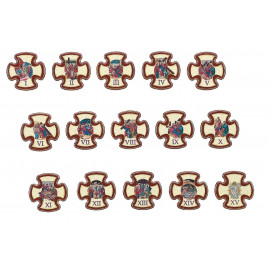
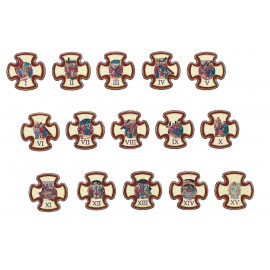
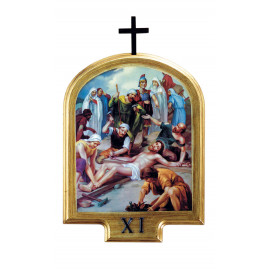
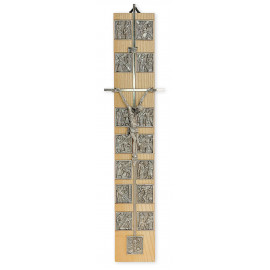
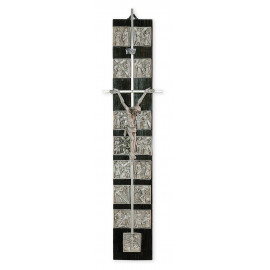
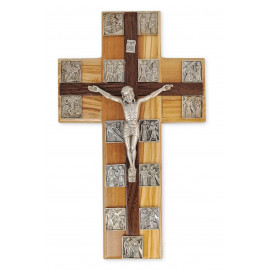
The 15th panel usually shows the risen Christ, sometimes with the women at the tomb, the disciples, or the wounds of the Passion. In our collection, the 15-piece MDF sets include a Resurrection panel alongside the 14 traditional stations. The Italian wooden wall crosses show the stations in metal relief on a single cross; they are a different format, not a 15-panel set.
If you are choosing a set for a church, check that the Resurrection panel matches the style and size of the other panels. A mismatched panel can look like an afterthought. If you are choosing for home, a smaller 15-piece set is often the easiest way to tell the whole story.
Which Set Should You Choose?
- Choose 14 if you want the strict traditional form, you have limited wall space, or your parish already has a separate Resurrection image.
- Choose 15 if you want the devotion to end with the Resurrection, you are teaching children, or you want a complete visual narrative for a chapel or home.
- Choose a wooden wall cross if you want all the stations on one cross and do not have room for 14 or 15 separate panels.
Our Stations of the Cross collection includes 15-piece laminated MDF sets in four sizes and four Italian wooden wall crosses with metal reliefs. All are for indoor wall display.
How to Pray a 15-Piece Set
Begin with the Sign of the Cross and the opening prayer. Pray the 14 traditional stations in order, using the traditional response at each one. After the 14th station, pause, then read a short Resurrection text or meditate on the 15th panel. End with a closing prayer.
Do not treat the 15th panel as a substitute for the 14th. The burial is the end of the traditional sequence; the Resurrection is the answer to it. Keeping the two moments distinct helps the devotion stay faithful to its structure.
Frequently Asked Questions
Q: Are there 14 or 15 Stations of the Cross?
A: The traditional devotion has 14 stations. A 15th panel, usually the Resurrection, is a common devotional addition but not one of the traditional 14.
Q: Is the 15th Station official?
A: It is not an official station of the traditional Via Crucis. It is a legitimate devotional addition when it is clearly distinguished from the 14 traditional stations.
Q: Why do some sets have 15 pieces?
A: To complete the story with the Resurrection and to give the devotion a hopeful ending. The extra panel is usually displayed after the 14th station.
Q: Can I use a 15-piece set for the traditional 14 stations?
A: Yes. Pray the 14 traditional stations and use the 15th panel as a closing meditation. The traditional numbering remains 1–14.
Q: Is a 14-piece set better than a 15-piece set?
A: Neither is better. A 14-piece set follows the traditional form exactly; a 15-piece set adds the Resurrection. Choose according to your space and pastoral needs.
Q: What does the 15th panel show?
A: Usually the risen Christ, sometimes with the women at the tomb or the disciples. The exact image varies by manufacturer.
Q: Do I need a 15th panel to pray the Stations?
A: No. The traditional devotion is complete with 14 stations. The 15th panel is optional.
Q: Where should I place the 15th panel?
A: After the 14th station, either at the end of the sequence or on a separate wall. It should not be numbered as if it were one of the traditional 14.
Q: Are your wooden crosses 14 or 15 pieces?
A: Our Italian wooden wall crosses are a single cross with the stations in metal relief, not a 14- or 15-panel set. Our laminated MDF sets are 15 pieces.
Conclusion
The difference between 14 and 15 is the Resurrection panel. The traditional devotion remains 14; the 15th panel is a devotional completion. If you want the strict form, choose 14; if you want the whole story, choose 15. Browse the Stations of the Cross collection to compare sizes, read our full list of the 14 stations, or see the complete guide for the history and prayers.