

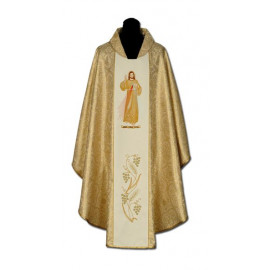
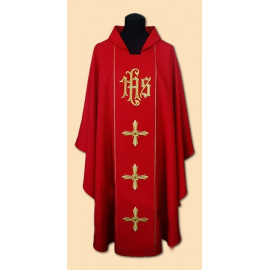
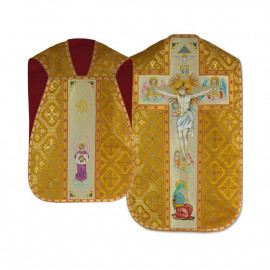
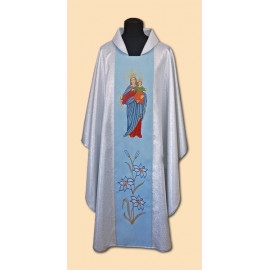
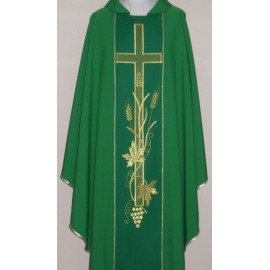
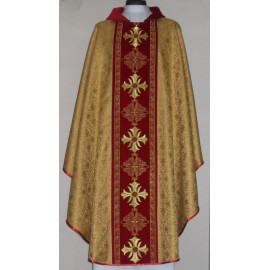
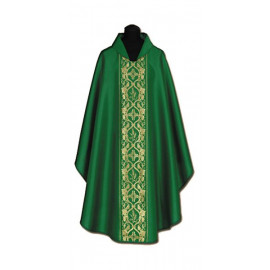
Normally, no. The General Instruction of the Roman Missal (GIRM 336) names the chasuble as the vestment proper to the priest celebrant at Mass. There are narrow exceptions — principally concelebration and non-Eucharistic services — but “no chasuble” is not a normal option for a priest celebrating Mass.
What GIRM 336 Says
GIRM 336 states that the vestment proper to the priest celebrant at Mass, and in other sacred actions celebrated with Mass, is the chasuble worn over the alb and stole. The same instruction notes that the priest may wear a cope for non-Eucharistic services. The wording is clear: the chasuble is the ordinary vestment of the priest who celebrates the Eucharist.
This is not a matter of taste or parish custom. The chasuble is a liturgical sign of the priest's role at the altar. It covers the other vestments, expresses the unity of the priesthood, and has been part of the Roman liturgy for centuries. The Church gives detailed vestment rules precisely because the visible signs of the liturgy communicate what the Church believes.
When a Priest May Wear Only Alb and Stole
There are limited cases in which a priest wears the alb and stole without the chasuble. The most common is concelebration: when several priests concelebrate, the principal celebrant wears the chasuble, while the other concelebrants may wear the alb and stole. The chasuble remains the vestment of the principal celebrant, who acts as the visible focus of the concelebration.
A priest may also wear the alb and stole for certain non-Eucharistic services, such as the Liturgy of the Hours, blessings, or processions. In those cases the chasuble is not required because the service is not the celebration of Mass. The cope may be used for solemn processions and Benediction.
What About a Cope?
The cope is not a substitute for the chasuble at Mass. It is a processional cloak with an open front, worn for services such as Benediction, processions, and the celebration of the Liturgy of the Hours. A priest may wear a cope over the alb and stole, but the cope does not replace the chasuble when the Eucharist is celebrated. Our embroidered cope collection is intended for those processional and devotional contexts.
What If the Chasuble Is Unavailable?
A parish should not plan to celebrate Mass without a chasuble. If a vestment is damaged, the sacristan should arrange a repair or borrow a replacement in the correct liturgical color. A temporary shortage is a practical problem, not a liturgical permission. The ordinary solution is to keep at least one chasuble in each of the four main colors and a spare in the most-used color.
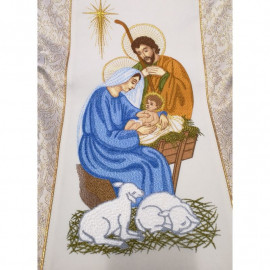
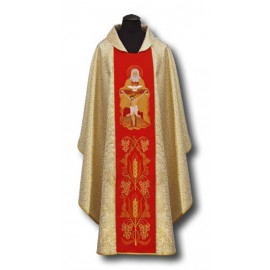
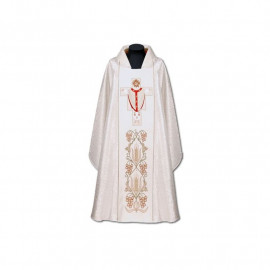
For a new parish or a mission church, the first purchase should be a white, green, red and violet chasuble. Black and rose are optional. A simple, well-made chasuble in each color is more useful than a large collection in one color. Our embroidered chasuble collection includes models from $104, so a basic set is within reach of most parishes.
Why the Chasuble Matters
The chasuble is not merely a ceremonial garment. It is a visible sign of the priest's ministry and of the unity of the Church. Its color marks the liturgical season; its cut and ornament express the dignity of the Eucharist; its shape recalls the yoke of Christ. When the priest wears the chasuble, the congregation sees the Church's faith in visible form.
The Roman, Gothic and semi-Gothic cuts all serve the same purpose. The choice between them is a matter of liturgical tradition, parish preference and the celebrant's build. What matters is that the vestment is worn with care and in the correct color.
How to Choose a Chasuble
Choose the color set first, then the cut, then the fabric and embroidery. A Roman chasuble is more fitted; a Gothic chasuble is fuller; a semi-Gothic chasuble sits between them. Check the size and what is included — most of our listings mention a matching stole. If the parish has several priests, order duplicates in the most-used colors and keep a spare white or green for busy seasons.
For a deeper comparison, see our guide to Roman vs Gothic chasubles and our article on how to choose a chasuble.
Frequently Asked Questions
Q: Can a priest celebrate Mass without a chasuble?
A: Normally no. GIRM 336 names the chasuble as the vestment proper to the priest celebrant at Mass. The main exception is concelebration, where priests other than the principal celebrant may wear the alb and stole.
Q: Can a priest wear a cope instead of a chasuble at Mass?
A: No. The cope is a processional cloak used for non-Eucharistic services such as Benediction and processions. It does not replace the chasuble at Mass.
Q: What does GIRM 336 actually require?
A: It requires the chasuble for the priest celebrant at Mass, worn over the alb and stole. It also allows the cope for non-Eucharistic services.
Q: Can a deacon wear a chasuble?
A: No. A deacon wears a dalmatic. The chasuble is the vestment of the priest celebrant.
Q: What should a parish do if it has no chasuble in the right color?
A: Repair or borrow one, or use a chasuble from another parish. A shortage is a practical problem to solve, not a liturgical permission to celebrate Mass without the proper vestment.


