



The Chrism Mass is the Mass at which the bishop blesses the Oil of the Catechumens and the Oil of the Sick and consecrates Sacred Chrism for the whole diocese. It is normally celebrated in the cathedral during Holy Week, traditionally on the morning of Holy Thursday, and it is the moment when every parish receives the oils it will use for the coming year — which is why parishes check their oil stocks before Easter.
When Is the Chrism Mass Celebrated?
The Roman Missal places the Chrism Mass on Holy Thursday, ordinarily in the morning, with the bishop surrounded by the priests of the diocese. Because many dioceses find Thursday morning impractical — priests need to be back in their parishes for the Evening Mass of the Lord's Supper — the Missal allows the Chrism Mass to be transferred to another day close to Easter, and many dioceses now celebrate it on Monday, Tuesday, or Wednesday of Holy Week, or even earlier. What does not change is the setting: the cathedral, the bishop, and the priests of the diocese gathered around him.
What Happens at the Chrism Mass?
The Chrism Mass is one of the most striking liturgies of the year. After the homily, the priests renew the promises made at their ordination, and the bishop prays for them and for the unity of the diocese. Then comes the heart of the celebration — the blessing of the oils:
- The Oil of the Catechumens is presented and blessed with a prayer asking that those preparing for baptism may receive strength and wisdom.
- The Oil of the Sick is presented and blessed with a prayer for the healing and comfort of those who receive it in the Anointing of the Sick.
- Sacred Chrism is presented last and consecrated — the bishop mixes balsam into the oil and prays the consecratory prayer, asking the Holy Spirit to sanctify it. Chrism is the only one of the three that is consecrated, and the only one that may not be blessed by a priest in case of necessity.
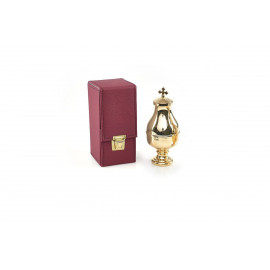
At the end of Mass, the oils are distributed to representatives of each parish, who carry them back in the vessels in which they were brought — traditionally glass or metal containers brought to the cathedral for this purpose.
Why It Matters for Parishes
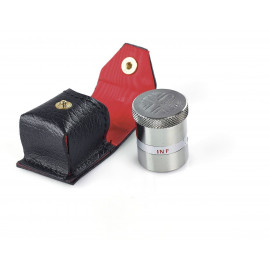
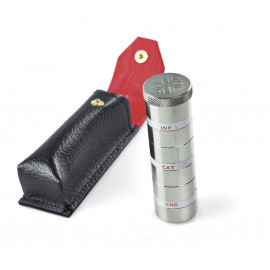
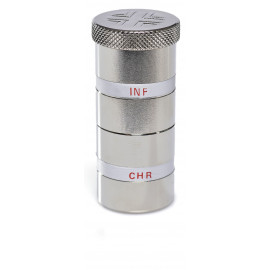
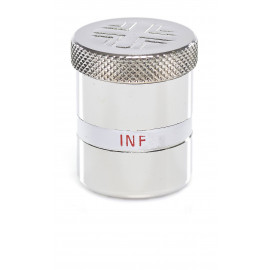
For sacristans and pastors, the Chrism Mass is the practical high point of the liturgical year. The oils received at the cathedral are poured into the parish's oil stocks and reserved in the ambry or a locked sacristy cabinet. Because the three oils look nearly identical, the stocks must be clearly labeled — INF, CHR, and CAT, or OI, OC, and SC — before they are filled.
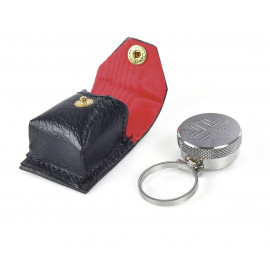
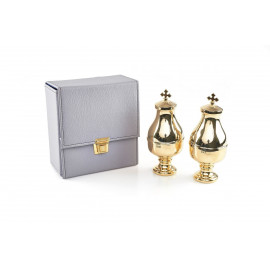
It is also the natural moment to check the condition of the parish's oil stocks: caps that no longer seal, tarnished plating, or worn labels are best replaced before Easter rather than during the year. A parish that keeps a triple stock in the sacristy, a double set at the baptismal font, and a single ring stock in the sick call bag will be ready for every celebration the new oils will serve. Our holy oil stocks — single, double, and triple, with the traditional labeling — ship worldwide from our workshop.
What Happens to the Old Holy Oils?
When the newly blessed oils arrive, the previous year's oils are disposed of reverently. Dioceses commonly direct that the old oils be burned; they are never poured down an ordinary drain, because the oils have been blessed and used in the sacraments. Oil that has touched a person is not returned to the vessel, and wash water that has touched the holy oils is poured into the sacrarium.
Frequently Asked Questions
Q: When is the Chrism Mass celebrated?
A: Ordinarily on Holy Thursday morning in the cathedral; with the permission of the Holy See, many dioceses transfer it to another day of Holy Week or shortly before Easter.
Q: Are the holy oils blessed every year?
A: Yes. The Church blesses new oils every year at the Chrism Mass, and parishes use them until the following Holy Week.
Q: How do parishes get the holy oils?
A: Parish representatives receive the oils at the end of the Chrism Mass in the cathedral and bring them back to the parish, where they are poured into the parish's oil stocks and reserved in the ambry or sacristy.
Q: What happens to the old holy oils?
A: According to diocesan custom, old oils are burned rather than discarded. They are never poured down a regular drain, and used oil is not returned to the stock.
Q: Can priests bless the oils themselves?
A: Only the Oil of the Sick may be blessed by a priest, and only in case of true necessity. The Oil of Catechumens is blessed by the bishop, and Sacred Chrism is consecrated by the bishop alone.
