An Easter Sunday chasuble should do three things at once: carry the white or gold of the Resurrection, fit the priest who will wear it, and match the vestments already used in the sacristy. This guide walks through the choices — colour, cut, size, fabric and budget — so the vestment is ready before the Easter Vigil.
What Makes a Chasuble an Easter Chasuble?
An Easter chasuble is a white or gold chasuble worn from the Easter Vigil through the Easter season. The colour is the first marker; the embroidery is the second. The most common motifs are the Risen Christ, the Lamb of God (Agnus Dei), the empty tomb, Alpha and Omega and the victory cross.
The cut is not specific to Easter. A parish can choose a Roman, Gothic or semi-Gothic chasuble and still wear it for the whole season. What makes the vestment an Easter chasuble is the combination of colour and Resurrection symbolism.
White, Ecru or Gold?
White is the liturgical colour of Easter. Ecru is a warmer, ivory-toned white that many parishes prefer for its softer look in candlelight. Gold may be used in place of white on more solemn occasions and is often chosen for the Easter Vigil and Easter Sunday.
If you are buying one vestment for the whole season, white or ecru with gold embroidery is the most versatile choice: it covers Easter, Christmas and other solemn feasts. If the parish already has a white set, a gold chasuble adds solemnity for the Vigil without duplicating the existing vestment.
Roman, Gothic or Semi-Gothic?
The Roman cut is shorter and more fitted, with a straight front and back. The Gothic cut is fuller and falls in wide folds from the shoulders. The semi-Gothic cut sits between the two: a fuller silhouette than the Roman, with a more structured front than the Gothic.
Match the cut to the vestments the parish already uses. A Gothic chasuble in a large sanctuary reads as a solemn vestment; a Roman or semi-Gothic cut is easier to wear in a smaller church and is often chosen for the Traditional Latin Mass.
Size and Fit
Most Easter chasubles in our collection measure 125–130 cm (49–51 in) from shoulder to hem and 158–160 cm (62–63 in) across the width. The exact dimensions are listed on every product page, because a few centimetres change the way the vestment falls.
Some models can be adjusted to individual needs, and the lining can be added on request. If the priest already has a vestment that fits well, measure it and compare the length and width before ordering.
Fabric and Embroidery
Damask and brocade give the vestment structure and a subtle sheen. Velvet is used for bands and panels that frame the embroidery. Lightweight stretch fabric keeps a large chasuble comfortable during a long liturgy.
Our vestment fabrics are airy, crease-resistant and suitable for standard washing and ironing. Each product page states the fabric and the embroidery technique used for that model.
What Should Be Included?
Most of our chasubles come with a matching inner stole, usually with embroidered gold crosses on both ends and on the neck. The product description lists exactly what is included, so check whether you are ordering the chasuble alone or a complete set.
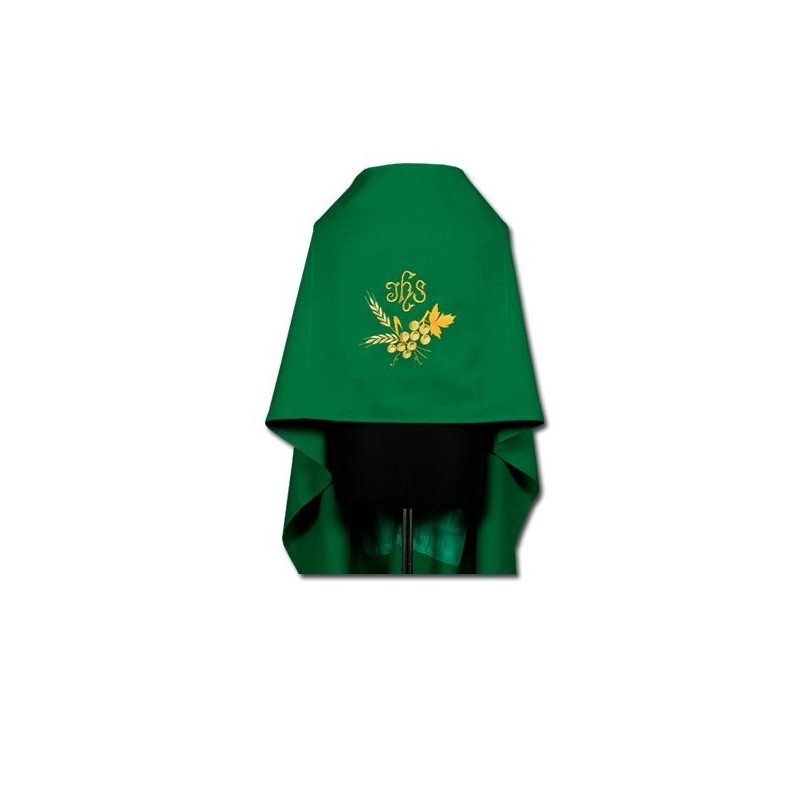
If the parish also needs a cope for the Easter Vigil procession, a chalice veil or altar linens, order them in the same fabric and colour so the set reads as one vestment rather than a collection of pieces.
Budget: What Changes the Price
Easter chasubles in our collection range from $201 to $440. The difference comes from the fabric, the amount and technique of the embroidery, and the cut. A damask or brocade chasuble with a single embroidered panel sits at the lower end; a fully embroidered model with velvet bands and a matching stole sits at the upper end.
Adding a lining or adjusting the size is made to order and affects the price. If the budget is fixed, choose the fabric and cut first, then decide whether the embroidery or the lining matters more.
A Checklist Before Easter Sunday
- Confirm the colour used in the parish: white, ecru or gold.
- Match the cut to the vestments already in the sacristy.
- Measure the length and width of a vestment that fits well.
- Check whether the set includes an inner stole.
- Order early if the vestment is made to order — production takes 3–14 business days.
- Press the vestment and hang it on a wide hanger before the Vigil.
Frequently Asked Questions
Q: Can an Easter Sunday chasuble be worn at Christmas?
A: Yes. White and gold are also used at Christmas and at other solemn feasts where white is prescribed. A white chasuble with gold embroidery is the most versatile solemn vestment a parish can own.
Q: Should the chasuble be white or gold?
A: Both are permitted. White is the liturgical colour of the season; gold may be used in place of white on more solemn occasions. Many parishes use gold for the Easter Vigil and Easter Sunday and white for the rest of the season.
Q: Does the chasuble include a stole?
A: Most of our chasubles come with a matching inner stole. The product description lists exactly what is included.
Q: How long does production take?
A: In-stock orders are dispatched within 72 hours and delivered by FedEx in 2–5 business days. Made-to-order vestments need an additional 3–14 business days for production.
Q: Are the vestments made in Poland?
A: Yes. Every chasuble and stole is sewn and embroidered in our workshop in Lublewo Gdańskie, Poland, where we have been producing liturgical vestments since 2015.
Where to Find an Easter Sunday Chasuble
Our Easter chasubles collection includes white, ecru and gold vestments with the Risen Christ, the Lamb of God and victory cross motifs. For the wider range, see the chasuble collection and the white chasubles.
For the colours of the whole season, read Easter Vestment Colors: What to Wear from Vigil to Pentecost.