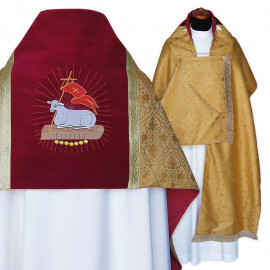
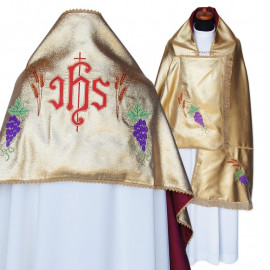
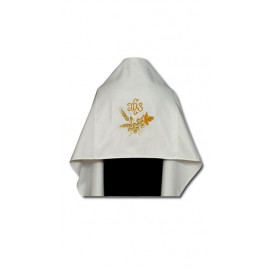
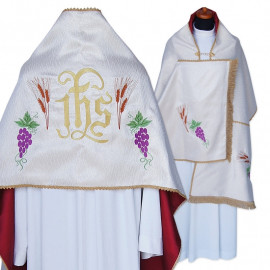
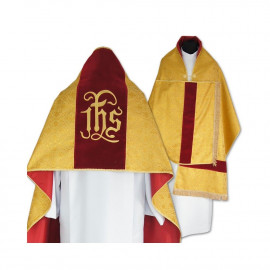

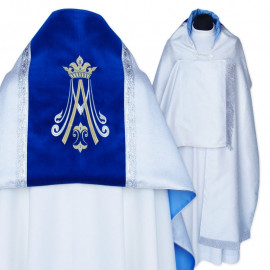
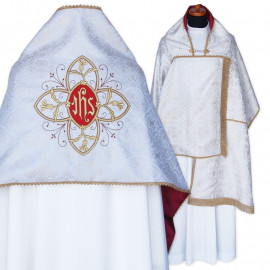
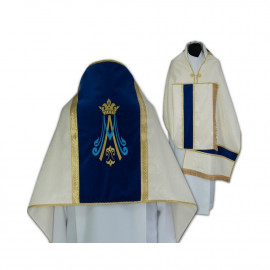
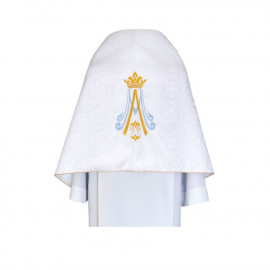
The humeral veil normally follows the liturgical color of the day. White and gold are used for Christmas, Easter, and feasts of the Lord; red for Pentecost, Good Friday, and martyrs; green for Ordinary Time; violet for Advent and Lent; rose for Gaudete and Laetare Sunday. Black is associated with the Dominican rite and with funeral use where permitted.
The color is not decoration. It is a visual language that ties the vestment to the season and to the mystery being celebrated. This guide explains each color and when to use it.
Why the Color Matters
The Church uses colors to mark the liturgical year. The same logic that governs the chasuble and the cope governs the humeral veil: the veil should match the color of the day, or be white or cloth of gold. A unified set — cope, humeral veil, chalice veil, and bursa — helps the whole sanctuary speak with one voice.
If you are buying for a parish, the practical answer is to own at least the four core colors: white/gold, red, green, and violet. Rose and black are occasional needs.
White and Gold
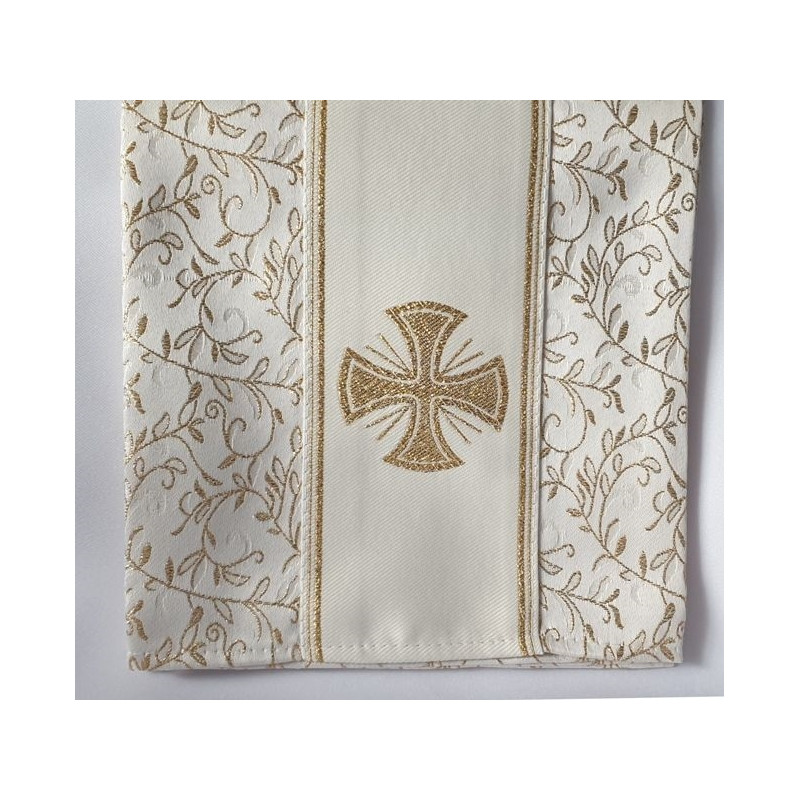
White and gold are used for Christmas and Easter, feasts of the Lord, feasts of the Blessed Virgin and of saints who were not martyrs, and weddings. White is also common at funerals in many places, where it expresses hope in the resurrection. Gold is often used as a solemn alternative to white, especially for Christmas, Easter, and Corpus Christi.
Red
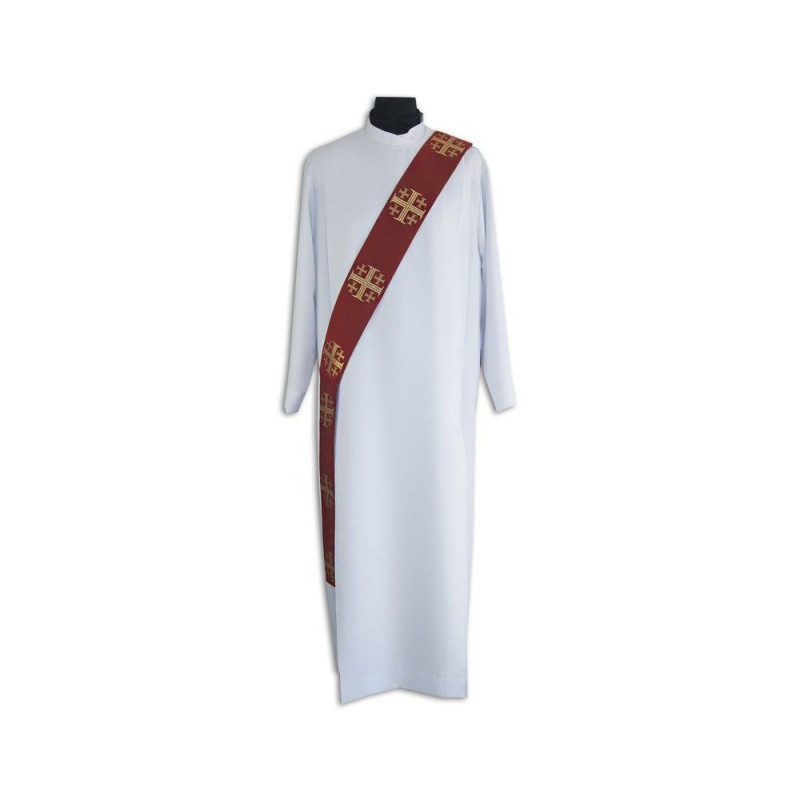
Red is used for Pentecost, Good Friday, Palm Sunday, the feasts of apostles and martyrs, and Confirmation. It recalls the fire of the Holy Spirit and the blood of the martyrs. A red humeral veil is a common choice for Pentecost and for the feasts of the apostles.
Green
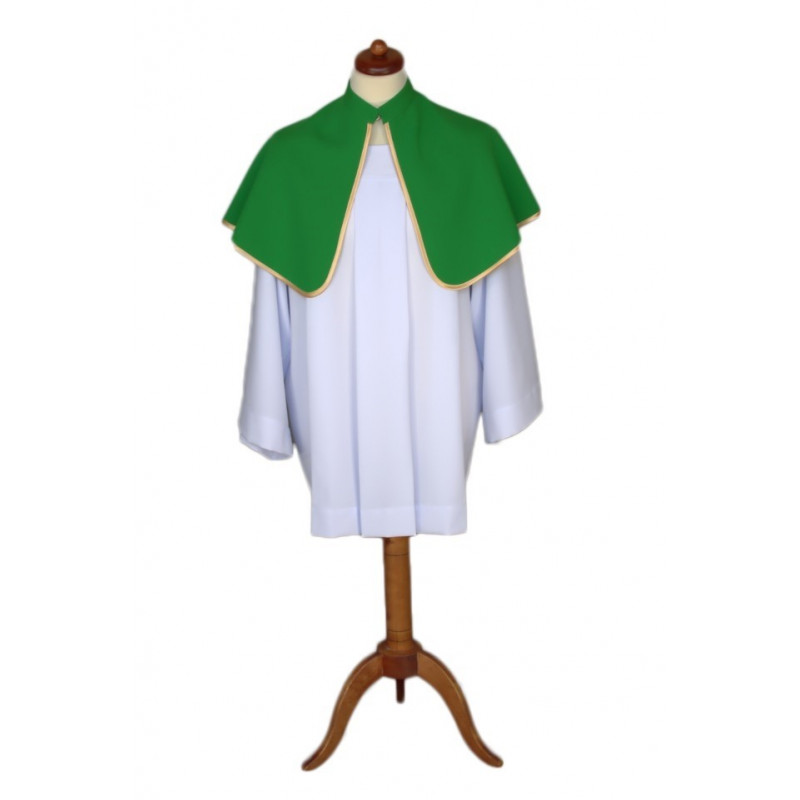
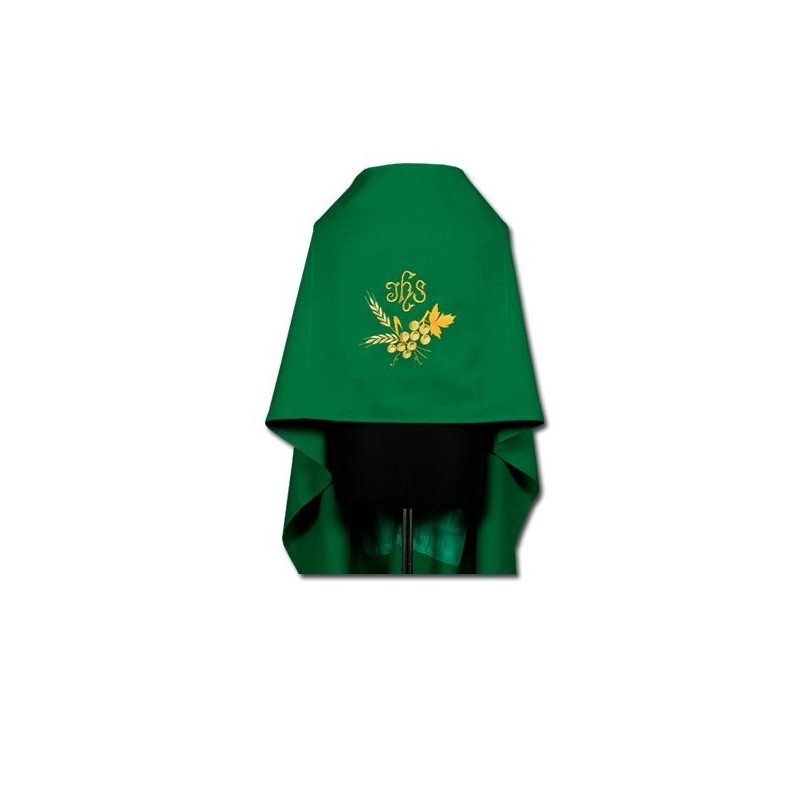
Green is the color of Ordinary Time. It speaks of growth and hope. A green humeral veil is used at Benediction and in processions during the weeks of Ordinary Time, and it is one of the most frequently needed colors in a parish sacristy.
Violet and Purple
Violet (often called purple) is used in Advent and Lent, and in the Sacrament of Reconciliation. It is a penitential color, a sign of preparation and conversion. A violet humeral veil is used at Benediction during Advent and Lent, and at other penitential celebrations.
Rose
Rose is used on Gaudete Sunday (the Third Sunday of Advent) and Laetare Sunday (the Fourth Sunday of Lent). It is a lighter, joyful note within the penitential seasons. Rose veils are rare but valued for those two Sundays.
Black
In the Roman Rite the humeral veil is normally seen in every liturgical color except black; black is associated with the Dominican rite and with funeral use where permitted. Some communities keep a black veil for Requiem Masses and funerals. If you need one, check the product description and the local liturgical norms.
Matching the Cope and Chasuble
The humeral veil is usually worn over the cope at Benediction, so the two should match in color and, where possible, in fabric and embroidery. If you are ordering a new set, choose the cope first and then match the veil to it. The same logic applies to the chalice veil and the bursa.
Browse our humeral veils, copes, and chasubles to build a coordinated set.
Practical Tips for Sacristans
Store each color separately and label the bag or shelf with the color and size. A white veil kept in the same bag as a red one can pick up dye over time, and a heavy velvet veil can crush the embroidery of a lighter satin piece. Keep the cope, humeral veil, chalice veil, and bursa of one set together so the pieces are found as a unit.
Check the set before each major solemnity. Look for faded gold thread, loose clasps, and creases that no longer fall out. A veil that has faded unevenly will look different under sanctuary lighting, even if the color still matches on the shelf. If a piece is worn beyond repair, replace it as part of the set rather than introducing a slightly different shade.
Humeral Veil Colors FAQ
Q: What color humeral veil is used at Benediction?
A: The veil normally follows the liturgical color of the day, or is white or cloth of gold. At Corpus Christi and on solemnities of the Lord, white or gold is usual.
Q: Is a black humeral veil allowed?
A: In the Roman Rite the humeral veil is normally used in every liturgical color except black; black is associated with the Dominican rite and with funeral use where permitted.
Q: What color is used at Corpus Christi?
A: White or gold. Corpus Christi is a solemnity of the Lord, so the liturgical color is white, often with gold vestments for the procession.
Q: What color for a funeral?
A: Black or white, depending on local custom and the liturgical norms. In many places white is now common at funerals as a sign of hope in the resurrection.
Q: Can a humeral veil be white instead of the day's color?
A: The veil normally follows the color of the day; white or cloth of gold is also permitted, especially for solemn exposition and processions.
Q: How many humeral veils should a parish own?
A: At least the four core colors — white/gold, red, green, and violet — with rose and black as occasional needs. A second white veil is useful for funerals and weddings.
Related reading: humeral veils · Benediction vestments · copes · chalice veils.