
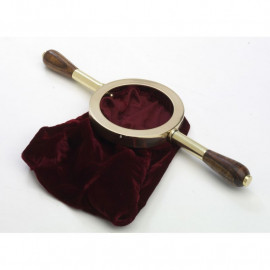
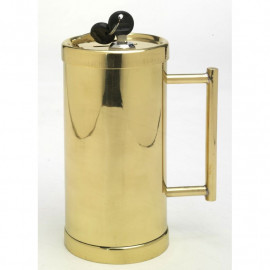
Every Sunday the same question goes through the pews, and it is a fair one: where does the money in the collection basket actually go? The short answer is the one the Order of Mass gives — "the support of the Church and the care of the poor". The longer answer is a parish budget, a diocesan assessment and a set of charitable works that most congregations never see in detail.
What the Church Actually Says
The General Instruction of the Roman Missal (73) speaks of "money or other gifts for the poor or for the Church" and requires only that they be put "in a suitable place away from the Eucharistic table". The Order of Mass is slightly more explicit: monetary gifts may be brought forward "for the support of the Church and the care of the poor".
Canon law adds the framework. The faithful are obliged to assist with the needs of the Church, and the diocesan bishop has the right to issue norms on collections; no one may be compelled to contribute, and a collection taken for a stated purpose must be used for that purpose. In other words: the collection is not a fee, and designated gifts are not discretionary income.
The Parish Budget
For most parishes the Sunday collection is the largest single line of ordinary income. It pays for the things that keep a church open:
- Worship — hosts, wine, candles, incense, linens, vestments, sacred vessels, and the maintenance of the organ.
- Utilities — heating, electricity, water; in older churches this is a substantial figure.
- Buildings — roof, masonry, heating plant, insurance, and the slow accumulation of a fabric fund.
- People — clergy support, sacristan, music director, office staff, cleaners.
- Ministries — catechism, youth work, altar servers, liturgical formation.
A parish finance council normally reviews these figures monthly and reports to the congregation at least once a year. If your parish does not publish anything, that is a question worth asking politely.
The Diocesan Assessment
Parishes do not keep everything they collect. Most dioceses levy an assessment — sometimes called a cathedralicum or a parish assessment — calculated on ordinary income, which funds the bishop's office, seminary formation, diocesan tribunals, Catholic schools support and central services. The percentage varies widely between dioceses and is set locally, which is why two neighbouring parishes in different dioceses can look very different on paper.
Charitable Works and the Poor
The second purpose named in the Order of Mass is not decorative. In most parishes a portion of the collection — and, in many places, a second collection on particular Sundays — goes to the poor: a food pantry, a St Vincent de Paul conference, prison ministry, hospital chaplaincy, disaster appeals and missionary support. Some of this leaves the parish immediately; some is held in a discretionary fund that the pastor uses for families in crisis.
This is also why a collection taken for a named appeal cannot simply be absorbed into the general fund. Designated money stays designated.
How Parishes Report the Figures
Transparency has improved sharply in the last two decades. A typical parish now publishes an annual financial report with income by source and expenditure by category, and many publish quarterly bulletins. Dioceses publish their own audited accounts. If you want to know where the collection goes in your parish, the three documents to ask for are the annual financial report, the parish budget and the finance council minutes — all of which are normally available on request.
What the Collection Is Not
- It is not a membership fee. No one is obliged to give a set amount, and no one may be compelled to contribute.
- It is not the same as the offering of the bread and wine. The gifts of bread and wine are the matter of the Eucharist; the collection accompanies them.
- It is not the only way to give. Electronic giving, standing orders, legacies and direct donations to parish charities all fund the same works.
- It is not private. The money is handled by two people, counted in a closed room, recorded and banked intact.
Frequently Asked Questions
Q: What percentage of the collection stays in the parish?
A: Most of it, in most dioceses — but not all. The parish retains ordinary income and pays a diocesan assessment calculated on that income; the percentage is set locally and varies from diocese to diocese.
Q: Do Catholics have to give 10 percent?
A: No. The Old Testament tithe of one tenth is often quoted as a benchmark, but for Catholics it is a counsel rather than a rule, and no one may be compelled to contribute. Each person gives according to their means.
Q: What happens to second collections?
A: They are taken for a named purpose — a diocesan appeal, a mission, a disaster, the Holy Land — and must be used for that purpose. They are not general income.
Q: Can I give to the collection by card?
A: Not usually during Mass. Many parishes offer electronic giving through a website, app or QR code, and some provide a card reader at the door; the basket itself remains a cash-and-cheque collection.
Q: Who counts the collection?
A: Two people, never one, in a closed room, with a signed record. The funds are then deposited intact at the bank.
