
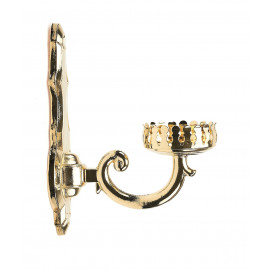
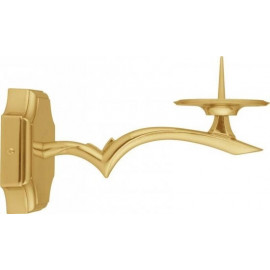
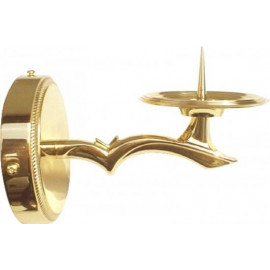
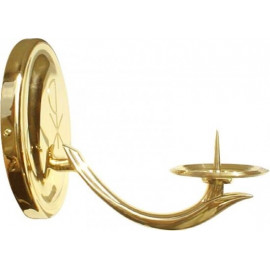
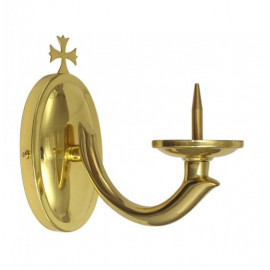
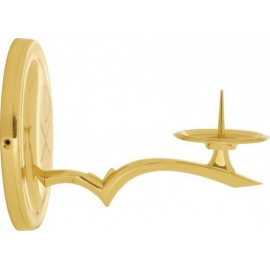
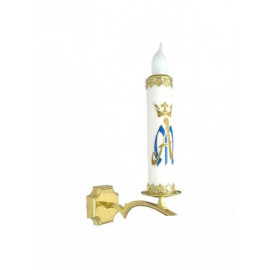
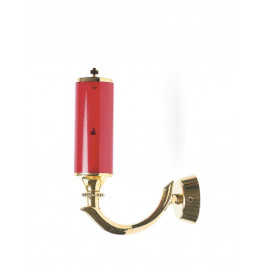
Every parish that hangs wall sconces faces the same question: real candles or electric? The two options look almost identical on the wall, cost about the same to buy, and yet behave very differently over ten years of daily use. Here is an honest comparison.
The Case for Candle Sconces
A candle sconce holds a living flame — the oldest language of Christian worship. Christ called himself the light of the world; the Easter candle is greeted as Lumen Christi; and at Mass real candles burn on the altar. Wall sconces with real candles continue that language along the walls of the church, and no bulb imitates the warm, moving light of a flame.
Candle sconces also require nothing you do not already have: candles, a lighter, and someone to light them before services. They suit walls at eye level that staff and volunteers can reach, and they are the traditional choice for the twelve consecration crosses and side chapels.
The Case for Electric Sconces
An electric sconce is the same cast-brass fixture with a bulb inside a candle-shaped sleeve. It lights with a switch — or a timer — and never needs a candle replaced. That makes it the practical choice for:
- High walls where nobody can reach the sconce to light a candle safely.
- Restricted buildings where fire regulations or insurance limit open flame.
- Unattended churches where a light should burn without staff present — for example on the consecration crosses or in a side chapel that is open during the day.
- Large naves where dozens of candle flames would need daily tending.
Safety and Insurance
Open flame is not dangerous when it is respected: a candle in a proper brass sconce, above eye level and away from textiles, is a normal part of church life. But some buildings — historic wooden churches, for example — operate under fire restrictions, and some insurers ask that devotional lights be electric. If your church falls into either category, electric sconces on the high walls plus candles at reachable levels is a common compromise.
Maintenance Over the Years
Candle sconces ask for candles, wicks and regular attention: wax drips have to be removed from the backplate, sockets kept clean, candles replaced. Electric sconces ask for almost nothing — an occasional bulb change — but they do depend on electricity and wiring. In both cases the brass itself is lacquered and needs only dry dusting; see how to clean brass without damaging the lacquer for the details.
Cost Comparison
The fixture costs are similar — a brass sconce is a brass sconce, whether it holds a candle or a bulb. The difference shows up in running costs: candles and labour over years, versus electricity and occasional bulbs. For a nave with twenty sconces lit daily, the numbers usually favour electric; for a chapel with six sconces used on Sundays, candles cost very little and give the better light.
The Hybrid Approach Most Parishes Use
In practice, most churches mix the two. Candle sconces go where people can see and reach them — the sanctuary, side chapels, the entrance. Electric sconces go where a flame cannot be tended — high on the nave walls and at the consecration crosses. This gives the church both the living flame at eye level and the reliability of electric light above. For a similar decision about the eternal light, see our electric sanctuary lamp guide.
What We Recommend
Decide sconce by sconce, not for the whole church at once. Start with the walls that are hardest to reach and make those electric; keep or add candle sconces where the flame is part of the experience. Our brass church wall lamp collection includes both formats in matching designs, so a single church can mix candle and electric sconces that look identical from the floor.
Frequently Asked Questions
Q: Can candle and electric sconces look identical?
A: Yes — our sconces share the same cast-brass backplates and candle cups whether they hold a candle or an electric candle sleeve, so the two formats can be mixed in one church without a visible difference.
Q: Are electric candles allowed in a Catholic church?
A: For wall sconces and devotional lights, yes — electric versions are common, especially where open flame is restricted. The candles of the Mass itself are governed by the rubrics; see our GIRM guide for the details.
Q: Do electric sconces need special wiring?
A: They need a mains connection and must be installed by a qualified electrician in line with local codes. Many churches put electric sconces on a timer or a lighting circuit controlled from the sacristy.
Q: How often do candle sconces need attention?
A: Before and after services is enough in most churches: light the candles, replace them when spent, and remove wax residue while it is fresh. Sockets and backplates stay clean with occasional dry dusting.
Q: Which is better for consecration crosses?
A: Traditionally a candle, but because the crosses sit high on the walls, many churches use the electric version — the sconce marks the anointed place, and the light burns without anyone climbing to light it.
Related Reading
See our church wall lamps collection, the electric sanctuary lamp guide, and how to set up a Catholic church sanctuary.


