
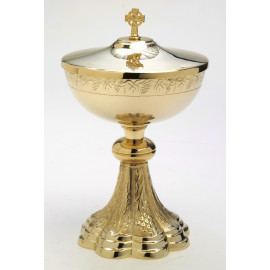
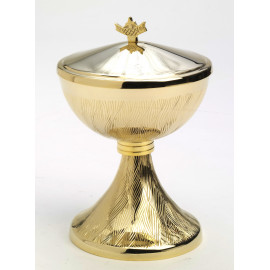
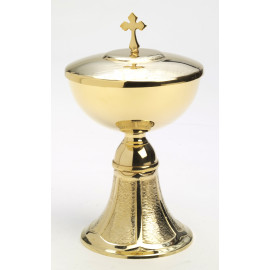
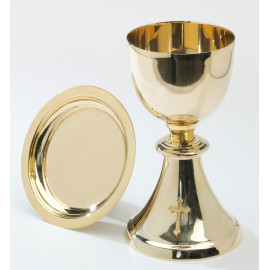
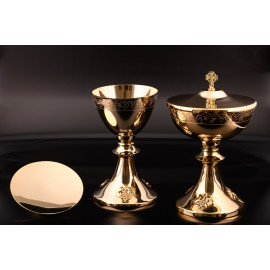
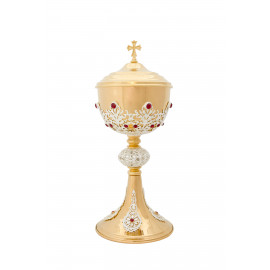
When shopping for a chalice, you'll often see two plating options: gold-plated and silver-plated. Both are beautiful, both are permitted, and both have their advantages. Here's how to choose.
For a broader comparison of chalice materials, also see our guide on brass vs silver chalices.
Gold-Plated Chalices
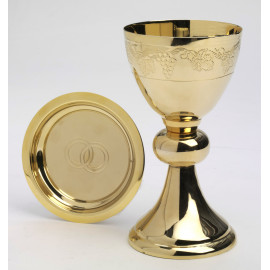
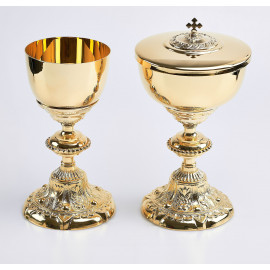
Gold plating gives the chalice a warm, rich appearance. It's the traditional choice for the interior of the bowl, since gold doesn't react with wine. Gold-plated exteriors are stunning but require less maintenance than silver — gold doesn't tarnish.
Pros: Doesn't tarnish, warm appearance, traditional, low maintenance
Cons: More expensive than silver plating, can scratch over time
Silver-Plated Chalices
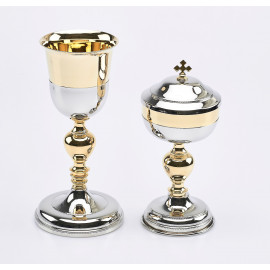
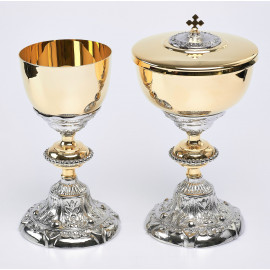
Silver plating gives a bright, luminous finish. It's classic and elegant but requires regular polishing to prevent tarnishing. The interior of the bowl should still be gold-plated (required by canon law), so the silver is typically on the exterior only.
Pros: Beautiful bright finish, classic look, affordable
Cons: Tarnishes regularly, needs frequent polishing, can scratch
| Feature | Gold-Plated | Silver-Plated |
|---|---|---|
| Tarnishing | No | Yes — regular polishing needed |
| Maintenance | Low | Medium to High |
| Appearance | Warm, rich | Bright, luminous |
| Price | Higher | Lower |
| Durability | High | Medium |
What I Recommend
For most parishes, I recommend a gold-plated chalice. The low maintenance and warm appearance make it the practical choice. If your parish has someone dedicated to polishing sacred vessels, a silver-plated chalice is a beautiful alternative.
When building your altar set, consider matching your chalice with a ciborium and paten in the same finish. We also carry monstrances and pyxes to complete your sacred vessel collection.
Frequently Asked Questions
Q: Does the interior of the chalice have to be gold-plated?
A: Canon law requires that the interior surface that contacts the Precious Blood be lined with a precious metal that doesn't tarnish. Gold is the standard choice. Silver alone is not permitted for the interior.
Q: How long does gold plating last?
A: With proper care, gold plating can last 10-20 years before needing re-plating. Avoid abrasive cleaners and store the chalice in a protective case when not in use.
Q: Can I mix gold and silver plated vessels?
A: Yes, many parishes use a mix of finishes. Some prefer gold for daily Mass and silver for solemn celebrations. The key is that each vessel is dignified and worthy of sacred use.
Related Products
Complete your altar with these sacred vessels:
- Liturgical Chalices — gold-plated and silver-plated options
- Liturgical Ciboria — matching ciboria for Mass
- Patens — for the consecrated host
- Chapel Monstrances — for Eucharistic adoration
- Tabor Monstrances — brass designs for exposition
- Catholic Pyx — for Communion to the sick
- Reliquaries — for sacred relics
- Chalice Linen Sets — matching linens for your vessels
- Chalice Cover Veils — to protect the chalice
Conclusion
Both gold and silver plating are beautiful choices. Pick the one that fits your parish's maintenance capacity and aesthetic preference. Either way, you're getting a worthy vessel for the Eucharist.
Browse our collection of gold-plated and silver-plated chalices. For more comparisons, see our guide on brass vs silver chalices. Don't forget matching chalice linen sets and ciborium veils to complete your altar setup.