

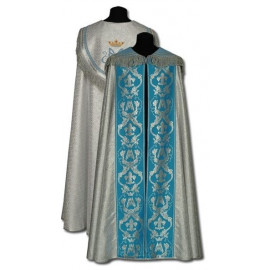
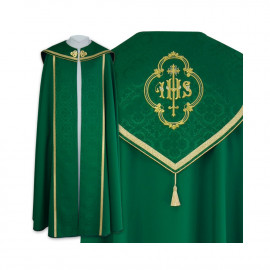
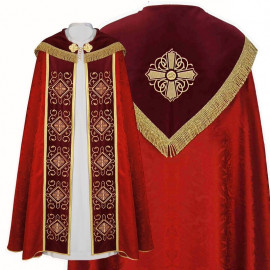

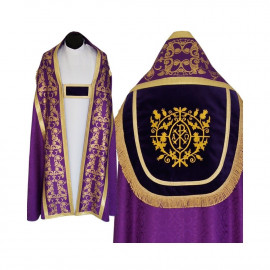
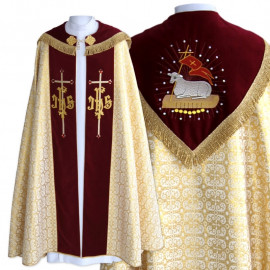
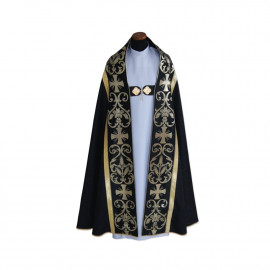
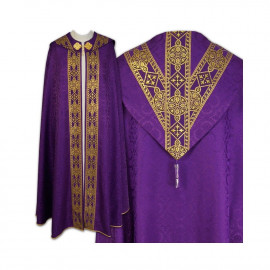
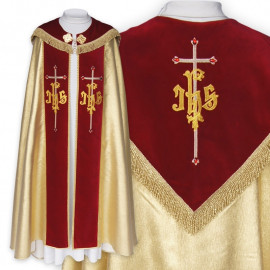
At Benediction of the Blessed Sacrament, the celebrant wears a cope — usually white or gold — over an alb and stole, and uses a humeral veil to hold the monstrance. The deacon, if present, wears a dalmatic; the acolytes wear cassock and surplice. The monstrance contains the Blessed Sacrament, and the rite concludes with the blessing of the people.
Benediction is one of the most solemn non-Eucharistic liturgies in the Catholic Church, and its vestments are chosen to honor the Real Presence. This guide explains each vestment and how to prepare for the rite.
What Is Benediction?
Benediction of the Blessed Sacrament is a liturgical service in which the Blessed Sacrament is exposed in a monstrance and the people are blessed with it. It is celebrated outside Mass, usually after a period of Eucharistic adoration, and it is the classic occasion for the cope and the humeral veil.
The Celebrant's Vestments
- Cope — the outer vestment, usually white or gold, worn over the alb and stole.
- Stole — worn under the cope, in the liturgical color.
- Alb — the white liturgical robe worn by all ministers.
- Humeral veil — the long veil used to hold the monstrance and to cover the hands during the blessing.
The cope is the vestment that distinguishes Benediction from Mass: the celebrant does not wear a chasuble, because Benediction is not the Eucharist. For the full comparison, see our guide to cope vs chasuble.
The Humeral Veil
The humeral veil is a long, narrow veil worn over the shoulders. The celebrant uses it to hold the monstrance, so that the hands do not touch the sacred vessel directly, and to give the blessing. It is usually made of silk or a rich fabric and matches the color of the cope. See our humeral veils.
The Monstrance
The monstrance is the vessel that holds the Blessed Sacrament for adoration and Benediction. It is usually made of gold or silver and may be veiled when carried in procession. For the range of styles, see our chapel monstrances.
Preparing for Benediction
- Prepare the altar with a white cloth and candles.
- Place the monstrance on the altar and expose the Blessed Sacrament.
- Vest the celebrant in alb, stole, and cope; the deacon in dalmatic.
- Have the humeral veil ready for the blessing.
- Arrange the music and the incense, if used.
The color of the cope follows the liturgical day, but white or gold is always appropriate before the Blessed Sacrament. See our cope colors guide for the full list.
Frequently Asked Questions
Q: What does the celebrant wear at Benediction?
A: An alb, stole, and cope — usually white or gold — with the humeral veil for the blessing.
Q: Is a chasuble worn at Benediction?
A: No. Benediction is not the Mass, so the celebrant wears the cope, not the chasuble.
Q: What is the humeral veil used for?
A: To hold the monstrance and to cover the hands during the blessing. It is worn over the shoulders.
Q: Can a deacon give Benediction?
A: A deacon may officiate at Benediction when permitted; he wears a cope for the service. At Mass, the deacon's vestment is the dalmatic.
Q: What color cope is used for Benediction?
A: White or gold is the most common; the cope may also follow the liturgical color of the day.
Conclusion
Benediction requires three things above all: a cope, a humeral veil, and a monstrance. Browse our Catholic copes, humeral veils, and monstrances to prepare for the rite.


