


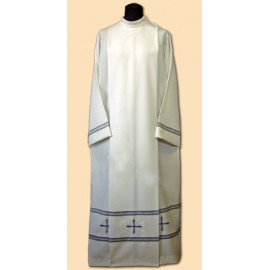
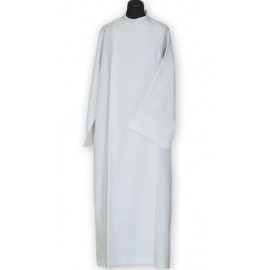

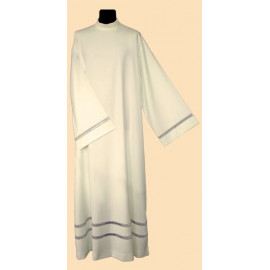
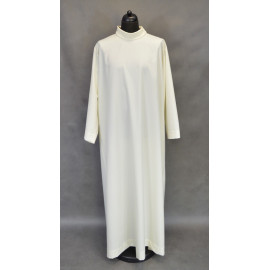
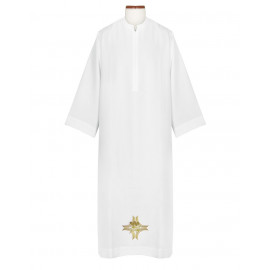
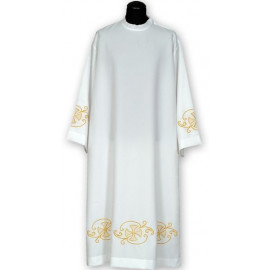

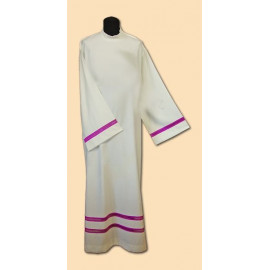
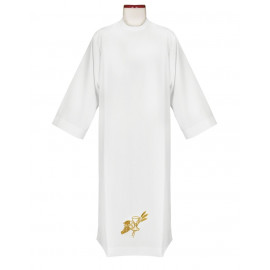
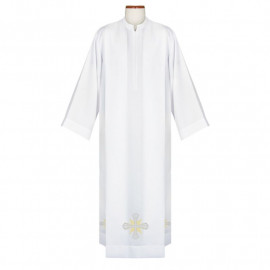


What Are Clergy Albs?
Clergy albs are long, white vestments worn by priests, deacons, and altar servers during liturgical celebrations. The alb is the foundational vestment — the garment that goes on first, before the stole, chasuble, or dalmatic. It is required for all ordained ministers and altar servers at Mass and other liturgical celebrations.
The alb has its roots in the Roman tunic, a common garment in the ancient world. Over time, it became specifically associated with liturgical worship. Today, it symbolizes the purity of baptism and the white garment given at baptism. When the priest puts on the alb, he prays: "Make me white, O Lord, and cleanse my heart."
Every priest, deacon, and altar server needs a quality alb. It is the most frequently worn vestment and should be chosen for comfort, durability, and appropriate appearance.
The name comes from the Latin alba, meaning "white" — the color of the baptismal garment the alb represents. In the traditional order of vesting, the priest puts on the amice first, then the alb, and finally secures it at the waist with a cincture. Every alb in this collection is cut to be worn that way: over an amice, under a stole and chasuble, with a cincture holding the drape clean.
What Types of Clergy Albs Are Available?
Clergy albs come in several options to suit different liturgical traditions and preferences:
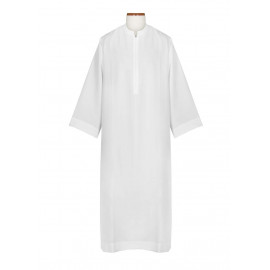
Traditional linen albs — the classic choice. Linen is breathable, durable, and has a beautiful drape. These are the most traditional and often the most elegant. Linen albs are appropriate for any liturgical celebration.
Polyester blend albs — more affordable and easier to care for. They resist wrinkles and can be machine washed. Good for daily use and travel. Polyester blend albs are popular for their practicality.
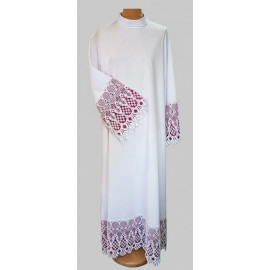
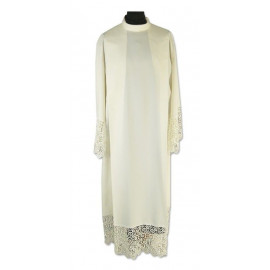
Lace albs — feature decorative lace at the cuffs and hem. These are popular for solemn occasions and cathedral use. Lace albs add beauty and solemnity to the liturgy.
Monastic albs — feature a hood and a more flowing cut. These are appropriate for monastic communities and priests who prefer the monastic style.
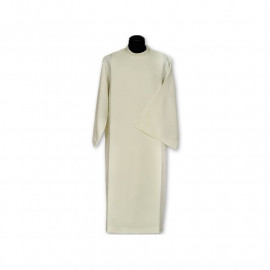
Cotton albs — soft and breathable, a middle ground between linen and synthetics; a practical choice for warm parishes. Wool-blend albs — warmer options for unheated churches and winter liturgies. Black albs — worn for funerals, Requiem Masses, and All Souls' Day. Off-white and ecru albs — a softer, warmer tone than pure white, popular in traditional and monastic communities.
How Do I Choose the Right Clergy Alb?
- Consider the fabric. Linen looks beautiful but needs careful handling. Polyester blends are easier to maintain. Choose based on your care preferences and liturgical needs.
- Check the fit. Albs should be long enough to reach the ankles but not drag on the floor. Many albs have adjustable necks or belts for a custom fit.
- Think about the occasion. A simple alb works for daily Mass. A lace alb is better for solemnities and special celebrations.
- Look for quality construction. Check the seams, hem, and any lace or embroidery for durability. A well-made alb will last for years.
- Consider the sleeves. Some albs have wide sleeves, others have fitted sleeves. Choose based on your preference and the style of your other vestments.
| Material | Care | Best For | Price Range |
|---|---|---|---|
| Linen | Dry clean or hand wash | Sunday Mass, solemnities | $50–$150 |
| Polyester blend | Machine washable | Daily Mass, travel | $30–$80 |
| Lace-trimmed | Hand wash or dry clean | Solemnities, cathedral use | $80–$200+ |
Alb vs. Cassock-Alb vs. Surplice: What's the Difference?
A cassock-alb is a hybrid garment: the full-length body of an alb combined with the close fit and stand-up collar of a cassock. It is worn without a separate cassock underneath, which makes it a convenient choice for altar servers and for clergy who prefer a neat, tailored look. A surplice is a shorter, wider white garment worn over a cassock — the standard choir dress for clergy and servers, but not a substitute for the alb at Mass.
In short: the alb goes on first and is girded with a cincture; the cassock-alb replaces the cassock and alb in one garment; the surplice is worn over a cassock for non-Eucharistic services. We stock cassock-albs and cassocks and clergy surplices alongside this collection, and our guide Alb vs. Surplice compares them side by side.
Who Can Wear a Clergy Alb?
Any baptized person serving in a liturgical ministry can wear an alb. Priests and deacons wear it as the base vestment under the stole and chasuble or dalmatic. Altar servers, lectors, and instituted acolytes wear it as their primary vestment. Lay ministers of Holy Communion may also wear an alb when distributing Communion.
Albs are not gender-specific — they are sized by length and fit, and this collection comes in four standard lengths from 164 cm to 182 cm (about 64.5–71.7 in).
How Are Our Clergy Albs Made?
Our albs are handcrafted in Poland (European Union) by vestment makers who have supplied Catholic parishes for decades. Each alb is cut from bolt fabric, hemmed with reinforced stitching, and finished by hand wherever the design includes embroidery or lace. Standard construction details include a stand-up or Roman collar, a reinforced button or zipper placket, and generous sleeve openings that fit comfortably over a cassock.
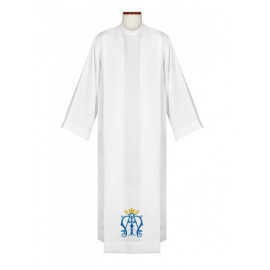
At the time of writing, this collection includes 54 clergy alb designs priced from $55 to $242, in four standard lengths from 164 cm to 182 cm. Embroidery options include the Jerusalem cross, Marian emblems, and the chalice motif; lace options include guipure and hemstitch finishes; fabrics include linen, cotton, polyester, and polyester-cotton blends.
How Much Does a Clergy Alb Cost?
Clergy albs in our store range from $55 for simple styles to $242 for richly embroidered linen designs. Most of our albs — lace-trimmed and embroidered models — fall in the $120–$242 range, with a few simpler designs around $95–$119. Because the alb is worn more often than any other vestment, many parishes keep two or three per priest so one can always be laundered and pressed. Orders over $100 ship free.
How Do You Care for a Clergy Alb?
Linen albs should be hand washed or dry cleaned. Polyester blends can usually be machine washed on a gentle cycle. Hang to dry or tumble dry on low. Iron while slightly damp for best results. Store albs on hangers to prevent wrinkles.
Frequently Asked Questions About Clergy Albs
Q: Do I need a cincture with my alb?
A: Yes, the alb is typically secured with a cincture (rope belt). The cincture is worn around the waist and can be white or the liturgical color of the day.
Q: Can altar servers wear the same albs as priests?
A: Altar servers wear albs that are similar in style but often simpler and sized for younger wearers. Many churches have a supply of server albs in various sizes.
What is the difference between an alb and a chasuble?
The alb is the white base vestment worn by priests, deacons, and altar servers; the chasuble is the outer vestment worn by a priest over the alb and stole at Mass. Everyone serving in the sanctuary wears an alb — only the celebrating priest (and concelebrants) wears a chasuble.
Do clergy albs come in different colors?
Yes. Most albs are white or off-white (ecru), but this collection also includes red, violet, and black albs — black is worn for funerals and Requiem Masses, while red and violet follow the liturgical season. White remains the standard for Mass.
What is an amice, and do I need one with an alb?
The amice is a white cloth worn around the shoulders and neck, under the alb. It was originally a neck cloth and remains part of the traditional vesting prayers; in the modern rite it is optional, and a well-fitting alb with a stand-up collar can be worn without one.
How should a clergy alb fit?
An alb should reach the ankles — long enough to cover the cassock or street clothes, short enough not to drag on the floor. The sleeves should allow full arm movement, and the collar should sit close without gaping. This collection comes in four standard lengths from 164 cm to 182 cm (about 64.5–71.7 in); when between lengths, choose the longer for a fuller drape.
Are clergy albs available for women?
Yes. Albs are worn by anyone serving in a liturgical ministry, including women who serve as lectors, altar servers, or ministers of Holy Communion. Albs are not cut differently by gender — they are sized by height and fit, and the same size chart applies.
Browse Our Clergy Alb Collection
Explore our selection of clergy albs in linen, polyester, and lace styles. Available in sizes for priests, deacons, and altar servers. Find the right alb for your liturgical ministry. We also offer cinctures, surplices, and chasubles.
For more guidance, read our vestment guides: Alb vs. Surplice: What's the Difference?, the complete guide to liturgical vestments, and how to store vestments properly.