


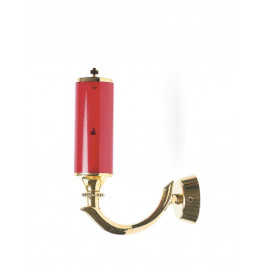


What Is a Sanctuary Lamp?
A sanctuary lamp (also called an eternal light or altar lamp) is a votive light placed near the tabernacle in Catholic churches to indicate the presence of the Blessed Sacrament. It is required by Canon Law (Canon 940) that "a special lamp which indicates and honors the presence of Christ is to shine continuously before a tabernacle in which the Most Holy Eucharist is reserved."
Why Does Every Catholic Church Have a Sanctuary Lamp?
The sanctuary lamp answers one simple question: is the Blessed Sacrament here? Wherever the lamp burns before the tabernacle, Christ is truly present — body, blood, soul, and divinity — reserved for Communion of the sick, for adoration, and for prayer. The custom is ancient: God commanded in Exodus 27:20–21 that a pure olive-oil lamp burn before Him without ceasing, and the early Christians carried the same practice from the Temple into their churches. Canon 940 makes it a requirement of Church law today, so the eternal light is more than decoration — it is a profession of faith in the Real Presence, visible from the moment you step into the nave.
Types of Sanctuary Lamps
- Hanging sanctuary lamps — suspended from the ceiling on a chain, usually directly in front of or beside the tabernacle
- Table sanctuary lamps — placed on a shelf, altar step, or stand near the tabernacle
- Wall-mounted sanctuary lamps — fixed to a wall or pillar, common in side chapels and smaller churches
- Electric sanctuary lamps — a bulb or LED flame where an open flame is not permitted
- Battery sanctuary lamps — portable lights for processions, home chapels, and temporary adoration
Sanctuary Lamp Sizes: From 7 cm to 40 cm
Sanctuary lamps are sized to the space they serve. Our collection runs from miniature 7 cm olive-oil lamps for home oratories, through 14–22 cm standing and table lamps for side altars and adoration corners, up to 38–40 cm hanging brass lamps for cathedral-scale sanctuaries. As a rule of thumb, choose a size at which the flame stays clearly visible from the back of the nave — a lamp that looks proportionate in a chapel can look lost in a large church — and remember that larger hanging lamps use correspondingly larger globes and oil reservoirs.
Fuel Options
Traditional sanctuary lamps burn olive oil or beeswax, though many parishes now use electric lamps for convenience and safety. Our lamps are compatible with both traditional and modern fuel sources: olive oil and lamp oil with a wick, replaceable liquid-wax cartridges, or a standard electric bulb or LED. Battery-operated models keep the light burning during processions, power outages, and temporary adoration setups.
Design
Our sanctuary lamps are crafted from brass, bronze, or glass with decorative elements such as crosses, wheat, grapes, and other Eucharistic symbols. Available in various sizes to suit different sanctuary settings.
Chancel Lamp, Altar Lamp, or Eternal Light — What's the Difference?
Nothing — they are all traditional names for the same lamp. A sanctuary lamp is also called a chancel lamp, altar lamp, everlasting light, or eternal flame. The custom goes back to Exodus 27:20–21, where God commanded that a pure olive-oil lamp burn before Him without ceasing; it passed from the Temple into Christian churches, and today the sanctuary lamp is the sign of the Real Presence, telling everyone who enters that the Blessed Sacrament is reserved in the tabernacle. Don't confuse it with vigil lights: those are the small votive candles the faithful light for their intentions, while the sanctuary lamp is the single lamp that honors Christ in the Eucharist.
Where Do You Hang a Sanctuary Lamp?
A hanging sanctuary lamp is suspended on a chain from the ceiling, usually directly in front of or beside the tabernacle, at a height where it can be seen from the nave. Standing and table lamps rest on a shelf or altar step near the tabernacle, and wall-mounted lamps are common in side chapels and small churches. Whichever style you choose, the lamp should be visible from the main entrance so visitors can see at a glance that the Blessed Sacrament is present. Red glass is the most traditional choice — the red flame is the sign Catholics look for.
Oil, Wax, or Electric Sanctuary Lamp?
Oil sanctuary lamps burn olive oil or beeswax with a living flame and are the most traditional option; most parishes prefer them for the tabernacle. Liquid wax lamps use replaceable wax cartridges and wicks — a cleaner alternative that still gives a real flame. Electric sanctuary lamps are the practical choice where open flames are not allowed: a bulb or LED imitates the candle flame, and battery-operated models keep a light burning during processions, power outages, or temporary adoration setups. Check with your diocese before ordering — some require a living flame, while others permit electric or battery lights.
How Much Does a Sanctuary Lamp Cost?
Our sanctuary lamps range from $52 for a compact glass oil lamp to $1,371 for a large hanging brass lamp. As a price guide: glass and olive-oil lamps run $52–$270, standing and table lamps $112–$238, battery-operated models $88–$145, and large hanging lamps $181–$1,371. Each lamp is crafted from solid brass, bronze, or glass.
How to Care for a Sanctuary Lamp
Because the lamp should never go out, maintenance matters. For oil lamps: keep the reservoir topped up, trim the wick regularly, and clean the glass globe with warm water and a soft cloth so the flame stays bright. Refillable olive lamps and wax cartridges make routine service quick — keep spares on hand so the light is never interrupted. For electric lamps: keep a replacement bulb in the sacristy and check the fitting at the start of each season. A light film of dust on brass can be wiped away with a dry cloth; avoid abrasive polishes on lacquered finishes.
When Is the Sanctuary Lamp Not Lit?
The lamp is extinguished after the Mass of the Lord's Supper on Holy Thursday and stays unlit until the Easter Vigil, when the Church waits at the tomb and the Blessed Sacrament is not reserved in the tabernacle. It may also be put out briefly whenever the tabernacle is empty — during cleaning or repairs, for example. At all other times, Canon 940 requires the sanctuary lamp to shine continuously, day and night.
Frequently Asked Questions About Sanctuary Lamps
What is a sanctuary lamp used for?
A sanctuary lamp is used to indicate and honor the presence of the Blessed Sacrament in the tabernacle. Its continuous flame tells everyone entering the church that Christ is truly present in the Eucharist — the same Lord we receive in Holy Communion. Canon 940 of the Code of Canon Law requires a special lamp to shine continuously before a tabernacle in which the Most Holy Eucharist is reserved.
Does the sanctuary lamp have to be red?
Red is the most common and most traditional color, and the red glass globe is what most Catholics recognize, but the Church does not strictly require red. Clear or amber glass is also used. What matters is that the light burns continuously and is easily seen by the faithful.
Is the sanctuary lamp always lit?
Yes — whenever the Blessed Sacrament is reserved in the tabernacle, the sanctuary lamp shines day and night. The one regular exception is the period between Holy Thursday and the Easter Vigil.
Can I use a sanctuary lamp at home?
Yes. Small oil, electric, and battery-operated lamps are often used in home chapels and adoration corners. For safety, choose an electric or battery model where an open flame would be unattended, and keep the lamp near your home altar or icon corner.
What is the difference between the nave and the sanctuary?
The sanctuary is the area around the altar where the priest celebrates Mass; the nave is the main body of the church where the congregation sits. The sanctuary lamp hangs in the sanctuary, near the tabernacle, so it is visible from the nave.
Why is the sanctuary lamp important?
Because it points to the greatest gift the Church has: the real, abiding presence of Jesus Christ in the Blessed Sacrament. The lamp is a silent announcement that the tabernacle is not empty — that Christ is there for anyone who walks in to visit, pray, or adore. That is why the Church has kept a light burning before the Blessed Sacrament since antiquity and why Canon 940 protects the practice.
What oil do sanctuary lamps use?
The most traditional fuel is pure olive oil, echoing the Temple lamp of Exodus 27. Beeswax and liquid-wax cartridges are common alternatives that give a clean, steady flame, and purpose-made lamp oil is also widely used. Some dioceses specify which fuels are acceptable, so check local practice before ordering. Our olive lamps work with olive oil or lamp oil, and our wax models take standard cartridges.
How long does a sanctuary lamp burn?
The sanctuary lamp is meant to burn continuously, day and night. How long a single filling lasts depends on the lamp: large olive-oil reservoirs can burn for days to weeks, while liquid-wax cartridges typically last several days. Battery-operated lamps run on a single charge or battery set, and electric lamps burn indefinitely as long as power is connected. Whatever the fuel, plan the refill before the flame dies — the lamp should never be left to go out on its own.
Sanctuary Lamp Guides & Related Items
Learn more in our guides: what is a sanctuary lamp and why every Catholic church has one, how to set up a Catholic church sanctuary, and the meaning of the Paschal candle. For the practical side, see choosing an electric sanctuary lamp, how to hang a hanging sanctuary lamp, and sanctuary lamps for the home. Complete your sanctuary with brass church wall lamps, altar candlesticks, sanctuary bells, and thurible, boat & spoon sets.
Related Reading
For the vessels that hold the relics of saints, see our reliquaries.
For Benediction of the Blessed Sacrament, the celebrant wears a cope; see our cope collection.
