

If you are vesting a girl for the first time, the question is practical: what does she actually put on? At most Catholic parishes the answer is a long skirt or cassock with a white surplice over it — or, in some parishes, a one-piece white alb. The exact combination is set by parish and diocesan custom, not by a single universal rule.
This guide explains the three common options, the colors you are likely to see, how to choose a size, and how to vest with reverence. It is written for sacristans, parents, and altar server coordinators who need to order the right garments the first time.
The Short Answer: What Do Altar Girls Wear?
An altar girl normally wears a long skirt or cassock as the base garment and a white surplice or cotta over it. The skirt or cassock covers her everyday clothes; the surplice is the liturgical vestment that gives the server team its uniform look. In parishes that prefer a single garment, she wears a white alb instead.
All three options are legitimate. The Church has permitted female altar servers since 1994, when the Holy See clarified Canon 230 §2; the diocesan bishop sets the norms, and the parish applies them. If you are unsure what your parish expects, ask the sacristan or liturgy coordinator before ordering.
Option 1: A Skirt and Surplice
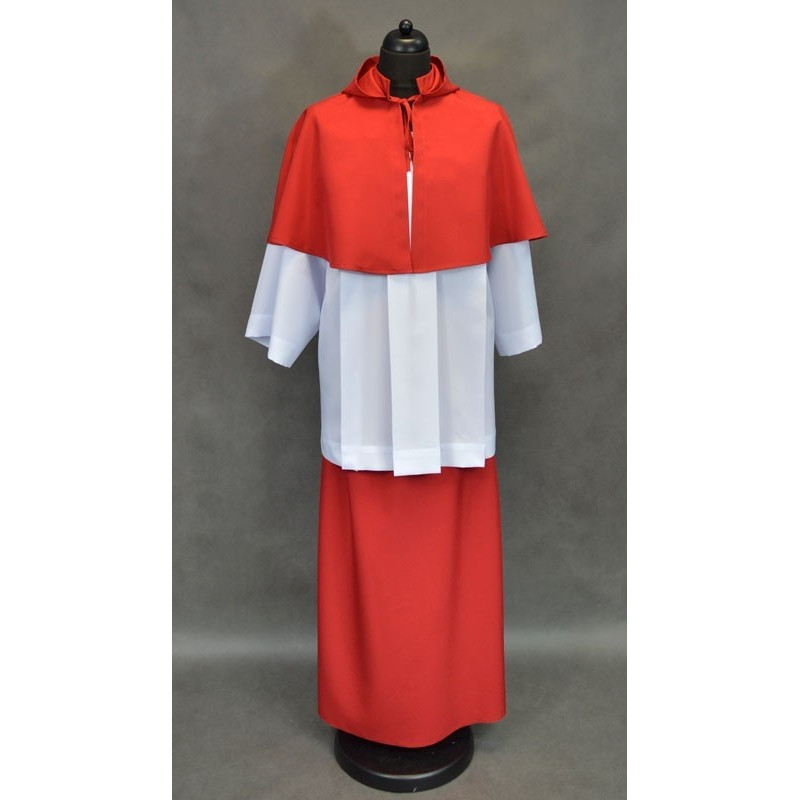
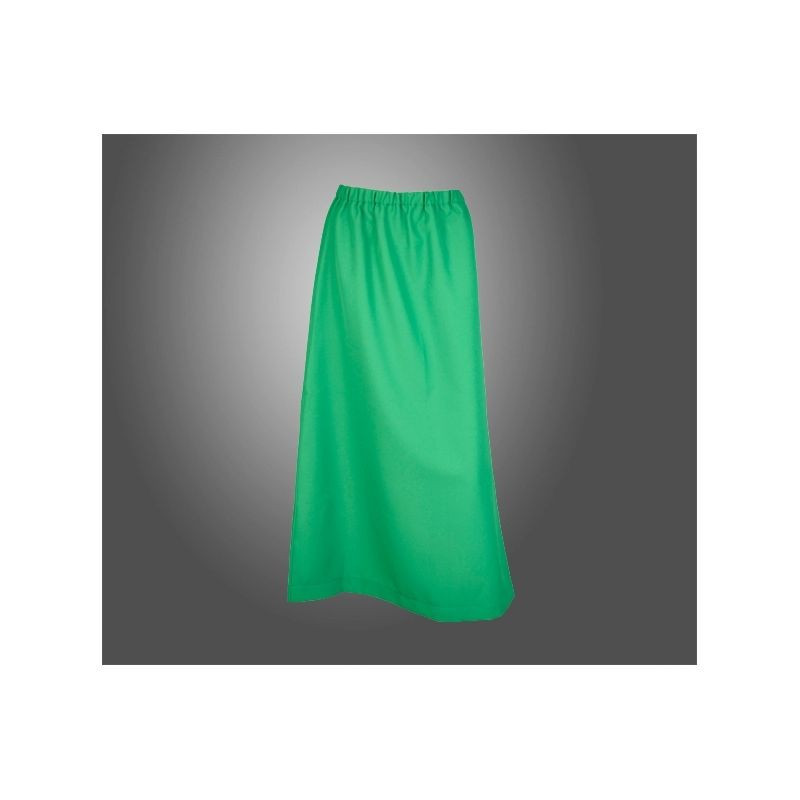
A skirt-and-surplice set is the most common vesture for girls in parishes that use a distinct female server outfit. The skirt is long, usually ankle-length, with an elastic waist so it can be put on quickly and adjusted by the server. The surplice — a white, loose garment with wide sleeves — is worn over the skirt. A cotta is a shorter, often lace-trimmed version of the same idea.
The advantage is flexibility: the same skirt can be worn with a fresh surplice, and the skirt can be ordered in the parish's color. Our altar server skirts come in white, black, red, green, and violet, in sizes from 128 to 194 cm. The single skirt is $36; red and green skirt-and-cape sets are $82. The surplice is a separate garment — see our altar server surplices.
The disadvantage is that it is two garments. The skirt and surplice have to match in length and color, and both need to be stored and laundered. For a large parish, that is still usually cheaper than replacing full albs as children grow.
Option 2: A Cassock and Surplice
A cassock is a full-length robe, usually black or a liturgical color, buttoned from neck to hem. It is the traditional server garment for boys and men, and many parishes use the same cassock for girls. A surplice is worn over it, just as with a skirt.
The cassock gives a very clean, formal line and works well when the parish already owns a set of cassocks in multiple sizes. It is less forgiving to fit than a skirt with an elastic waist, because the shoulders and chest have to be close to the cassock's cut. If your parish already uses cassocks, adding skirts for girls may create two different looks on the same team; many parishes prefer to keep one system.
For the cassock option, see our altar server cassocks. They are sized by height and available in several colors.
Option 3: A One-Piece Alb
An alb is a single white robe that reaches the ankles. It is worn on its own, sometimes with a cincture (a cord belt) at the waist. Many parishes — especially those with a mix of boys and girls — prefer the alb because it is one garment, easy to stock, and looks the same on everyone.
The alb is also the vestment most often recommended for adult servers and for parishes that want a simple, unified look. It is not a skirt substitute in the strict sense: it replaces both the skirt and the surplice. If your parish uses albs, you do not need a separate skirt. See our altar server albs.
What Color Do Altar Girls Wear?
Color follows the parish's existing vesture and the liturgical season. The most common base colors are black and white; red, green, and violet are used to match cassocks, capes, or seasonal sets. A few practical notes:
- White — Christmas, Easter, solemnities, weddings, and funerals where customary.
- Red — Pentecost, Good Friday, Palm Sunday, feasts of martyrs, and Confirmation.
- Green — Ordinary Time.
- Violet — Advent and Lent.
- Black — funerals and All Souls' Day, where customary; many parishes now use white or violet instead.
If the parish has no standard, black is the safest base for ordinary Sundays. If you are buying for a school or a large team, order the ordinary-time color first and add seasonal colors only if the budget allows.
Sizes and Fit: Getting the Length Right
Server vestments are sized by height, not by age. Measure the girl standing in the shoes she will wear at Mass, from the top of her head to the floor. Choose the nearest size; if she is between sizes, size up. The hem should reach the ankle or the top of the shoe and should not drag on the floor.
Our single skirt runs from 128 to 194 cm in 12 sizes, so it covers young children through tall adults. The skirt-and-cape sets run from 128 to 188 cm. A skirt that is too long is a trip hazard on stairs; a skirt that is too short looks informal. If you are ordering for a growing child, choose the next size up and check the hem before the first use.
What to Wear Under the Vestment
The vestment covers the everyday clothes, but it does not replace them. A girl should wear modest, comfortable clothing underneath: a plain white or neutral top, leggings or trousers, and flat, closed-toe shoes. Avoid logos, bright patterns, and anything that shows above the neckline of the surplice. A skirt with an elastic waist is easy to put on over leggings; a cassock or alb needs a little more room.
It also helps to keep a spare pair of socks and a hair tie in the sacristy. Small details — hair tied back, shoes clean, hem straight — make the whole team look prepared.
How to Vest with Reverence
Vesting is not just dressing; it is the beginning of the server's ministry. A simple routine helps:
- Wash your hands and remove outer layers (coats, scarves, bulky sweaters).
- Put on the skirt or cassock, then the surplice or cotta. Check that the hem is straight and the sleeves are not twisted.
- If your parish uses a cincture, tie it neatly at the waist.
- Add the cape only if the parish uses one; it should sit evenly on the shoulders.
- Check the mirror, fix the collar, and arrive at the sacristy door on time.
Teach new servers to hang the vestments properly after Mass. A skirt stored on a hanger and a surplice folded flat will last for years; a pile on the floor will not.
Common Questions
Q: What do altar girls wear?
A: Most wear a long skirt or cassock with a white surplice or cotta over it. Some parishes prefer a one-piece white alb. The exact vesture depends on parish and diocesan norms.
Q: Do altar girls have to wear a skirt?
A: No. A skirt is one option, not a requirement. Many parishes vest girls in a cassock and surplice or in an alb. Ask your parish what it uses before ordering.
Q: What color should an altar girl wear?
A: Match the parish's existing vesture and the liturgical season. Black and white are the most common base colors; red, green, and violet are used for particular seasons or sets.
Q: What size altar girl vestment do I need?
A: Measure her height in the shoes she will wear at Mass and choose the nearest size. Our skirts run from 128 to 194 cm; the sets run from 128 to 188 cm. Size up if she is between sizes.
Q: Can altar girls wear an alb instead of a skirt?
A: Yes, where the parish uses albs. An alb is a single white robe worn on its own; it replaces both the skirt and the surplice. It is a common choice for parishes that want one uniform for all servers.
Q: What should an altar girl wear under her vestment?
A: Modest, comfortable clothing: a plain white or neutral top, leggings or trousers, and flat closed-toe shoes. Avoid logos and bright patterns that might show through or above the surplice.
Q: How should an altar server skirt fit?
A: The hem should reach the ankle or the top of the shoe and should not drag on the floor. The elastic waist should sit comfortably and allow the server to move, kneel, and climb stairs without holding the skirt.
Where to Shop
Our altar server skirts are available in five liturgical colors and 12 sizes from 128 to 194 cm, with red and green skirt-and-cape sets. Pair them with altar server surplices or albs, and browse the full altar server vestments collection for cassocks, cinctures, and capes.
New to server training? Read our guide to training altar servers and the step-by-step program for new servers.
For a side-by-side comparison of the three options, read Altar Server Skirt vs Cassock vs Alb.
Conclusion
What an altar girl wears is less complicated than it looks: a skirt or cassock with a surplice, or a one-piece alb, in the color and size your parish uses. The important things are fit, modesty, and consistency with the rest of the team. Measure carefully, order the right size, and teach her to care for the vestment — she will serve with more confidence from the first Mass.