
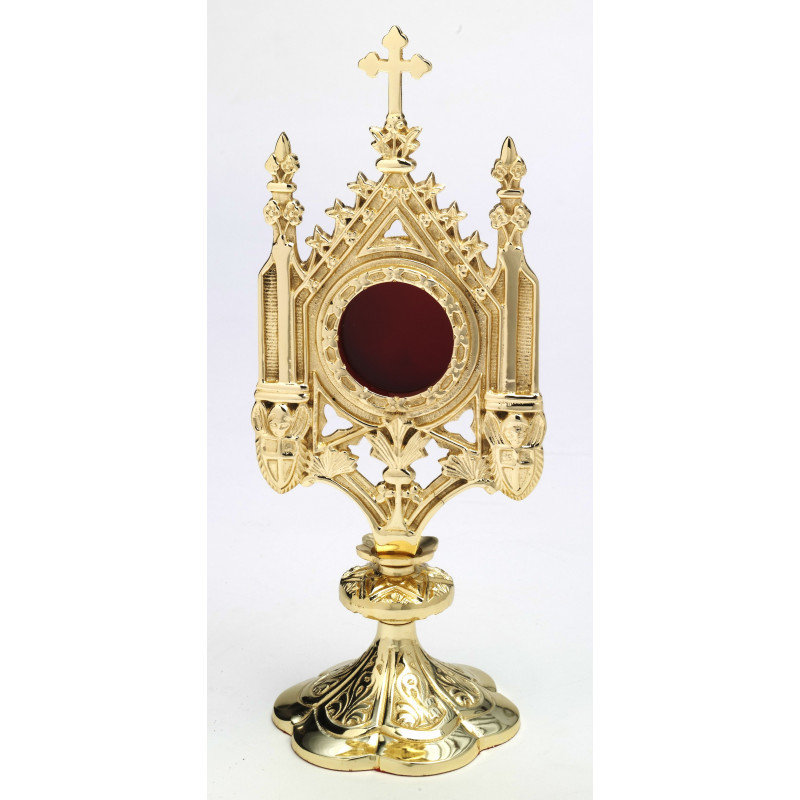
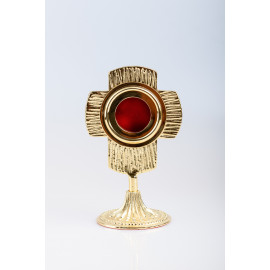
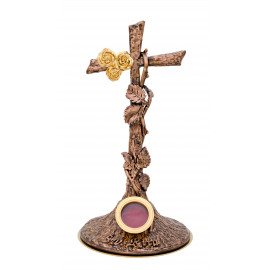
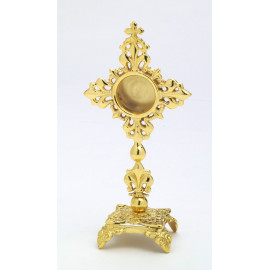
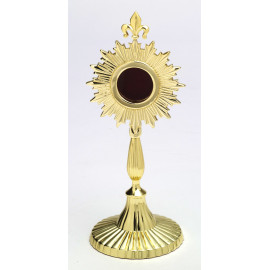
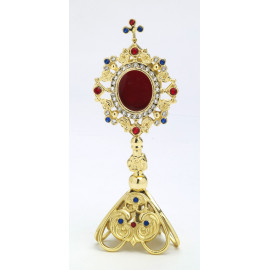
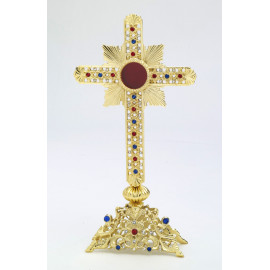
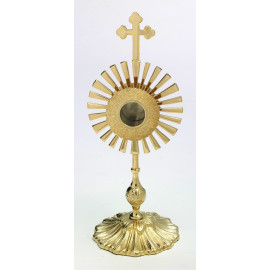
Placing a relic in a reliquary is a small ceremony of care. It is not a craft project, and it is not a moment for improvisation. The relic should remain identified, sealed and protected, and the reliquary should be closed in a way that can be documented and, if necessary, verified later.
The exact customs differ by diocese. What follows is the ordinary sequence used in many sacristies; if your diocese has its own rules, follow them.
Before You Begin: Documentation
A relic should have an authenticity certificate — often called an authentic — signed by the postulator or the competent ecclesiastical authority. The certificate identifies the relic, the saint, the class of relic and the authority that sealed it. Keep it with the reliquary, not in a separate file.
If the relic has no documentation, do not attempt to place it in a reliquary for public veneration. Ask the diocese to identify it first. A relic without a certificate cannot be verified, and a reliquary without documentation is a vessel with an unknown content.
Do Not Open a Sealed Theca
Most first-class relics are sealed inside a small theca or capsule, with a wax seal and a thread. The seal is part of the authentication. Do not open it, do not cut the thread and do not remove the relic to “clean” it. The relic stays in its sealed container, and the container is placed inside the reliquary.
If the seal is already broken when you receive the relic, stop and consult the diocese. A broken seal raises questions about the relic’s identity and should be resolved before the relic is placed in a new vessel.
Choosing the Right Cavity
Measure the sealed theca, not just the relic. The reliquary’s internal capsule or recess should be slightly larger than the theca, so that the theca sits flat and cannot move. If the cavity is too deep, use archival tissue or cotton to cushion the theca; do not glue the theca or the relic.
Check the glass and the closure before you place anything inside. The glass should be clear and well fitted; the closure should hold the relic securely. If the reliquary has a screw closure, check that the thread turns smoothly. If it has a hinged lid, check the hinge and the catch.
Step by Step
- Prepare a clean surface. Use a clean cloth on a stable table, away from food, drink and children.
- Wash and dry your hands. Handle the reliquary with clean hands; gloves are optional but helpful for gilded surfaces.
- Place the sealed theca in the cavity. Set it flat, with the seal visible if the design allows. Cushion it if necessary so that it cannot slide.
- Close the reliquary. Turn the screw or close the lid firmly, but do not force it. The glass should not press on the theca.
- Seal the closure if required. Follow the diocesan custom — often a wax seal and a thread across the closure, stamped with a sigil.
- Record the placement. Note the date, the relic, the certificate number, the reliquary and the person who sealed it.
Sealing with Wax and Thread
The traditional seal is a wax seal with a thread passed through the closure and secured with a stamp. The purpose is not decoration: it shows that the vessel has not been opened since the relic was placed. The exact method varies. Some sacristies use a small wax disc with the parish seal; others use a thread and a lead seal. If you are unsure, ask the chancellor’s office for the local custom.
Do not use glue, tape or a modern tamper-evident seal as a substitute for the diocesan custom. The seal should be removable for inspection and recognizable as an ecclesiastical seal.
Recording the Placement
Keep a record with the certificate: the date, the name of the saint, the class of relic, the certificate number, the reliquary’s description and the name of the person who placed and sealed it. If the reliquary is moved, add a note with the date and the new location. A parish inventory should list the relic, the reliquary and the certificate together.
When to Call the Diocese
Call the diocese before you act if the relic is first class, if the seal is broken, if you are transferring the relic to a different vessel, or if the reliquary will be used for public veneration in a church. The diocese can confirm the authentication, advise on the seal and, if necessary, authorize the transfer. For a third-class relic or a private devotional object, the process is usually simpler, but the principle is the same: keep the relic identified and protected.
Frequently Asked Questions
Q: How do you put a relic in a reliquary?
A: Confirm the authenticity certificate, keep any sealed theca intact, place the sealed relic in the reliquary’s cavity with archival cushioning, close the vessel, and seal the closure with wax and thread if the diocese requires it. Record the date, relic and certificate number.
Q: Do reliquaries need to be sealed?
A: A reliquary should close securely so the relic cannot move or be lost. Many sacristies also seal the closure with wax and thread as a sign of authenticity and reverence. The exact custom varies by diocese.
Q: Can I move a relic to another reliquary?
A: A transfer should be done with the knowledge of the diocese, especially for a first-class relic. The seal, the certificate and the new vessel should be documented. Do not open a sealed theca yourself.
Q: What is an authentic certificate?
A: An authentic is the document that identifies a relic and certifies its authentication. It normally names the saint, the class of relic and the authority that sealed it. Keep it with the reliquary and do not separate the two.
Q: Can I touch a first-class relic?
A: A first-class relic is normally kept sealed and should not be handled directly. The faithful venerate the relic by proximity or by touching an object to the outside of the reliquary, which is how a third-class relic is made. Follow the local custom and the direction of the clergy.
Related Reading
Read What Are Catholic Relics? Classes, Veneration, and Reliquaries Explained, and choose a vessel from our Catholic reliquaries.
