

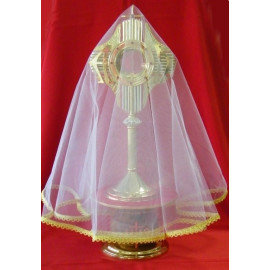
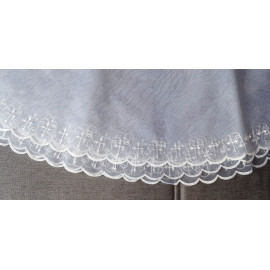
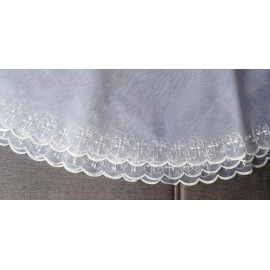
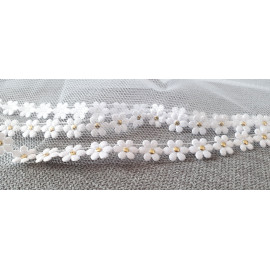
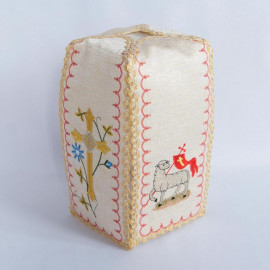
Tulle and embroidery are delicate. A monstrance veil that is folded badly, ironed directly or stored in plastic can lose its shape, yellow or catch on the embroidery. This guide gives a simple care routine that works for the tulle and embroidered veils in our collection.
Daily Handling
After use, shake the veil gently to remove dust and loose incense. Hold it by the hem, not by the embroidered border, and avoid pulling the fabric across the monstrance. If the veil is damp, let it air-dry before folding.
Keep the veil away from candles and hot metal. Tulle is synthetic and can melt if it touches a flame or a hot thurible.
Folding or Rolling
For short storage, fold the veil loosely into a rectangle. Do not press the folds sharply; a soft fold is easier to iron out later. For long storage, roll the veil around a padded tube or a clean cardboard core. Rolling prevents permanent creases and keeps the embroidery from pressing into the tulle.
If you fold the veil, place a sheet of acid-free tissue between the layers. Avoid newspaper and printed paper, which can transfer ink.
Ironing Tulle and Embroidery
Set the iron to the lowest heat and use steam sparingly. Place a clean cotton cloth between the iron and the veil. Never iron directly over embroidery, metallic trim or a printed motif: the heat can flatten the stitches or melt the metallic thread.
For a stubborn crease, hang the veil in a steamy bathroom for a few minutes instead of increasing the iron temperature. If you use a steamer, keep it at least 15 cm from the fabric.
Washing a Monstrance Veil
Most monstrance veils do not need frequent washing. When they do, hand-wash in cool water with a mild detergent. Do not use bleach, fabric softener or a washing machine with an agitator. Rinse well and do not wring the fabric.
Roll the wet veil in a clean towel to remove excess water, then dry it flat on a rack away from direct sunlight. Hang-drying a wet tulle veil can stretch the hem.
Storing the Veil
Store the veil flat in a shallow box or rolled in a cotton bag. Avoid plastic bags, which trap moisture and can cause mildew. Keep the veil away from direct light, incense smoke and damp walls.
White fabrics can yellow over time. A clean, dry, dark storage place slows this down. Do not store the veil on a wooden shelf that has been freshly polished; the oils can transfer to the fabric.
What to Do About Yellowing
If a white veil has yellowed, wash it gently with a mild detergent and rinse thoroughly. Do not use chlorine bleach. If the yellowing remains, consult a textile conservator rather than experimenting with strong chemicals. For antique or heavily embroidered veils, professional cleaning is safer than home treatment.
Frequently Asked Questions
Q: Can I iron a monstrance veil directly?
A: No. Iron on the lowest heat through a clean cotton cloth. Direct heat can melt tulle and flatten or damage embroidery and metallic trim.
Q: How should I store a monstrance veil?
A: Fold it loosely or roll it, then store it flat in a clean cotton bag or a shallow box. Avoid plastic, direct sunlight and damp places.
Q: Can I wash a tulle monstrance veil in a washing machine?
A: It is not recommended. Hand-wash in cool water with a mild detergent, rinse well, do not wring, and dry flat away from direct sunlight.
Q: How do I remove creases from tulle?
A: Hang the veil in a steamy bathroom or use a steamer at a safe distance. If you iron, use the lowest setting and a cotton cloth between the iron and the fabric.
Q: How often should a monstrance veil be washed?
A: Only when it is visibly soiled or dusty. Frequent washing weakens delicate fabrics and can distort the hem. Shake and air the veil after use instead.
Q: Can I store a monstrance veil in a plastic bag?
A: No. Plastic traps moisture and can cause mildew or yellowing. Use a breathable cotton bag or a shallow box lined with acid-free tissue.
Related Reading
See the monstrance veil collection and the Monstrance Veil Size Guide. For the wider care of liturgical textiles, see the Catholic Liturgical Textiles Glossary.
