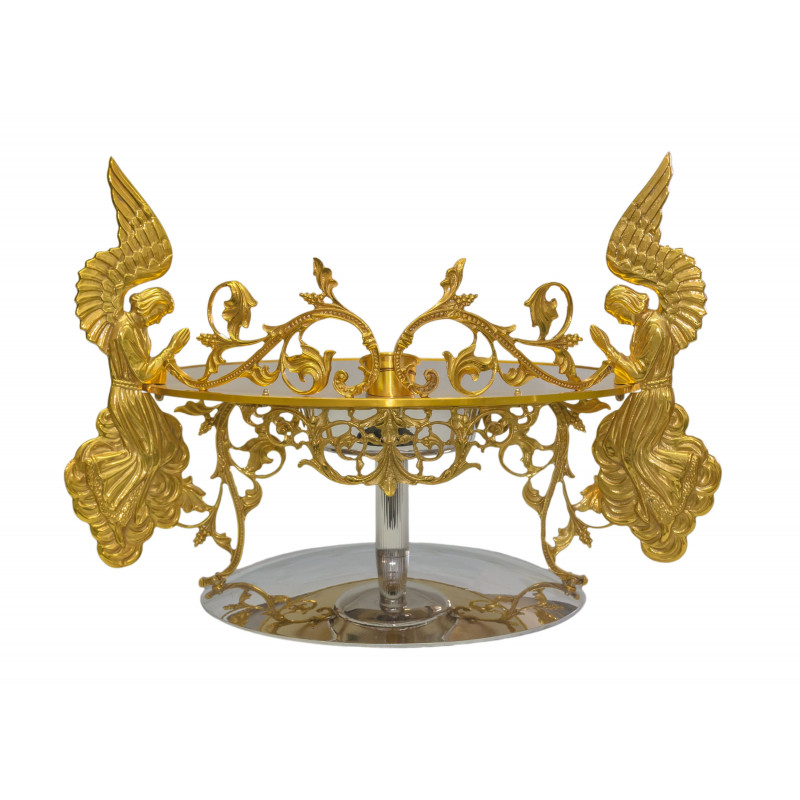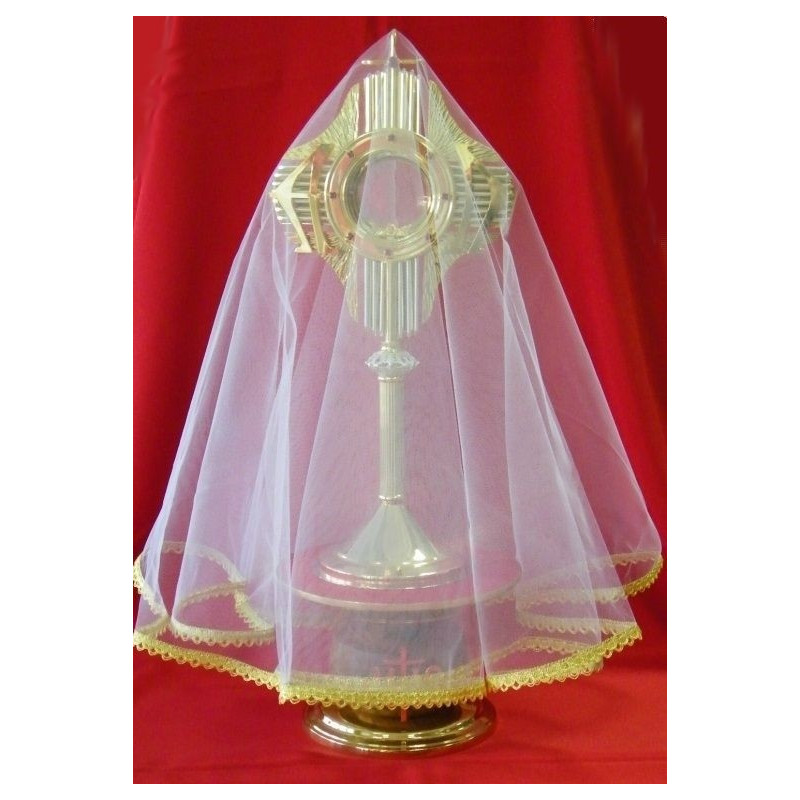

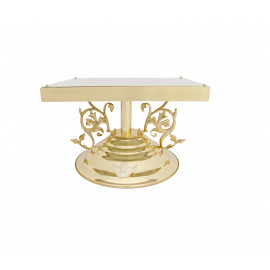
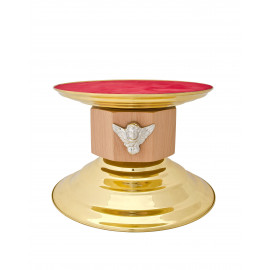

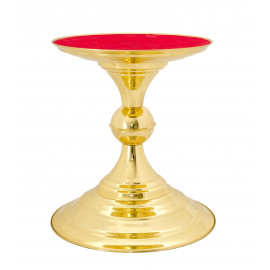
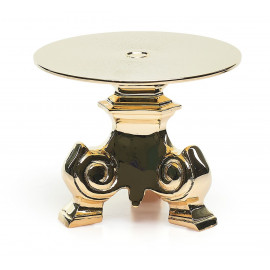
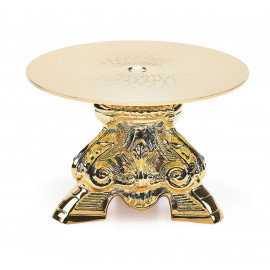
Perpetual adoration places the Blessed Sacrament at the center of a parish’s daily life. The monstrance is the vessel, but the monstrance throne is what keeps it visible, stable, and safe through long hours of exposition. A throne that works for a short Benediction may not be suitable for a chapel that is open all day.
This guide covers the practical choices: height, top plate, stability, material, and the small details that make a permanent exposition space work.
Start With the Monstrance, Not the Room
Measure the monstrance base before choosing a throne. The top plate should be at least as wide as the base, and preferably slightly wider. A base that overhangs the plate is a tipping risk, especially in a chapel where people move close to the stand.
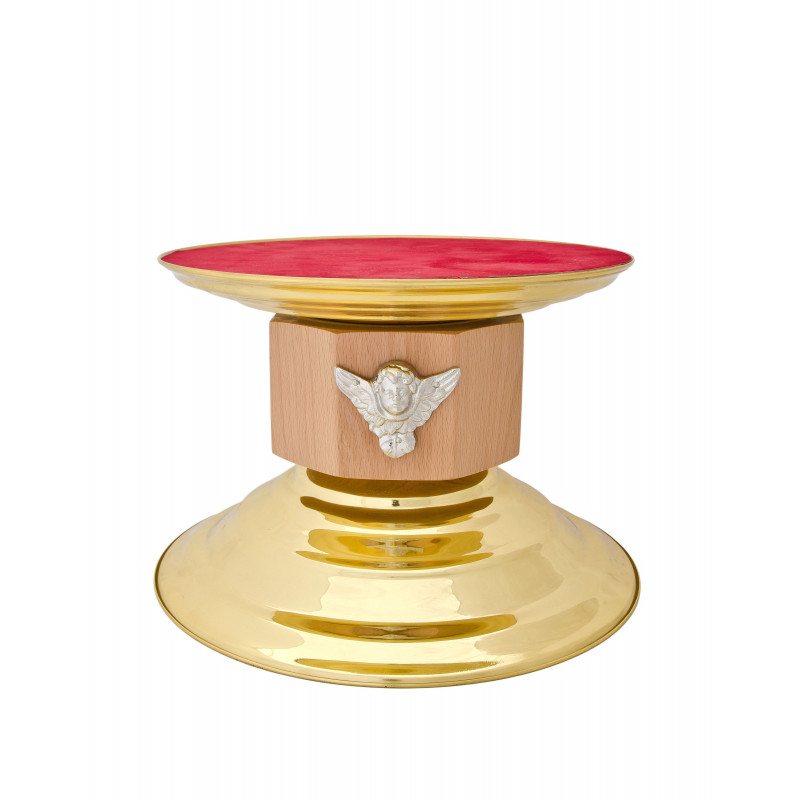
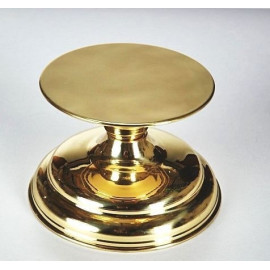
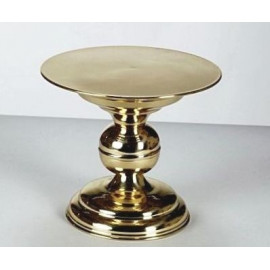
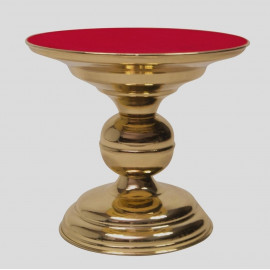
If the monstrance has a rectangular or cross-shaped base, measure both dimensions. A round plate can work if it is wide enough, but a rectangular plate is safer for a broad foot. In our monstrance stands and thabors collection, top plates range from 14.5 cm to 35 cm, including a rectangular 35 × 25 cm top.
Height and Visibility
For perpetual adoration, the host should be visible from the back of the chapel without forcing people to crane their necks. A 21–27 cm stand is a common choice for a chapel where the monstrance is placed on an altar or a pedestal. A 32–35 cm throne is better for a large sanctuary or a space with deep seating.
Check the sightline from the entrance, the back row, and the side aisles. If a tall altar cross or a candlestick blocks the monstrance, adjust the height or the position of the stand. Visibility is a practical matter, not a matter of taste.
Stability for Long Exposition
A permanent throne should be heavy enough that it does not move when the chapel is cleaned or when someone brushes against the altar. A wide base and a solid casting are more important than decorative detail. If the monstrance is tall or top-heavy, choose a throne with a broad base and a top plate that supports the full base of the vessel.
Consider a felt or cork pad under the monstrance base. It protects the top plate and reduces sliding. Check the pad periodically; a worn pad can make the monstrance sit unevenly.
Material and Finish
Brass is the traditional material for a monstrance throne because it is strong, repairable, and takes a warm gold finish. Gold-plated and 24-karat gilded surfaces are appropriate for a chapel where the Blessed Sacrament is exposed for long periods. Lacquered and painted finishes are practical where the stand is handled often.
A gilded throne can be a focal point, but it also needs care. Avoid abrasive cleaners and silver polish on gold plate. Dust with a soft dry cloth, and use a barely damp cloth for fingerprints. For more on finishes, read Brass vs Wood vs Marble Tabor.
Chapel Setup Checklist
- Measure the monstrance base and match the top plate.
- Check the sightline from the back of the chapel.
- Choose a stand with a broad, stable base.
- Leave room for incensation and reverence.
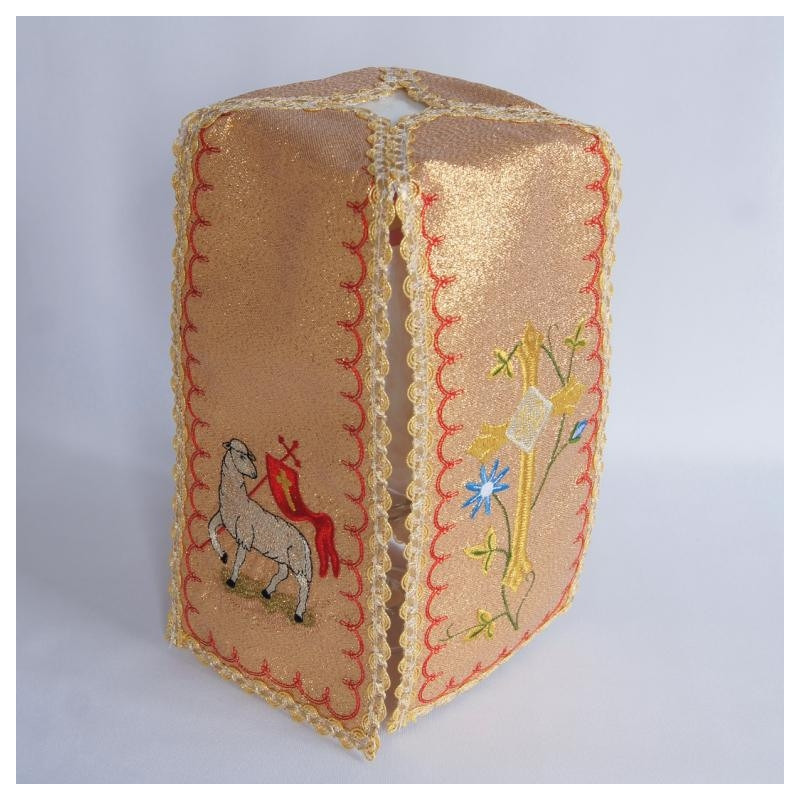
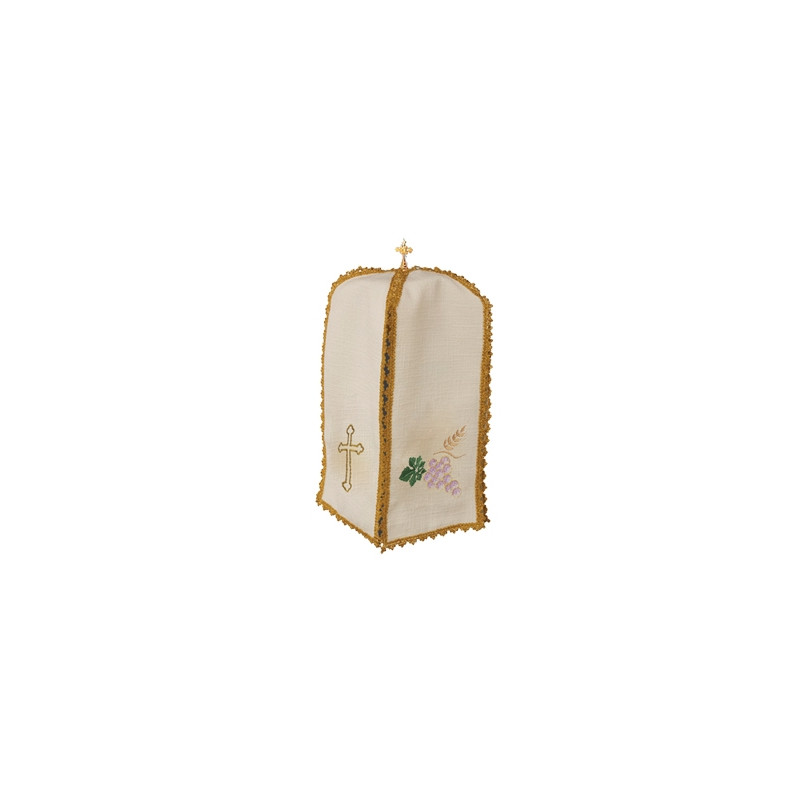
- Plan a safe place for the veil when the monstrance is not exposed.
- Keep the stand away from drafts, water, and direct heat.
- Check the top plate and pad periodically for wear.
For the vessel, see our Catholic monstrances and ostensoria. For the veil, see our embroidered monstrance veils. For the tabernacle, see our liturgical ciboria and pyxes.
Frequently Asked Questions
Q: What is a monstrance throne?
A: A monstrance throne is the stand or tabor that holds the monstrance during Eucharistic exposition. It raises the vessel for visibility and gives it a stable base.
Q: How tall should a throne be for perpetual adoration?
A: A 21–27 cm stand is common for a chapel altar. A 32–35 cm throne suits a large sanctuary or a deep seating area. Test the sightline from the back of the chapel before deciding.
Q: Does the throne need to match the monstrance?
A: It should match in scale and finish, but the most important match is physical: the top plate must support the monstrance base. A gold throne with a small plate is not a good fit for a large monstrance.
Q: Can a throne be used for Benediction?
A: Yes. The same throne can be used for Benediction and for perpetual adoration. For Benediction, make sure the priest has room to incensate and reverence the Blessed Sacrament.
Q: Where can I compare thrones?
A: See our monstrance stands and thabors collection. Each product page lists height, top plate, material, and price.
For the definition and terminology, read What Is a Tabor? and Tabor vs Thabor vs Monstrance Stand. For measuring, read How to Measure a Tabor.