



The Rite of Asperges is the sprinkling of holy water that opens Sunday Mass, during which the priest walks the sanctuary with the aspersorium and aspergillum while the choir sings the antiphon Asperges me. In Eastertide the same rite is sung to the Vidi aquam. It is one of the oldest visible ceremonies of the Roman liturgy — and one of the easiest to explain: the Church sprinkles her people with the water of baptism before they approach the altar.
What happens in the Asperges
After the prayers at the foot of the altar, the priest — vested in cope — takes the aspersorium in his left hand and the aspergillum in his right. He sprinkles the altar three times, then the clergy, then the congregation, walking the length of the sanctuary. The choir sings the antiphon with its psalm verse and the Gloria Patri. In the Ordinary Form the sprinkling may replace the Penitential Act; in the Extraordinary Form it precedes every Sunday Mass.
Asperges me and Vidi aquam — the two antiphons
The two antiphons carry the whole theology of the rite. Asperges me, Domine, hyssopo — "You shall sprinkle me with hyssop, and I shall be cleansed" — comes from Psalm 51, the Miserere, the great psalm of repentance. From Easter Sunday to Pentecost, the Church changes the chant: Vidi aquam egredientem de templo — "I saw water flowing from the right side of the temple" — from Ezekiel 47 and the visions of the renewed temple. The Easter antiphon celebrates the water that flows from the side of the risen Christ: the baptismal water blessed at the Vigil.
A reminder of Baptism
Every sprinkling is a small rehearsal of baptism. The water used in the Easter season is the water blessed at the Easter Vigil, when the candle is plunged into the font and the people are sprinkled with it; the same gesture — water falling from the aspergillum — renews that memory on any Sunday of the year. This is why the rite survived every reform of the liturgy: it says in one minute what the whole catechism says about washing, cleansing, and new life.
The vessels of the rite
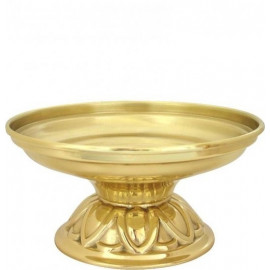
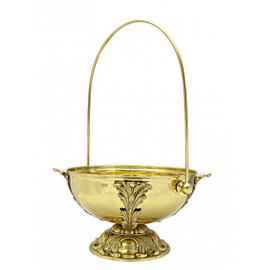
Two vessels make the rite possible: the aspersorium — the pot or bucket that holds the water, carried by the priest — and the aspergillum, the sprinkler dipped into it. A fixed holy water font stays at the church entrance for the congregation's own use, and the small stoup does the same duty at home. Parishes usually keep a pot-and-sprinkler set in the sacristy specifically for the Asperges and for the blessing of homes.
Beyond Sunday Mass: homes, graves, and processions
The sprinkling does not stay in church. In Eastertide the parish priest visits homes and blesses them room by room with the same two vessels; the rite is repeated at graves in November, at processions, and at the blessing of objects and vehicles. Families who keep holy water at home continue the same practice in miniature — see our guide to blessing your home with holy water.
Frequently Asked Questions
Q: What is the Asperges?
A: The Asperges is the sprinkling of holy water that opens Sunday Mass, accompanied by the antiphon "Asperges me" from Psalm 51. The priest carries the aspersorium and aspergillum and sprinkles the altar, the clergy, and the people.
Q: What is the difference between Asperges and Vidi Aquam?
A: They are the same rite with different chants: "Asperges me" is sung outside Eastertide, and "Vidi aquam" — celebrating the water flowing from the temple — is sung from Easter Sunday through Pentecost.
Q: Why does the priest sprinkle holy water at Mass?
A: The sprinkling is a reminder of baptism: it recalls the washing of the baptismal font and disposes the faithful to repentance before the celebration of the Eucharist. In the Ordinary Form it may replace the Penitential Act.
Q: What vessels are used in the Asperges?
A: The aspersorium (the pot or bucket that holds the water) and the aspergillum (the sprinkler). Our holy water pots and aspergillums are made in Poland and Italy for exactly this use.
Q: Is the Asperges still used today?
A: Yes. It is standard in the Extraordinary Form and widely practiced in the Ordinary Form, especially at the main Sunday Mass, during Eastertide, and at the blessing of homes. On Palm Sunday the blessing of palms takes its place.
Conclusion
The Asperges is one of the simplest ceremonies in the liturgy: water, a pot, a sprinkler, and a psalm. Its meaning is anything but simple — every drop carries the memory of baptism. Keep the set in good repair, and the rite will keep its power for the parish and the home alike.
