

You can bless your home with holy water yourself, at any time of year — the Church encourages families to keep holy water at home and use it for blessing, protection, and prayer. No priest is required to sprinkle your own home with holy water; a small aspergillum (holy water sprinkler) and a bowl of water blessed by a priest are enough. This guide explains why Catholics bless their homes, what to say, and how to do it step by step — including the Epiphany house blessing many parishes and families keep each January.
Why Catholics Bless Their Homes with Holy Water
Holy water is a sacramental — a sign that recalls Baptism and asks God’s blessing. When a family sprinkles its home, three things are expressed at once: gratitude for the gift of a dwelling, a request for God’s protection over all who live and visit there, and a renewal of the baptismal promises that began the Christian life of everyone in the household. The Catechism calls the family the “domestic church,” and blessing the home is one of the simplest ways to make that title real: the sign of the cross at the door, water on the walls of every room, and a prayer that Christ remain in this house as he remained in the home of Martha and Mary.
The Epiphany House Blessing
The best-known annual house blessing happens around the Solemnity of the Epiphany (January 6). In many countries a priest visits homes during the days after Epiphany — in Poland this visit is called kolęda — and blesses each home and family. Where the priest cannot visit every house, families bless their own homes with holy water, often using Epiphany water blessed at the parish. The traditional Epiphany house blessing is marked on the door with chalk in the inscription 20 + C + M + B + 26 (the year split around the initials of the traditional names of the Magi — Caspar, Melchior, and Balthazar — which also stand for Christus mansionem benedicat, “may Christ bless this house”). The father or mother then sprinkles the doorway and each room with holy water.
What You Need
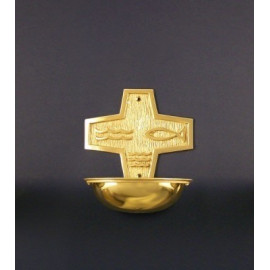
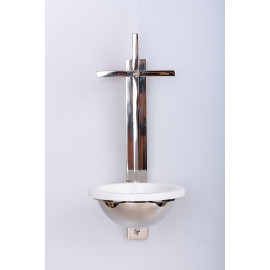
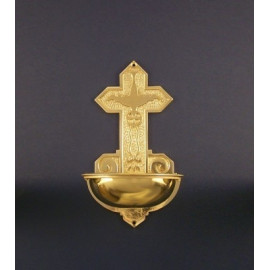
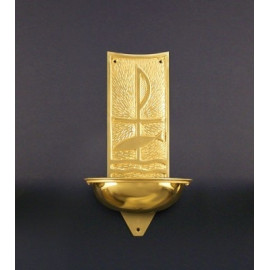
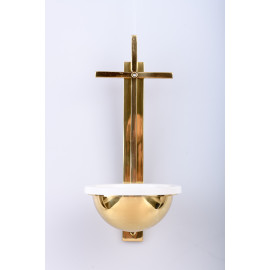
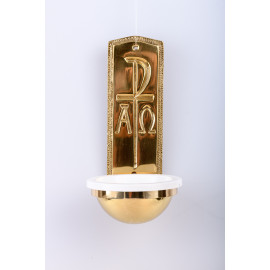
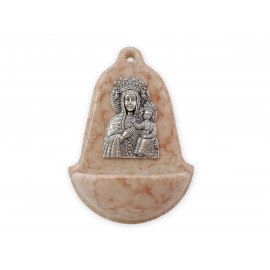
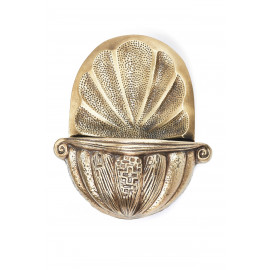
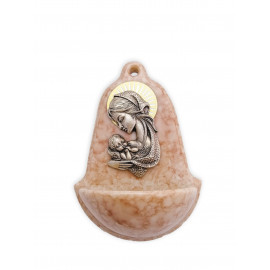
The essentials are simple: holy water from your parish, and something to sprinkle it with. A small aspergillum (the 9 cm size is made for home use) keeps the water in its bristles and gives a clean, even sprinkle; a holy water pot or aspersorium holds the water, and a holy water font by the entrance keeps a supply for daily use. You can also sprinkle with your fingers if you have no sprinkler at hand. A crucifix, an icon, or a candle on the family table makes the prayer easy to begin and end.
How to Bless Your Home with Holy Water — Step by Step
- Prepare the water. Bring holy water from your parish in a clean container. If you keep a pot at home, fill it and place the sprinkler beside it.
- Begin with the Sign of the Cross at the entrance of the home, saying: “In the name of the Father, and of the Son, and of the Holy Spirit. Amen.”
- Sprinkle the entrance and each room. Walk through the house room by room, sprinkling toward the walls and toward the center of each room. The blessing is a walk of prayer, not a cleaning; a light sprinkle is enough.
- Pray as you go. Use the traditional words of the Asperges — “Purge me with hyssop, O Lord, and I shall be clean” (Psalm 51:7) — or a simple prayer such as: “Bless this home, O Lord, and all who dwell in it. May your peace remain here.”
- Finish where you began with the Sign of the Cross, and put the sprinkler away dry.
For the blessing of homes the Church also has a formal rite in the Book of Blessings, which a priest or deacon can celebrate; the family’s sprinkling with holy water is the everyday form of the same prayer.
When to Bless Your Home
There is no wrong time. Families commonly bless the home when moving into a new house or apartment, during the Epiphany season, during Eastertide, when someone is ill or before a journey, at the start of a new year, or simply whenever they feel the need for a fresh start. A small sprinkling with holy water is also a fitting way to welcome guests, to begin family prayer, or to close a family celebration.
Frequently Asked Questions
Q: Can I bless my own home with holy water?
A: Yes. A layperson may take holy water and sprinkle the rooms of a home while praying. The Church blesses this practice; the solemn blessing of homes by a priest is its fuller form.
Q: Can I use tap water if I don’t have holy water?
A: No — the power of the practice comes from the Church’s blessing on the water, so you should use water blessed by a priest. Ask your parish for holy water (bring a clean container), or ask a priest to bless the water you provide.
Q: How often should I bless my home with holy water?
A: There is no rule. Many families do it once a year at Epiphany, some more often — when moving in, in Eastertide, or whenever the home has been empty or a difficult season has passed. Any time is a good time.
Q: What do you say when sprinkling holy water at home?
A: The traditional prayer is the Asperges me — “Purge me with hyssop, O Lord, and I shall be clean” — with the Sign of the Cross. A simple “Bless this home and all who live in it, in the name of the Father, and of the Son, and of the Holy Spirit” is also a complete blessing.
Q: Do I need a priest to bless my house?
A: For the formal blessing of a home (for example, the Epiphany visit or the blessing of a new house), a priest uses the Church’s official rite. For the everyday use of holy water in your own home, no priest is needed — the family may sprinkle and pray on its own.
Conclusion
A home blessed with holy water is a home that remembers its Baptism. Keep a small sprinkler with your holy water, bless the rooms when the season or the need calls for it, and let the sign of the cross at the door be the first and last thing the household sees each day. Explore our holy water sprinklers and holy water pots, place a font at your entrance, and read our guide to what an aspergillum is and how to choose a holy water font.
