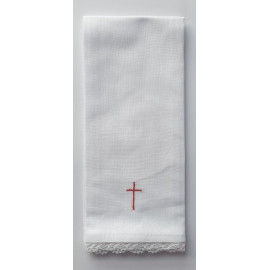
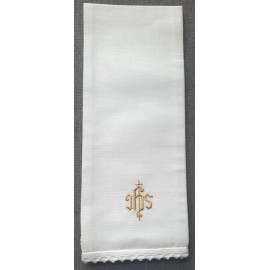
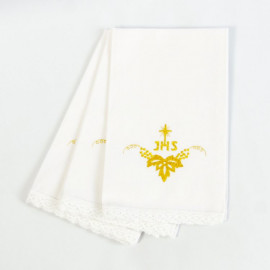
A purificator is a small white cloth used during Mass to wipe the rim of the chalice and to dry the chalice after the priest purifies it. It is one of the three chalice linens — with the corporal and the pall — and it is the only one of them that touches the rim of the cup during the distribution of Holy Communion.
This guide explains what a purificator is, where the name comes from, how it is used at Mass, and what to look for when buying purificators for a parish sacristy.
The Meaning of the Word "Purificator"
The name comes from the Latin purificare — "to purify" — and it is remarkably literal: the purificator is the cloth that purifies the chalice. In old Latin records the object is called the purificatorium; Italian sacristies call it the purificatoio, and Spanish ones the purificador. In English the word is stressed on the first syllable: pur-i-fi-ca-tor.
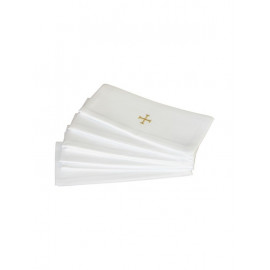
Sacristy guides sometimes call it simply "the purification cloth", and older English texts describe it as a napkin — but the object is the same: a rectangle of white absorbent cloth, marked with a small embroidered cross, folded in three.
What Is a Purificator Used For?
The purificator serves the chalice at three moments:
- During Communion — after each communicant receives from the chalice, the priest or deacon wipes the rim of the cup, so no drop of the Precious Blood remains on it.
- At the purification — after Communion the priest rinses the chalice with water (or wine and water) and wipes it dry with the purificator.
- In the preparation — before Mass the folded purificator lies over the chalice, under the pall, keeping the cup covered and clean.
The General Instruction of the Roman Missal directs that the sacred vessels are purified by the priest, the deacon, or an instituted acolyte — so the purificator is normally handled by the clergy, not by altar servers. Our collection of embroidered purificators covers 22 designs, from plain white crosses to gold IHS and Marian motifs.
What Is a Purificator Made Of?
Traditionally the purificator is made of pure linen — the Catholic Encyclopedia describes "a piece of pure white linen or hemp" — and the traditional requirement is absorbency: the cloth must drink the water used in the purification and dry the chalice completely. In modern parish practice most purificators are cotton, and that is what we sew: every purificator in our collection is 100% cotton, with a fine cotton lace trim on several designs, machine-washable up to 95 °C.
Some sacristies prefer the traditional linen or a textured huckaback weave for maximum absorbency. What a purificator should never have is starch — starch fills the weave, makes the cloth slippery, and works against the very absorbency the cloth exists for.
Sizes of Purificators
No size is fixed by the rubrics. The traditional European size is about 12–18 inches long and 9–10 inches wide (30–46 × 23–25 cm); American catalogs most often sell squares of 12 × 12 in and rectangles of 12 × 18 in. Our singles measure 47 × 28 cm (18.5 × 11 in) and our sets of three measure 45 × 35 cm (17.7 × 13.8 in) — the folded cloth drapes comfortably over a standard chalice. See the full size table on the purificator collection page.
Purificator, Corporal, Pall, or Finger Towel?
The four white linens of the chalice are constantly confused. In one line each: the purificator wipes the chalice; the corporal is the large square spread under the chalice and paten; the pall is the stiffened square that covers the cup during the Canon; the finger towel (lavabo towel) dries the priest's hands at the washing of hands. The full comparison is in our guide to the purificator vs corporal vs finger towel.
What Symbols Appear on Purificators?
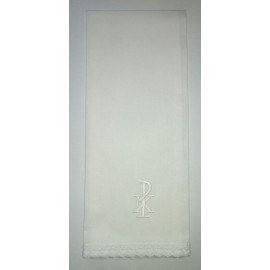
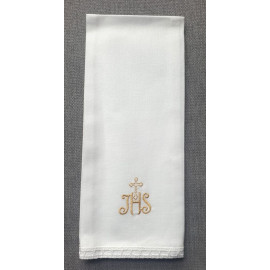
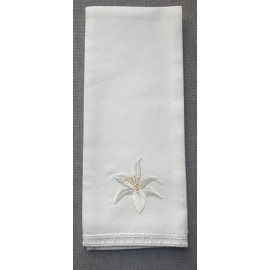
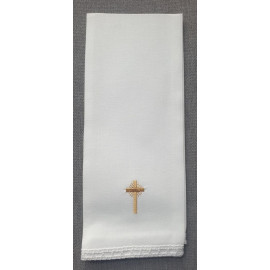
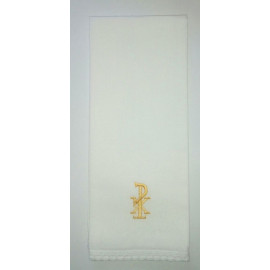
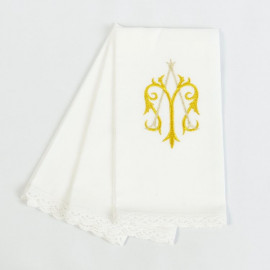
Every purificator carries a small embroidery at its centre — a cross (white, gold, or red), the IHS monogram of the Holy Name, the Chi-Rho (PX), or a Marian motif: a crown, a monogram, a lily. The mark is a working custom rather than a rubric: it shows which way up the cloth should be laid and marks the cloth as an altar linen when it is washed and stored. Our 22 designs are shown on the purificator page.
How Many Purificators Does a Parish Need?
One purificator is needed for each chalice prepared for a Mass. A typical Sunday parish prepares one for the priest and one or more for the ministers of Communion, so most sacristies keep at least four to six purificators in rotation, plus spares for weekday Masses and funerals. Sets of three — like our three-piece purificator sets — make it easy to keep a coordinated stack, and a parish starting from nothing can equip a full chalice preparation for well under $100.
Frequently Asked Questions
Q: What is a purificator in the Catholic Church?
A: A purificator is the small white cloth used at Mass to wipe the rim of the chalice during Communion and to dry the chalice after the priest purifies it with water. It is one of the three chalice linens, with the corporal and the pall.
Q: Is a purificator linen or cotton?
A: Both are used. Traditional purificators are pure linen or hemp; modern parish purificators are most often cotton. Every purificator in our collection is 100% cotton with a cotton lace trim, chosen for absorbency and easy care.
Q: How do you fold a purificator?
A: Fold it in three lengthwise, then fold the strip in three again so the embroidered cross ends on top. The folded cloth is laid over the chalice, with the pall above it. Step-by-step instructions are in our guide to folding a purificator.
Q: Who may touch the purificator?
A: There is no prohibition on touching it — sacristans handle purificators whenever they prepare the chalice or launder the linens. In the liturgy itself, however, the purificator is handled by the priest, deacon, or an instituted acolyte, since the purification of the vessels belongs to their ministry.
Q: What is the difference between a purificator and a corporal?
A: The corporal is a large square linen spread flat on the altar, under the chalice and paten; the purificator is the small folded cloth that wipes the chalice. The corporal never wipes; the purificator never lies flat under the vessels.
Q: Where can I buy purificators for a parish?
A: Our embroidered purificators are sewn in Poland in 22 designs — from $7 each, with three-piece sets at $25–$29 — and orders over $100 ship free within the United States.
Browse the full collection: Embroidered purificators for Mass — 22 designs in 100% cotton, from $7.