



An ambo is the reading desk in a Catholic church from which the Scripture readings, the responsorial psalm, and the Easter Proclamation are proclaimed. It is a permanent, dignified piece of furniture in the sanctuary, distinct from the altar and usually distinct from the pulpit. The word comes from the Greek ambon, a step or elevated place.
What Is an Ambo?
The ambo is the place of the Liturgy of the Word. It is usually elevated enough to be seen and heard, and it is reserved for the readings and the psalm. In many modern churches it also serves as the place of the homily and the prayer of the faithful. The ambo is not a podium for announcements, and it is not an altar.
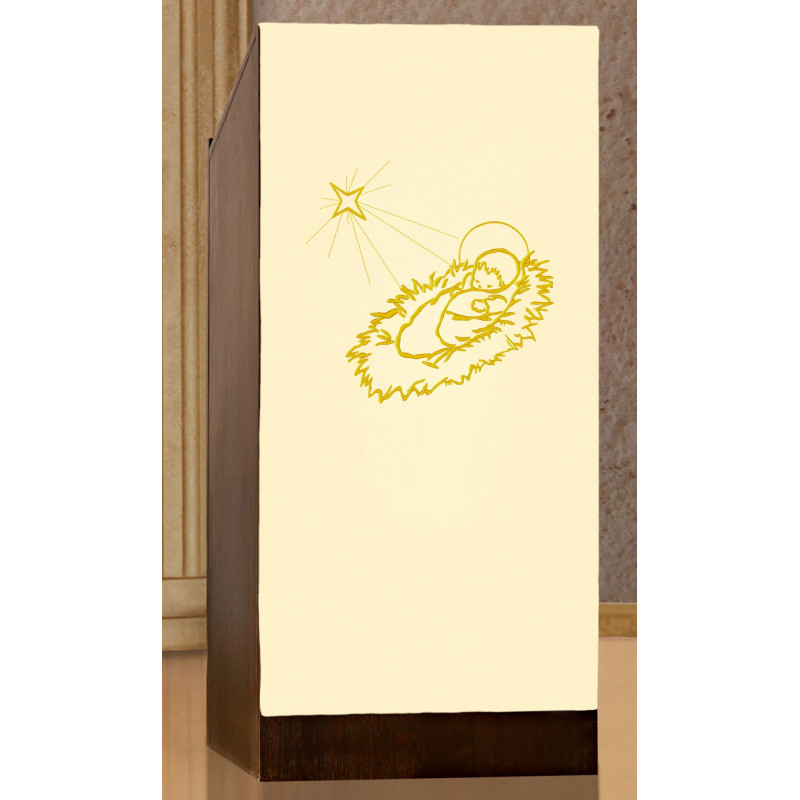
Because the ambo is the place where God speaks to the assembly in Scripture, the Church treats it with dignity. It should be permanent, noble, and suitable for the proclamation of the Word. A seasonal cover — an ambo fall — helps mark the color and character of the celebration.
A Short History
In the early basilicas, the ambo was a raised platform for the proclamation of the Gospel and the Epistle. It was often richly decorated, and in some churches there were several ambos for different readings. Over the centuries the ambo fell out of use in many places, and preaching moved to the pulpit. The Second Vatican Council restored the ambo as the standard reading desk of the Roman Rite, and the General Instruction of the Roman Missal gave it a clear liturgical role.
What Happens at the Ambo?
From the ambo, the lector proclaims the first reading and the psalm; the deacon or priest proclaims the Gospel; and the Easter Proclamation is sung from it. The homily and the prayer of the faithful may also be given there. The ambo is not used for ordinary announcements or for the presentation of gifts.
This is why the ambo is dressed with care. The cover, the microphone, the book stand, and the lighting all serve the proclamation of the Word. A clean, well-fitted cover keeps the focus on the text and the season.
What the GIRM Says
GIRM 309 is the key text: “From the ambo only the readings, the responsorial Psalm, and the Easter Proclamation (Exsultet) are to be proclaimed; it may be used also for giving the homily and for announcing the intentions of the prayer of the faithful.” The same passage calls the ambo a place of dignity and reserves it for the Word.
The practical implications are simple: keep the ambo clean and uncluttered; use a cover that matches the liturgical color; and do not treat the ambo as a general-purpose podium.
Ambo vs. Pulpit vs. Lectern
An ambo is a permanent reading desk in the sanctuary; a pulpit is a raised, enclosed stand for preaching; a lectern is a simpler standing desk for reading. In many modern Catholic churches one ambo serves both readings and preaching, so a separate pulpit is not built. In older churches, the pulpit may remain a prominent architectural feature.
The cover follows the furniture: an ambo fall for the ambo, a pulpit fall for the pulpit, and a lectern cover for the lectern. The proportions differ, so measure each piece separately. For a full comparison, see Ambo vs. Pulpit vs. Lectern.
How to Dress the Ambo
Choose a cover in the liturgical color of the season. Measure the width of the desk and the drop at the front; standard sizes are 50 × 160 cm, 58 × 180 cm, and 55 × 250 cm, with custom sizes available. Match the embroidery to the vestments and altar frontals: IHS, Alpha and Omega, PAX, a cross, or a Eucharistic motif are classic choices.
Our embroidered ambo covers and pulpit falls are made in Poland in all liturgical colors. The same embroidery can run across the sanctuary with our altar tablecloths and chalice linen sets.
Frequently Asked Questions
Q: What is an ambo in a Catholic church?
A: The ambo is the reading desk in the sanctuary from which the Scripture readings, the responsorial psalm, and the Easter Proclamation are proclaimed. It is a permanent, dignified piece of furniture distinct from the altar.
Q: What is the difference between an ambo and a pulpit?
A: The ambo is the reading desk for the Liturgy of the Word; the pulpit is the traditional raised stand for preaching. In many modern churches one ambo serves both readings and preaching.
Q: What does the GIRM say about the ambo?
A: GIRM 309 says that from the ambo only the readings, the responsorial psalm, and the Easter Proclamation are to be proclaimed; it may also be used for the homily and the prayer of the faithful.
Q: Can the ambo be used for announcements?
A: No. The ambo is reserved for the Word. Ordinary announcements belong elsewhere, and treating the ambo as a general podium weakens its liturgical role.
Q: What is an ambo fall?
A: An ambo fall is the fabric panel that hangs on the front of the ambo. It is usually embroidered and made in the liturgical color of the season.
Q: How do I choose an ambo cover?
A: Match the color to the vestments and altar frontals, measure the width and drop, and choose a durable fabric and a legible motif. Standard sizes fit most ambos; custom sizes are available.
Related Reading
Continue with Ambo vs. Pulpit vs. Lectern, How to Measure a Lectern or Ambo for a Cover, and What Is a Pulpit Fall? Browse our ambo covers.