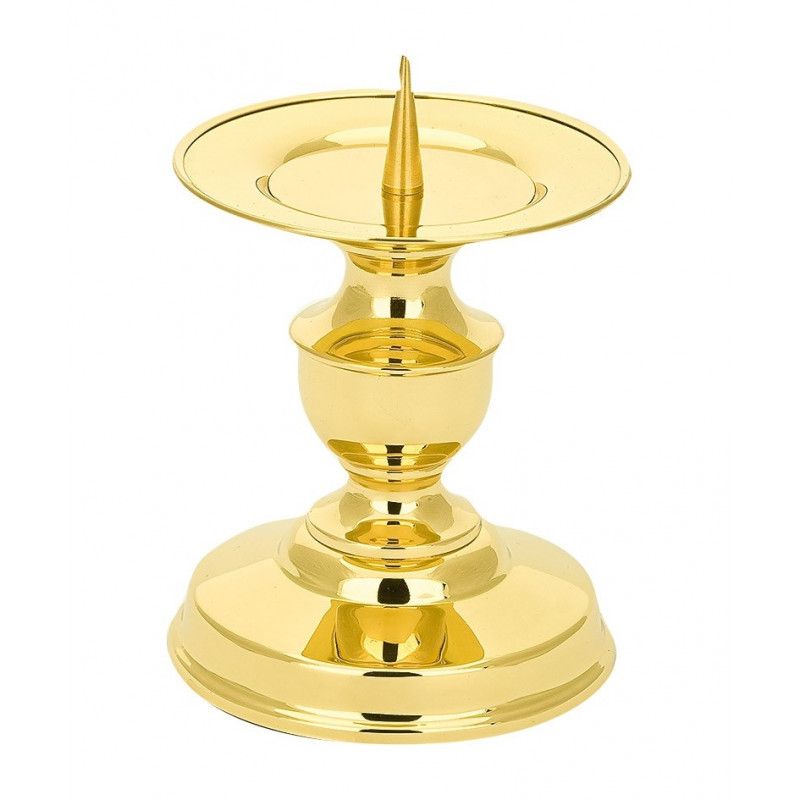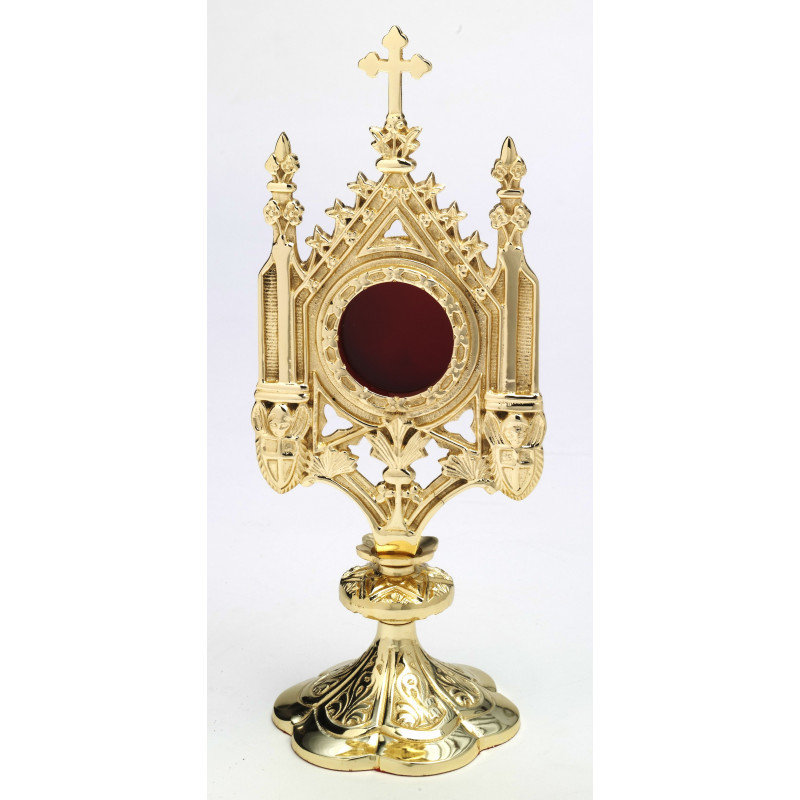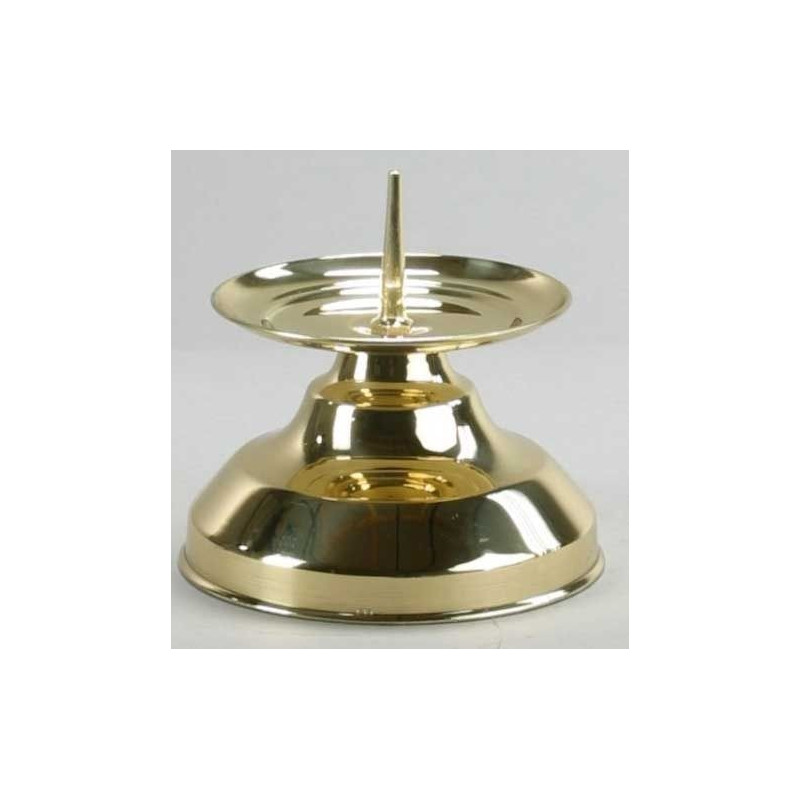


A pricket candlestick is a candle holder with a sharp metal spike instead of a socket. The candle is pressed onto the spike, which holds it upright from below. The form is ancient, simple and still practical: there is no socket to match, the candle sits straight, and the spike works with a range of taper diameters.
How a Pricket Works
The spike — the pricket — rises from the centre of a drip pan or a small platform. The candle is pushed down onto the spike until it is seated. The pan catches wax, and the spike keeps the candle vertical. Because the candle is held from the inside, the outside diameter matters less than the firmness of the wax.
Pricket holders are usually made of brass, cast brass or iron. They range from tiny 5 cm holders for slim candles to large floor-standing prickets for processions and Tenebrae.
A Short History
The pricket is one of the oldest forms of candlestick. Medieval churches used large pricket candlesticks on the altar and in processions, and the form survives in museum collections and in traditional sanctuaries. The word comes from the Middle English priket, a small spike. The same principle is still used today for taper candles, devotional candles and home altars.
Pricket vs Socket
| Pricket | Socket | |
|---|---|---|
| How it holds the candle | Spike inside the candle | Cup around the candle |
| Candle size | Flexible; works with tapers | Must match the socket diameter |
| Stability | Good for slim candles | Good for wider candles |
| Typical use | Side altars, home altars, processions | Altar sets, parish candlesticks |
Where Pricket Candlesticks Are Used
Side altars and chapels. A pair of prickets is simple and stable, and it works with the taper candles many parishes already have.
Home altars. A small pricket is an easy way to use slim candles without matching a socket.
Processions and Tenebrae. Large pricket candlesticks are traditional for processions and for the Tenebrae hearse.
Devotional candles. Pricket holders are practical for candles that are lit for short periods and replaced often.
Buying a Pricket Candlestick
Check the height, the diameter of the drip pan, the length of the spike and the weight of the base. A tall pricket with a small base can tip; a short pricket with a wide pan is stable. For church use, choose a brass or cast-brass piece with a lacquered finish. Our 9 cm brass pricket and 6 cm pricket with drip pan are the two smallest models in our collection.
Frequently Asked Questions
Q: What is a pricket candlestick?
A: A pricket candlestick is a holder with a sharp metal spike instead of a socket. The candle is pressed onto the spike, which holds it upright. Pricket holders are simple, stable and ideal for taper candles.
Q: What is a candle pricket?
A: The pricket is the spike itself — the pointed metal pin on which the candle is mounted. The word is also used for the whole candlestick.
Q: Are pricket candlesticks still used in Catholic churches?
A: Yes. They are used on side altars, in chapels, in processions and for devotional candles. Many historic sanctuaries still have large pricket candlesticks, and modern brass prickets are available for parish and home use.
Q: What size candle fits a pricket?
A: A pricket works with a range of taper diameters, as long as the candle is firm enough to hold on the spike. Slim candles of 2–2.5 cm are common; larger tapers may need a longer spike or a different holder.
Q: Is a pricket safer than a socket?
A: Both can be safe if the base is stable and the candle is seated properly. A pricket avoids the risk of a candle wobbling in an oversized socket, but the spike must be long enough to hold the candle securely.
Related Reading
Browse our altar candlesticks and read the altar candlestick buying guide. For the Easter candle, see the Paschal Candle guide.