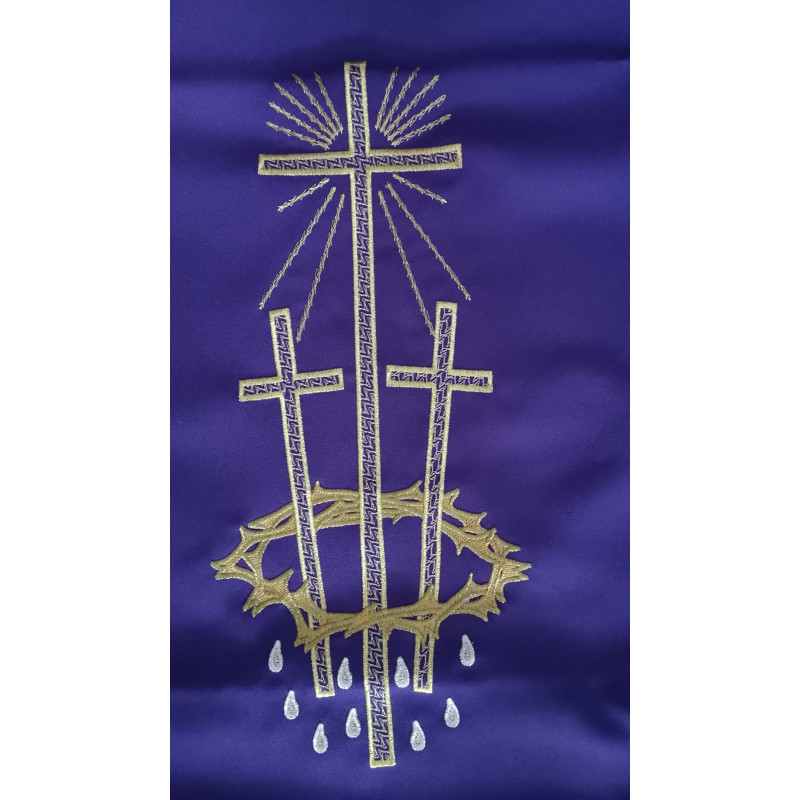


To clean a lectern or pulpit cover, wash it separately in cold water with a mild detergent, rinse thoroughly, and iron it while still slightly damp on the reverse side. Store it flat or rolled rather than folded tightly, so the embroidery does not crease. Avoid bleach, hot water, and a hot iron directly on gold thread.
Before You Wash
Check the label and the fabric. The H-series covers are an 80% polyester / 20% wool blend; the classic series uses a stain-resistant tablecloth fabric. Both can be washed gently, but wool blends should not be agitated aggressively or dried on high heat. Remove any pins, hooks, or attachments before washing.
Brush off loose dust and check for candle wax, incense residue, or stains. Treat stains before washing; once a stain is set by heat, it is much harder to remove.
Washing
Wash the cover separately in cold water with a mild detergent. Do not use bleach or optical brighteners, which can dull the embroidery and weaken the fibers. If you use a washing machine, choose a gentle cycle and a low spin speed; if you wash by hand, press the fabric gently rather than twisting it.
Rinse thoroughly. Detergent residue can attract dirt and cause yellowing over time. Do not wring the cover; roll it in a clean towel to remove excess water.
Removing Wax and Stains
For candle wax, place the cover between clean paper towels and press with a warm iron. The wax will transfer to the paper; replace the paper and repeat until no more wax comes out. Do not scrape the embroidery with a knife or sharp tool.
For incense residue or light stains, use a small amount of mild detergent and cold water, and blot rather than rub. For stubborn stains, consult a professional cleaner who specializes in liturgical textiles. Do not use solvent-based cleaners on gold thread without testing a hidden area first.
Ironing
Iron the cover while it is still slightly damp, on the reverse side, with a cool or warm setting. Do not press the iron directly on the embroidery; use a pressing cloth or iron around the motif. If the fabric is a wool blend, use a lower setting and avoid steam on the embroidery.
Hang the cover or lay it flat to finish drying. Avoid hanging it by the embroidery, which can stretch the stitching.
Storing
Store the cover flat or rolled rather than folded tightly. Folds can crease the embroidery and leave permanent lines. If you must fold it, place acid-free tissue paper between the layers and avoid folding along the embroidered motif.
Keep the cover in a dry, clean sacristy cabinet. Avoid plastic bags, which can trap moisture; use a cotton or linen bag or a clean shelf. Rotate the covers you use most often so no single piece carries all the wear.
When to Replace
Replace a cover when the fabric is frayed, the embroidery is pulled or discolored, or the color has faded unevenly. A cover that no longer hangs straight or no longer matches the parish set can also be retired. For a complete method that also covers corporals, purificators, and altar cloths, read our guide to washing liturgical linens.
Frequently Asked Questions
Q: Can I machine wash a lectern cover?
A: Yes, on a gentle cycle in cold water with a mild detergent. Do not use bleach or hot water, and do not wring the cover.
Q: How do I remove candle wax from a pulpit cover?
A: Place the cover between clean paper towels and press with a warm iron. Replace the paper and repeat until no more wax comes out. Do not scrape the embroidery.
Q: Can I iron the embroidery directly?
A: No. Iron on the reverse side or use a pressing cloth, and avoid pressing directly on gold thread or raised embroidery.
Q: How should I store a lectern cover?
A: Store it flat or rolled in a dry, clean cabinet. Avoid plastic bags and tight folds; use acid-free tissue paper if you must fold it.
Q: How often should I clean a pulpit cover?
A: Clean it when it is visibly soiled, after a season of heavy use, or before storing it. For weekly use, a regular gentle wash at the end of a liturgical season is usually enough.
Related Reading
Continue with What Is a Pulpit Fall?, How to Wash Liturgical Linens, and How to Choose a Lectern or Pulpit Cover. Browse our embroidered lectern and pulpit covers.