
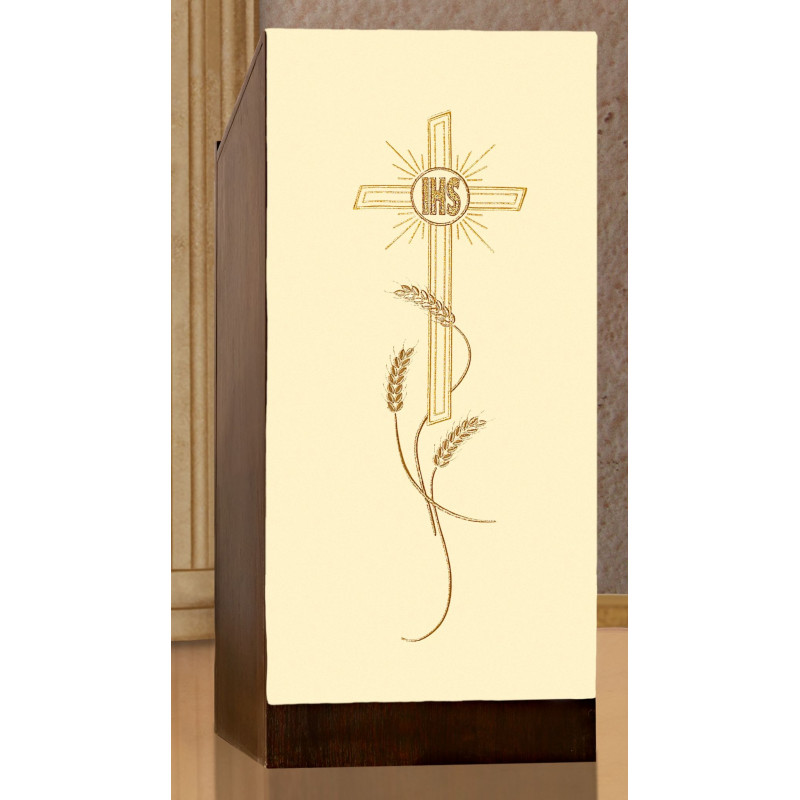




An ambo is the reading desk in the sanctuary from which Scripture is proclaimed at Mass. A pulpit is the traditional raised, enclosed stand used for preaching. A lectern is a simpler standing reading desk, common in both Catholic and Protestant churches. The three are related, but they are not the same piece of furniture — and the covers made for them are not identical.
What Is an Ambo?
The ambo is the place of the Liturgy of the Word in a Catholic church. It is usually a permanent, dignified desk in the sanctuary, elevated enough to be seen and heard, and reserved for the readings, the responsorial psalm, and the Easter Proclamation. The General Instruction of the Roman Missal says that from the ambo only the readings, the responsorial psalm, and the Easter Proclamation are to be proclaimed; it may also be used for the homily and the prayer of the faithful (GIRM 309).
The word comes from the Greek ambon, a step or elevated place. In the early basilicas the ambo was a raised platform for the proclamation of the Word; after the Middle Ages it fell out of use in many places, and preaching moved to the pulpit. The Second Vatican Council restored the ambo as the standard reading desk of the Roman Rite.
What Is a Pulpit?
A pulpit is a raised, enclosed stand used for preaching. It is often a fixed architectural feature, sometimes with a sounding board above it, and it is common in older churches where the preacher needed to be seen and heard by a large congregation. In many modern churches the ambo serves both readings and preaching, so a separate pulpit is not built.
The word comes from the Latin pulpitum, a platform or stage. In Anglican and Lutheran churches the pulpit remains a prominent piece of furniture, and the cloth that hangs on its front is often called a pulpit fall or pulpit scarf.
What Is a Lectern?
A lectern is a standing desk for reading. It is usually simpler and more movable than an ambo, and it is used by lectors, cantors, teachers, and speakers. A parish may have a lectern for the cantor or announcements in addition to the ambo, and schools and chapels often use a lectern as their main reading desk.
The word is related to the Latin lectrum, a reading place. A lectern cover — also called a lectern cloth or lectern fall — is the fabric panel that hangs over its front.
Side-by-Side Comparison
| Furniture | What it is | Typical use | Cover |
|---|---|---|---|
| Ambo | A dignified, permanent reading desk in the sanctuary. | Readings, responsorial psalm, Easter Proclamation, homily. | Ambo cover or ambo fall. |
| Pulpit | A raised, enclosed stand for preaching. | Homily or sermon; common in older churches. | Pulpit fall, pulpit hanging, pulpit scarf. |
| Lectern | A standing desk for reading, often movable. | Readings, cantor, announcements, school and chapel use. | Lectern cover, lectern cloth, lectern fall. |
What the GIRM Says About the Ambo
GIRM 309 is the key text for Catholic sacristans. It treats the ambo as a place of dignity and reserves it for the Word: the readings, the responsorial psalm, and the Easter Proclamation. The homily and the prayer of the faithful may also be given there. The practical consequence is that the ambo should be dressed with the same care as the altar — a seasonal cover, a clean surface, and a microphone that does not obscure the embroidery.
The ambo is not a podium for announcements, and it is not an altar. Keeping the furniture and its cover distinct helps the congregation read the structure of the Mass.
Which Cover Do You Need?
Match the cover to the furniture, not to the label in the catalog. For an ambo, choose an ambo fall or ambo cover wide enough for the front panel. For a pulpit, choose a pulpit fall with a drop that clears the pulpit steps. For a lectern, choose a lectern cover that fits the desk top and does not interfere with the book stand.
Our embroidered lectern, pulpit, and ambo covers are made in Poland in standard sizes of 50 × 160 cm, 58 × 180 cm, and 55 × 250 cm, with custom sizes available. The same embroidery can be carried across the sanctuary with our altar tablecloths and chalice linen sets.
Frequently Asked Questions
Q: What is the difference between an ambo and a pulpit?
A: The ambo is the reading desk where Scripture is proclaimed at Mass; the pulpit is the traditional raised stand used for preaching. In many modern Catholic churches one ambo serves both readings and preaching, while older churches often keep a separate, higher pulpit.
Q: What is the difference between a pulpit and a lectern?
A: A pulpit is a raised, enclosed stand for preaching; a lectern is a simpler standing desk for reading. The lectern may be movable and is common in schools, chapels, and churches of many traditions.
Q: Is an ambo the same as an altar?
A: No. The altar is the place of the Eucharistic sacrifice; the ambo is the place of the Word. They are distinct pieces of furniture and should not be confused in the sanctuary layout.
Q: Can a lectern be used as an ambo?
A: In some small chapels a dignified lectern may serve the same function, but the GIRM expects a permanent ambo in a church. If the furniture is used for the readings, it should be treated with the same dignity and dressed with a suitable cover.
Q: What is an ambo fall?
A: An ambo fall is the fabric panel that hangs on the front of the ambo. It is the Catholic term most closely associated with the place of the Liturgy of the Word, and it usually matches the vestments and altar linens.
Q: Which cover is best for a parish?
A: Start with the furniture you actually use. If your church has one ambo, choose an ambo cover in the colors you need most often — green, violet, white, and red. If you also have a lectern or pulpit, measure each piece separately.
Related Reading
Continue with What Is a Pulpit Fall?, How to Measure a Lectern or Ambo for a Cover, and What Is an Ambo in a Catholic Church? Browse our ambo covers and pulpit falls.
