
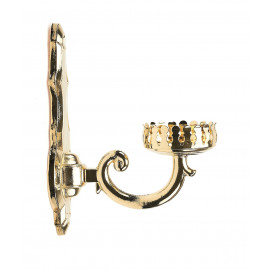
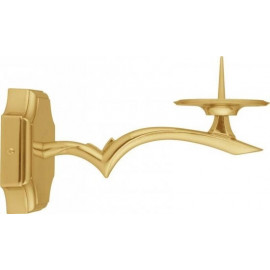
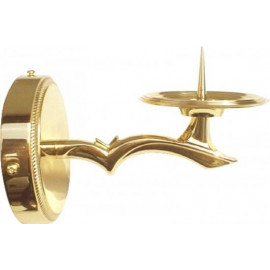
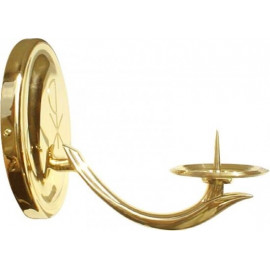
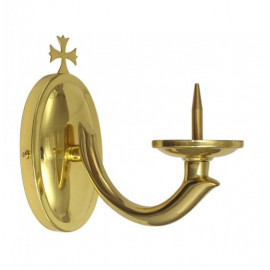
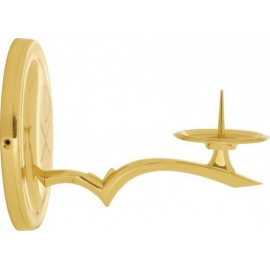
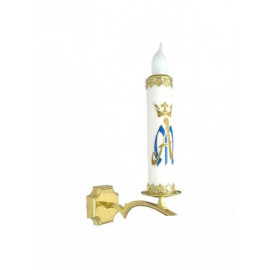
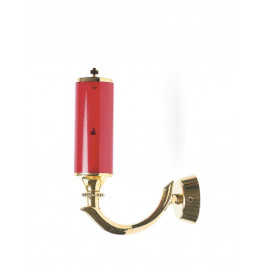
A church wall sconce is one of the quietest pieces of church furnishing — and one of the most visible. Mounted in pairs along the sanctuary, in a rhythm down the nave, or as single lights in side chapels, wall sconces give a church its warm, layered light and carry one of the oldest symbols of the faith: the living flame.
This guide covers what wall sconces are, how they differ from sanctuary lamps and candlesticks, where they are traditionally mounted, and how to choose the right model for your church.
What Is a Church Wall Sconce?
A wall sconce (also called a wall lamp or wall light) is a fixture fixed directly to the wall that holds either a candle or an electric bulb. In a Catholic church it is used for ambient light along the walls — around the sanctuary, between the windows of the nave, in chapels and shrines, in the entrance and in the sacristy.
Wall sconces are not the same as a sanctuary lamp. The sanctuary lamp is the single eternal light that burns before the tabernacle, usually behind red glass, and it is a liturgical sign of the Real Presence — see what a sanctuary lamp is and why every Catholic church has one. Sconces, by contrast, are ordinary devotional and decorative lighting for the church interior.
In Polish churches, the small brass sconces that mark the twelve crosses anointed on the walls at the dedication of a church are called zacheuszki — consecration sconces. Many of our wall lamps follow exactly this tradition.
Candle Sconces and Electric Sconces
Church wall sconces come in two formats:
- Candle sconces hold a real candle, traditionally beeswax or a beeswax blend. They give the warm, living flame that is part of the atmosphere of a church, and they suit walls that are easy to reach for lighting and replacing candles.
- Electric sconces look identical to their candle counterparts but take a bulb. They are the practical choice for high walls, for churches where open flame is restricted by fire regulations or insurance, and for the consecration crosses placed high above the floor.
Both are usually made of cast brass, polished and lacquered with a heat-cured clear finish. Our church wall lamps collection includes six candle sconces and one electric model, from 18.5 cm to 26.5 cm wide.
Where Wall Sconces Are Used in a Catholic Church
- Sanctuary — pairs flanking the altar area, often on the wall beside the celebrant's chair.
- Nave — evenly spaced along the bays between windows, high enough that flames sit above eye level.
- Consecration crosses — the twelve places anointed with chrism at the dedication of the church, each traditionally marked with its own sconce.
- Side chapels and shrines — beside statues, icons and side altars.
- Entrance and foyer — a warm welcome for people arriving for Mass.
- Sacristy — practical light for vesting and preparation.
How to Choose Church Wall Sconces
Four decisions cover most projects:
1. Candle or electric? If the walls are reachable and open flame is allowed, candle sconces are the traditional choice. For high walls, tight fire regulations or walls nobody tends daily, choose electric — or mix both.
2. Size. Small and medium sconces (around 20 × 12 cm) suit pillars, corridors and smaller chapels. A 23 × 18 cm sconce is the classic nave size. Large models (26 × 20.5 cm and up) fit tall naves and spacious sanctuaries. If you are replacing existing fixtures, match the old backplate and the distance from wall to socket.
3. How many? Even spacing matters more than a specific number: pairs in the sanctuary, a steady rhythm down the nave, one at each consecration cross, and additional lights in chapels and at the entrance.
4. Height. Candle sconces should sit high enough that the flame is above eye level and cannot be reached or brushed, and low enough that the light still serves the space. Electric models can go higher.
Why Churches Choose Brass
Cast brass is the traditional material for church lighting — it is heavy, takes fine detail, and takes the golden finish that suits both neo-Gothic and modern interiors. The sconces in our collection, like our altar candlesticks and sanctuary lamps, are polished and then sealed with a clear varnish cured at high temperature. That lacquer is why the brass keeps its shine for years and why the finish needs no polishing.
Care in Practice
Lacquered brass is cleaned with a dry cloth only. Dust the sconce with a dry cotton or dust-absorbing cloth, never with water or chemical fluids, and let candle wax harden before lifting it off. Our dedicated guide — how to clean brass without damaging the lacquer — covers the details, including what to do when wax drips onto the backplate.
Buying Church Wall Sconces
When you order, check three things against your wall: the size of the backplate, the height of the sconce, and — for candle models — the socket diameter against the candles you use. Ask for the quantity you need in one order so the finish matches across the batch. If you are furnishing the whole sanctuary, start with our guide to setting up a Catholic church sanctuary and see our full collection of brass church wall lamps.
Frequently Asked Questions
Q: What are the wall lamps in a church called?
A: They are called wall sconces, or simply wall lamps or wall lights. Sconces that mark the twelve consecration crosses are traditionally called zacheuszki in Polish churches. A wall-mounted light before the tabernacle is a sanctuary lamp, which is a distinct fixture with a liturgical meaning.
Q: Are candle or electric wall sconces better for a church?
A: Both have their place. Candle sconces give a real flame and suit reachable walls; electric sconces are safer for high or restricted walls and need no daily care. Many churches use both in the same building.
Q: How high should wall sconces be mounted?
A: Candle sconces should be high enough that the flame is above eye level and out of reach, and low enough that the light serves the space. Electric sconces can be mounted higher. Consecration sconces follow the height of the crosses on the wall.
Q: Do wall sconces replace altar candles?
A: No. Altar candles on the altar and wall sconces on the walls are separate things — the candles at Mass stand on candlesticks on or beside the altar, as required by the rubrics, while sconces light the walls.
Q: How many wall sconces does a church need?
A: There is no fixed number. A common pattern is pairs in the sanctuary, evenly spaced sconces down the nave, one at each consecration cross, and additional lights in chapels and at the entrance.
Related Reading
See also our guide to the sanctuary lamp, the complete sanctuary setup guide, and the full Church Wall Lamps & Sanctuary Sconces collection.
