

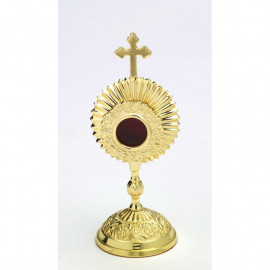
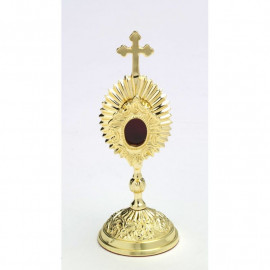
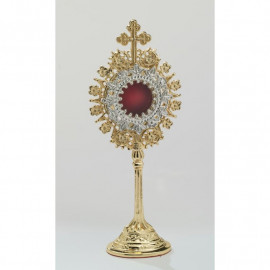
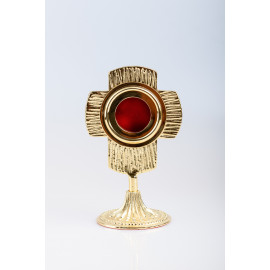
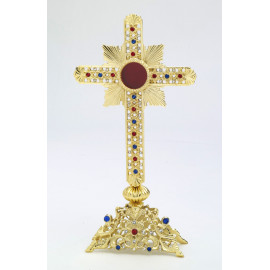
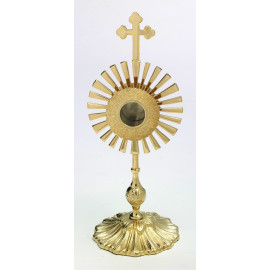
Antique reliquaries are among the most beautiful objects of sacred art: gilded chasses, arm reliquaries, carved wooden shrines and silver-plated thecae. They are also among the most difficult purchases in the liturgical market. Age, provenance, condition and authenticity all affect the value, and a piece that looks magnificent in a photograph can be fragile, repaired or undocumented in person.
This checklist is for collectors, sacristans and families who are considering an antique or used reliquary — and for parishes deciding whether to buy one or commission a new vessel.
Why Antique Reliquaries Appeal
An antique reliquary carries the history of the Church in its materials and its form. A 19th-century gilded chasse, a baroque theca or a carved wooden shrine can be a work of art as well as a vessel. For a collector or a museum, that history is the point. For a parish, the question is different: will the vessel serve the liturgy safely and reliably for the next decades?
Authentication and Seals
The first thing to check is the relic’s documentation. An authentic certificate should identify the saint, the class of relic and the authority that sealed it. The seal itself — usually wax and thread, sometimes a lead seal — should be intact. If the seal is broken or missing, the relic’s identity is uncertain, and the vessel should not be used for public veneration until the diocese has resolved the question.
Remember that Canon 1190 forbids the sale of sacred relics. An antique dealer may sell the vessel as an antique, but the relic inside it is not merchandise. If a seller prices the relic by class or by saint, treat that as a red flag.
Condition Checklist
- Gilding: look for flaking, worn areas, touch-ups and over-polishing. Gilding that has been aggressively polished may be thin or removed.
- Glass: check for cracks, chips, cloudiness and poor fit. Replacement glass can be made, but the frame may not accept a standard piece.
- Hinges and closures: open and close the vessel gently. A loose hinge or a missing catch can be repaired, but it affects the price and the security of the relic.
- Base and stability: a hollow or warped base may make the reliquary unstable on an altar.
- Wood: check for worm, splits, loose joints and old repairs. Wooden shrines may have been repainted or re-gilded.
- Stones and decoration: missing stones, replaced stones and glued repairs reduce value and can be difficult to match.
Repairs and Adaptations
Many antique reliquaries have been repaired, adapted or re-gilded. A repair is not automatically a defect, but it should be disclosed and reflected in the price. Look for mismatched metal, modern screws, glue around the glass, a replaced hinge or a base that does not match the body. A piece that has been converted from another object — a ciborium turned into a reliquary, for example — may be beautiful but historically mixed.
Lead Paint and Safety
Old gilding, paint and lacquer may contain lead. If the reliquary will be handled, displayed in a home with children or used around food, ask about the finish and avoid pieces with flaking paint. Do not sand or strip an antique finish yourself; consult a conservator. For a parish, a new vessel avoids the risk entirely.
New vs Antique for Parish Use
For a parish that needs a vessel for the altar, a new reliquary is usually the better choice. It is sound, it can be replaced consistently, it has a known specification and it can be ordered in the size and finish that suits the relic. An antique reliquary is a work of art with a history; it may be perfect for a museum, a collection or a historic church, but it is not the simplest solution for a working sacristy.
If you do buy an antique, have it inspected before it is used for a relic. Check the seal, the glass, the stability and the finish, and keep the documentation with the vessel.
Frequently Asked Questions
Q: Are antique reliquaries worth buying?
A: They can be, as works of art and history. Their value depends on age, maker, condition, materials and provenance. For liturgical use, a new reliquary is usually safer and easier to maintain; for a collection or a museum, an antique can be a significant acquisition.
Q: How can I tell if an antique reliquary is authentic?
A: Check the documentation, the seal and the provenance. An authentic certificate should identify the relic and the authority that sealed it. The seal should be intact. If the documentation is missing or the seal is broken, ask the diocese before treating the relic as authenticated.
Q: What should I check before buying a used reliquary?
A: Check the gilding, glass, hinges, base, wood and stones. Look for repairs, replacements and lead paint. Confirm the internal dimensions and whether the vessel can hold a sealed theca. Ask for the history and any documentation.
Q: Can an antique reliquary still hold a relic?
A: It can, if it is structurally sound, the glass is intact and the closure is secure. The relic should remain sealed in its theca, and the vessel should be inspected before use. For public veneration, the diocese should be consulted.
Q: Where can I buy a used reliquary?
A: Antique dealers, auction houses and specialist religious-art dealers sometimes offer used reliquaries. Buy from a seller who can document the piece and who understands Canon 1190. If a relic is present, the documentation and the seal matter more than the price.
Related Reading
Read What Are Catholic Relics? and Antique and Used Chalices: What to Know Before You Buy, or browse our Catholic reliquaries.


