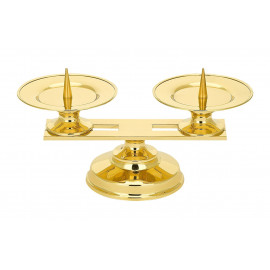
At a Catholic Mass there must be at least two lighted candles on or near the altar. Four or six are customary for Sunday Mass and solemnities, and the older custom of seven candles is still followed in many places when the diocesan bishop celebrates. The rule comes from the General Instruction of the Roman Missal (GIRM), no. 117, and it is one of the simplest liturgical norms to check before Mass begins.
This guide explains what GIRM 117 actually says, why the number changes, what the candles symbolize and how a sacristan can prepare the altar without guessing.
What Does GIRM 117 Say?
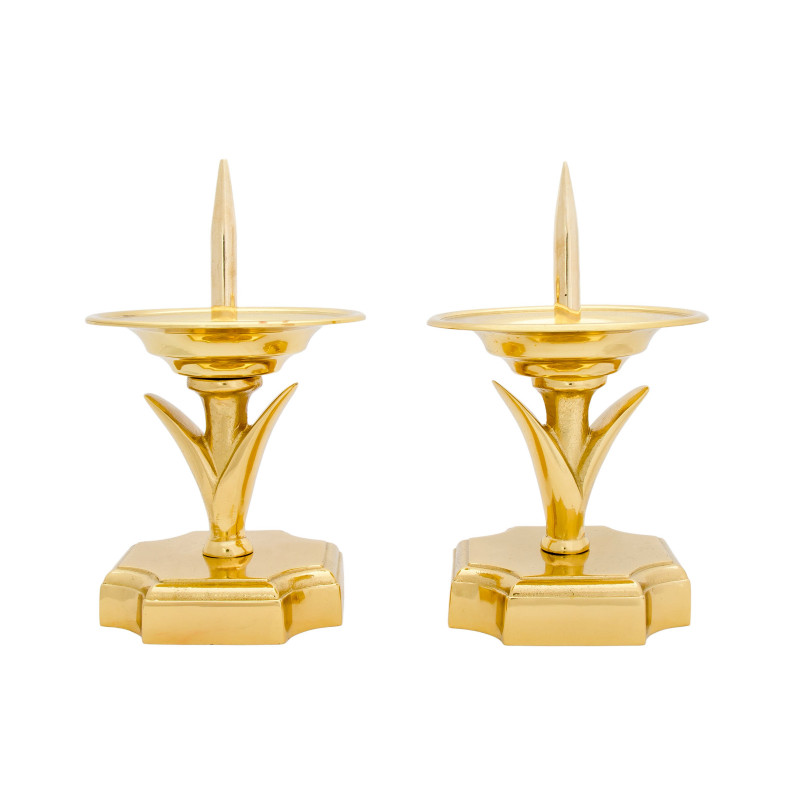
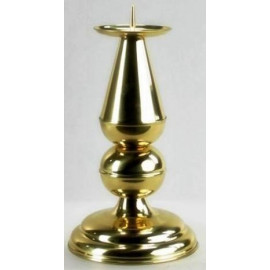
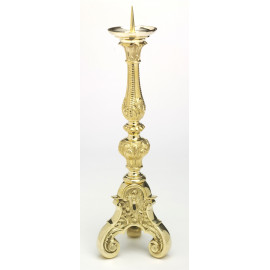
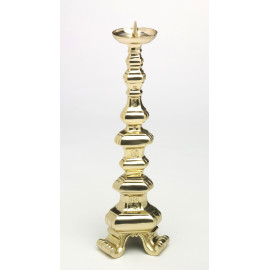
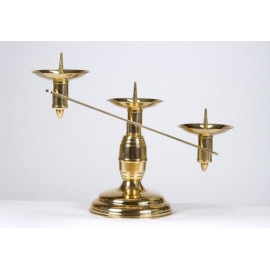
GIRM 117 directs that candlesticks with lighted candles are to be placed on or near the altar: at least two in any celebration, or four or six, especially for a Sunday Mass or a holy day of obligation. The same paragraph is the reason a parish normally owns a set of matching candlesticks rather than a random collection of holders.
The norm is a minimum, not a maximum. A large sanctuary may use more candles where the local custom and the diocesan norms allow it, but the baseline is always two. The candles are to be lit before the celebration begins and are normally extinguished after Mass.
Why Does the Number Change?
| Celebration | Usual number | Why |
|---|---|---|
| Weekday Mass | 2 | The minimum required for any Mass |
| Sunday Mass | 4 or 6 | Sunday is the weekly solemnity of the Resurrection |
| Solemnity or very solemn celebration | 6 | A fuller sign of joy and solemnity |
| Mass celebrated by the diocesan bishop | 7 in the older custom | Honour of the bishop and the particular Church |
The number is a liturgical signal. A weekday Mass with two candles and a Sunday Mass with six are not saying different doctrines; they are expressing different degrees of solemnity with the same symbol.
What Do the Six Candles Represent?
The six candles are a sign of joy and solemnity. They are usually arranged with three on each side of the cross, so that the cross remains the centre of the altar. The fuller light expresses the Church's joy on Sundays and the greatest feasts and points to Christ, the Light of the World.
The seventh candle in the older custom honours the bishop. It is not a different symbol; it is an extension of the same sign, marking the presence of the diocesan Church in the celebration.
Candles at Different Celebrations
Weekday Mass. Two candles are enough. In a small chapel, two well-proportioned candlesticks are better than six crowded ones.
Sunday Mass. Four or six candles are customary. The choice depends on the size of the sanctuary and the number of candlesticks the parish owns.
Solemnities and feasts. Six candles are the usual sign of solemnity. For the greatest feasts, the same six may be supplemented by candles around the sanctuary where custom allows.
Mass with the bishop. The older custom of seven candles is still followed in many places. The seventh candle is usually placed in front of the cross or in a position that marks the bishop's presence.
Funerals and Requiem Masses. The same norms apply, with local custom governing the arrangement. Candles are a sign of hope in the Resurrection, not merely decoration.
Benediction and exposition. The Blessed Sacrament is exposed with candles around the altar. Older ceremonial books call for at least twelve candles for public exposition, with six permitted in a poor church; in practice, parishes use the largest set their sanctuary allows.
Where Should the Candles Stand?
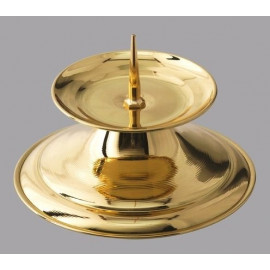
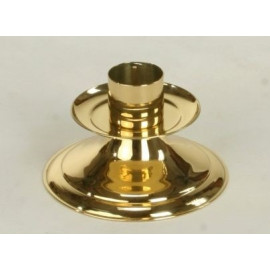
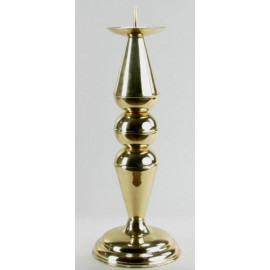
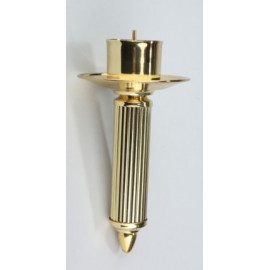
On or near the altar. The candlesticks should be stable, equal in height and placed so that they do not obstruct the view of the altar or the crucifix. A common arrangement is two, four or six candlesticks on the gradine or on the altar steps, with the cross in the centre. The candles should not be so tall that they hide the cross, and they should not be so close to the edge that they can be knocked over.
Which Candle Is Lit First?
Customs vary. Many sacristies light the candles from the cross outward, so that the candles nearest the cross are lit first and the outer candles last. Others light from the outside in. The safest rule is to follow the practice of your parish and to light the candles before the celebration begins. Never blow a candle out in the sanctuary; use a candle snuffer to avoid splashing wax and smoke.
A Sacristan's Checklist
- Check the liturgical calendar: weekday, Sunday, solemnity or bishop's Mass.
- Count the candles: 2, 4, 6 or 7 according to the norm and custom.
- Check that the candlesticks are equal in height and stable.
- Check the candle fit: the candle should sit upright in the socket or on the pricket.
- Light the candles before the celebration, using a taper or a candle lighter.
- Keep a snuffer on the credence table for the end of Mass.
- Replace candles before they burn down into the socket.
Frequently Asked Questions
Q: How many candles are required for a Catholic Mass?
A: At least two lighted candles are required for any Mass. Four or six are customary for Sunday Mass and solemnities, and seven may be used when the diocesan bishop celebrates.
Q: Why are there six candles on the altar?
A: Six candles express the joy and solemnity of Sunday and the greatest feasts. They are usually arranged with three on each side of the cross and point to Christ, the Light of the World.
Q: Does a weekday Mass need candles?
A: Yes. GIRM 117 requires at least two lighted candles for any Mass, including a weekday Mass. The candles may be smaller and simpler, but they should be real candles, not imitation flames.
Q: What do the candles on the altar symbolize?
A: They symbolize Christ as the Light of the World, the joy of the Resurrection, the prayers of the faithful and the vigilance of the Church. The flame is living light, which is why the liturgy asks for real candles.
Q: Which candle on the altar is lit first?
A: Customs vary. Many sacristies light the candles from the cross outward, but the safest rule is to follow your parish's practice. Light them before the celebration begins and use a snuffer to extinguish them.
Q: Can a parish use LED candles at Mass?
A: Battery LED candles are not a liturgical substitute for lighted candles at Mass. They may be used decoratively where no liturgical requirement applies, but the altar candles should be real candles.
Related Reading
Browse our altar candlesticks and read our guide to the GIRM. For the Easter candle, see the Paschal Candle guide, and for the sanctuary, see how to set up a Catholic church sanctuary.