
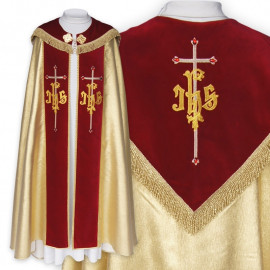
The cope normally follows the liturgical color of the day: white or gold for Christmas, Easter, and solemnities; red for Pentecost, Good Friday, and martyrs; green for Ordinary Time; violet for Advent and Lent; black for funerals where customary. White may always be worn for joyful celebrations or before the Blessed Sacrament, and violet may always be worn for penitential celebrations.
Color is not decoration. In the Roman rite it marks the mystery being celebrated, and the cope — as the vestment of processions and Benediction — is one of the most visible signs of the season. This guide explains each color and how to build a practical cope set for a parish.
Why Cope Colors Matter
The General Instruction of the Roman Missal sets the liturgical colors, and the cope follows the same rules as the chasuble and stole. A parish that owns only a white cope can still celebrate Benediction through the year, because white may always be used before the Blessed Sacrament. But for processions and the Liturgy of the Hours, the color of the day is the norm.
The Colors and When to Wear Them
| Color | Seasons and occasions | Cope use |
|---|---|---|
| White / gold | Christmas, Easter, solemnities, feasts of the Lord and Our Lady, weddings, baptisms | Benediction, Eucharistic processions, ordinations |
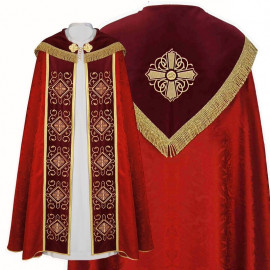
| Red | Pentecost, Good Friday, feasts of the Passion and martyrs, confirmations | Processions, confirmations, feasts of martyrs |
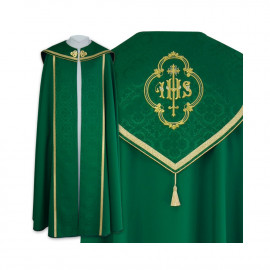
| Green | Ordinary Time | Parish processions, Sunday Benediction |
| Violet / purple | Advent, Lent, funerals (where customary), penance | Lenten processions, penitential services, funerals |
| Black | Funerals (where customary), All Souls | Funeral processions and absolution |
| Rose | Gaudete and Laetare Sundays (where used) | Rare; usually a rose chasuble or cope |
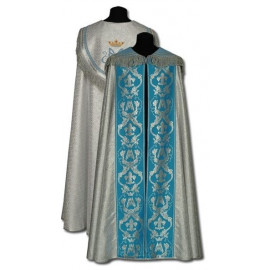
| Blue | Marian feasts (custom in some places) | Marian processions and devotions |
White and Gold
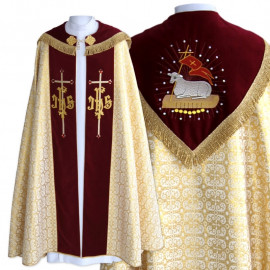
White is the color of joy and light: Christmas, Easter, the feasts of the Lord and Our Lady, weddings, and baptisms. Gold may replace white on solemn occasions, and cloth of gold may replace any color except violet and black. For Benediction, white or gold is the most common choice because it honors the Blessed Sacrament.
Red
Red marks the Holy Spirit, the Passion, and the martyrs. It is worn at Pentecost, on Good Friday, at confirmations, and on the feasts of martyrs. A red cope is useful for confirmations celebrated outside Mass and for processions on the feast of a martyr.
Green
Green is the color of Ordinary Time — the long season of growth between Christmas and Lent and between Easter and Advent. A green cope is the everyday processional vestment of many parishes, used for Sunday Benediction and local processions.
Violet
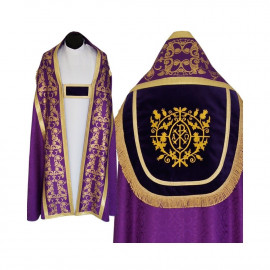
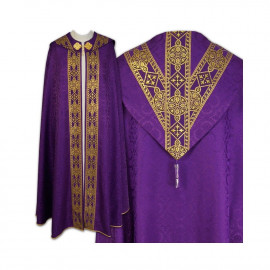
Violet (often called purple) marks Advent and Lent, the penitential seasons, and is also used at funerals in some places. It may always be worn for penitential celebrations. A violet cope is essential for Lenten processions and services of reconciliation.
Black
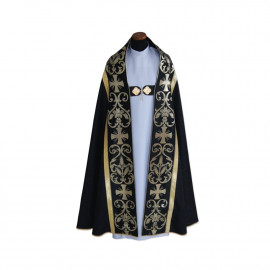
Black is traditional at funerals where customary and on All Souls. In many places violet or white has replaced it, but a black cope remains the most solemn option for a funeral procession and absolution.
Rose and Blue
Rose may be worn on Gaudete and Laetare Sundays where the custom exists; it is rare and usually appears in the chasuble rather than the cope. Blue is a Marian custom in some places, especially for processions in May and on Marian feasts; it is not part of the universal Roman color cycle.
How Many Copes Does a Parish Need?
Most parishes can start with two: a white or gold cope for Benediction and solemnities, and a green cope for Ordinary Time. Add red for Pentecost and confirmations, violet for Lent and Advent, and black or violet for funerals. If the parish has a set of chasubles, match the cope colors to the set so the vestments can be used together.
Matching Cope to Chasuble
Color is the first match; style is the second. A Gothic cope pairs naturally with a Gothic chasuble, a Roman cope with a Roman chasuble. Our Catholic cope collection includes white, cream, red, green, violet, black, gold, and silver copes, and our complete guide to liturgical colors explains the full calendar.
Frequently Asked Questions
Q: What color cope is worn for Benediction?
A: White or gold is the most common, especially for solemn Benediction. The cope may also follow the liturgical color of the day.
Q: Can a white cope be worn in Ordinary Time?
A: Yes. White may always be worn for celebrations of a joyful character or before the Blessed Sacrament, so a white cope is never wrong at Benediction.
Q: What color cope is worn for funerals?
A: Black where customary; violet or white may also be used. Follow the diocesan custom and the liturgical norms for the funeral rites.
Q: Is a purple cope the same as violet?
A: Yes. "Purple" and "violet" are used interchangeably for the liturgical color of Advent and Lent.
Q: What color cope is worn at Pentecost?
A: Red, the color of the Holy Spirit and of the martyrs.
Q: How many copes should a parish buy?
A: Start with white/gold and green; add red, violet, and black or violet for funerals as the parish's celebrations require.
Conclusion
A cope set that covers white/gold, red, green, and violet will serve almost every parish celebration. Browse our Catholic copes by color, or read our guide to cope vs chasuble to choose the right vestment for each liturgy.