

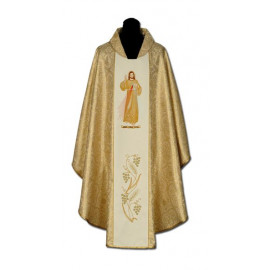

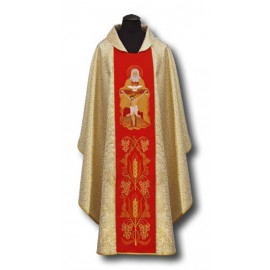
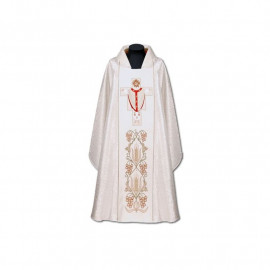
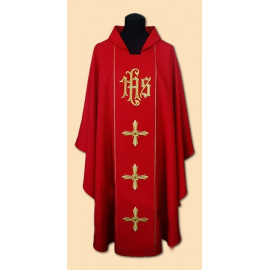
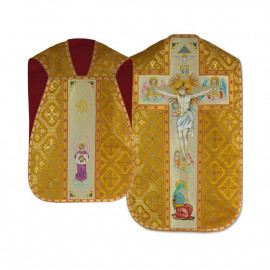
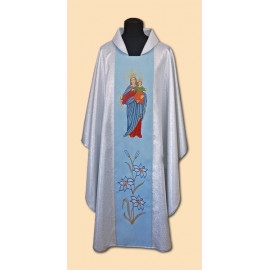
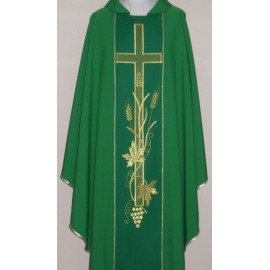
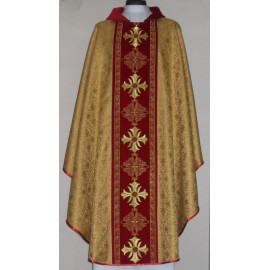
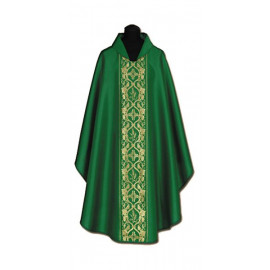
A chasuble is one specific Catholic vestment — the outermost garment worn by the priest at Mass. A vestment is the broader category that includes the chasuble, alb, stole, dalmatic, cope and other liturgical garments. In short: every chasuble is a vestment, but not every vestment is a chasuble.
What Is a Vestment?
The word vestment comes from the Latin vestimentum, meaning clothing. In Catholic liturgy it refers to the garments worn by the priest, deacon, bishop and other ministers during sacred rites. Vestments are not ordinary clothing: they set the minister apart for worship, express the dignity of the sacraments, and carry a long history of symbolism.
The main Catholic vestments are the alb (the white tunic worn by all ministers), the stole (the band worn around the neck), the chasuble (the priest's outer Mass vestment), the dalmatic (the deacon's outer vestment), and the cope (a processional cloak). Each has its own role. The chasuble is the one most closely associated with the priest who celebrates the Eucharist.
What Is a Chasuble?
The chasuble is the outermost vestment worn by the priest at Mass. It is placed over the alb and the stole, and its color follows the liturgical season. The English name comes from the Latin casula, a small hooded cloak; in the Roman tradition the garment developed from the paenula, an everyday outer cloak of antiquity.
The chasuble is traditionally understood as a symbol of the yoke of Christ and of the charity that should mark the priest who celebrates the Eucharist. Its shape also varies: the Roman cut is more fitted, the Gothic cut is wider and fuller, and the semi-Gothic cut sits between the two. Our embroidered chasuble collection includes all three styles.
Chasuble vs Vestment: The Short Answer
A vestment is the general term; a chasuble is a specific vestment. If you are buying a garment for the priest to wear at Mass, you are looking for a chasuble. If you are buying an alb, stole, dalmatic or cope, you are buying another kind of vestment. The distinction matters because the names are not interchangeable, and because each garment has its own liturgical rules and fit.
The Main Catholic Vestments Compared
| Vestment | Worn by | Role |
|---|---|---|
| Alb | Priest, deacon, altar servers | White tunic; the base garment worn under the stole and chasuble. |
| Stole | Priest, deacon | Band of cloth worn around the neck; signifies office and authority. |
| Chasuble | Priest | Outermost vestment at Mass; worn over the alb and stole. |
| Dalmatic | Deacon | Outer vestment of the deacon, with sleeves and a narrower shape. |
| Cope | Priest or bishop | Processional cloak with an open front; used outside Mass. |
The dalmatic is often confused with the chasuble because both are outer vestments. The difference is the minister: a deacon wears the dalmatic, while the priest celebrant wears the chasuble. The cope is also an outer garment, but it is open at the front and is used for processions, Benediction and other non-Eucharistic services.
Why the Distinction Matters When Buying
When a sacristan orders a “vestment,” the supplier needs to know which garment is meant. A chasuble has a different cut, size and price from an alb or a cope. The chasuble is also the garment most visible to the congregation, so its color, fabric and embroidery carry the liturgical message of the day. Buying the wrong garment can mean a piece that cannot be worn at Mass or that does not match the parish's other vestments.
The distinction also helps when comparing prices. A simple alb or stole costs far less than a chasuble because it uses less fabric and less embroidery. A chasuble is a larger garment with a visible front and back, so the embroidery, brocade or damask and the matching stole all affect the final price. Our guide to chasuble price ranges explains the main cost drivers.
How to Choose a Chasuble
Start with the liturgical colors. A priest needs white, red, green and violet at minimum; black and rose are optional. Then choose the cut: Roman for a closer, traditional fit; Gothic for a fuller drape; semi-Gothic for a middle ground. Next, consider the fabric and the embroidery. Brocade and damask give a rich, structured look; velvet has a soft pile; wool blends add warmth; polyester is lightweight and easy to care for.
Finally, check the size and what is included. Most chasubles in our collection are 127 × 158 cm or 130 × 160 cm, and most listings mention a matching stole. If you are buying for a parish with several priests, order the most-used colors first and add a spare white or green for busy seasons. Browse the Roman, Gothic and semi-Gothic collections to compare styles side by side.
Frequently Asked Questions
Q: Is a chasuble a vestment?
A: Yes. A chasuble is a vestment — specifically, the outermost vestment worn by the priest at Mass. The word “vestment” also covers the alb, stole, dalmatic, cope and other liturgical garments.
Q: What is the difference between a chasuble and an alb?
A: The alb is the white tunic worn underneath; the chasuble is the outer garment worn over the alb and stole at Mass. The alb is worn by several ministers, while the chasuble is proper to the priest celebrant.
Q: What is the difference between a chasuble and a stole?
A: The stole is a narrow band worn around the neck; the chasuble is the large outer garment worn over it. The stole signifies the office of the priest or deacon, while the chasuble is the Mass vestment of the priest.
Q: What is the difference between a chasuble and a cope?
A: A cope is a processional cloak with an open front, worn for Benediction, processions and other services outside Mass. A chasuble is closed at the front and is the vestment proper to the priest at Mass.
Q: Can a deacon wear a chasuble?
A: No. A deacon wears a dalmatic, not a chasuble. The chasuble is the vestment of the priest celebrant at Mass.
Continue Reading
- How to Choose a Chasuble: Complete Guide for Priests and Sacristans
- Roman Chasuble vs Gothic Chasuble: Key Differences Explained
- Dalmatic vs Chasuble: What's the Difference and Who Wears Each?
- The History of the Chasuble: From Ancient Rome to Modern Altars
Related: For the Nuptial Mass, see our wedding chasubles.


